How Often to Replace a Roof in Queens
The frequency of roof replacement in Queens depends entirely on the roofing material installed and how well it withstands local weather conditions. Standard lifespans range from 20 to 25 years for architectural asphalt shingles, 30 to 50+ years for standing seam metal systems, and 15 to 25 years for flat modified bitumen or built-up roofs.
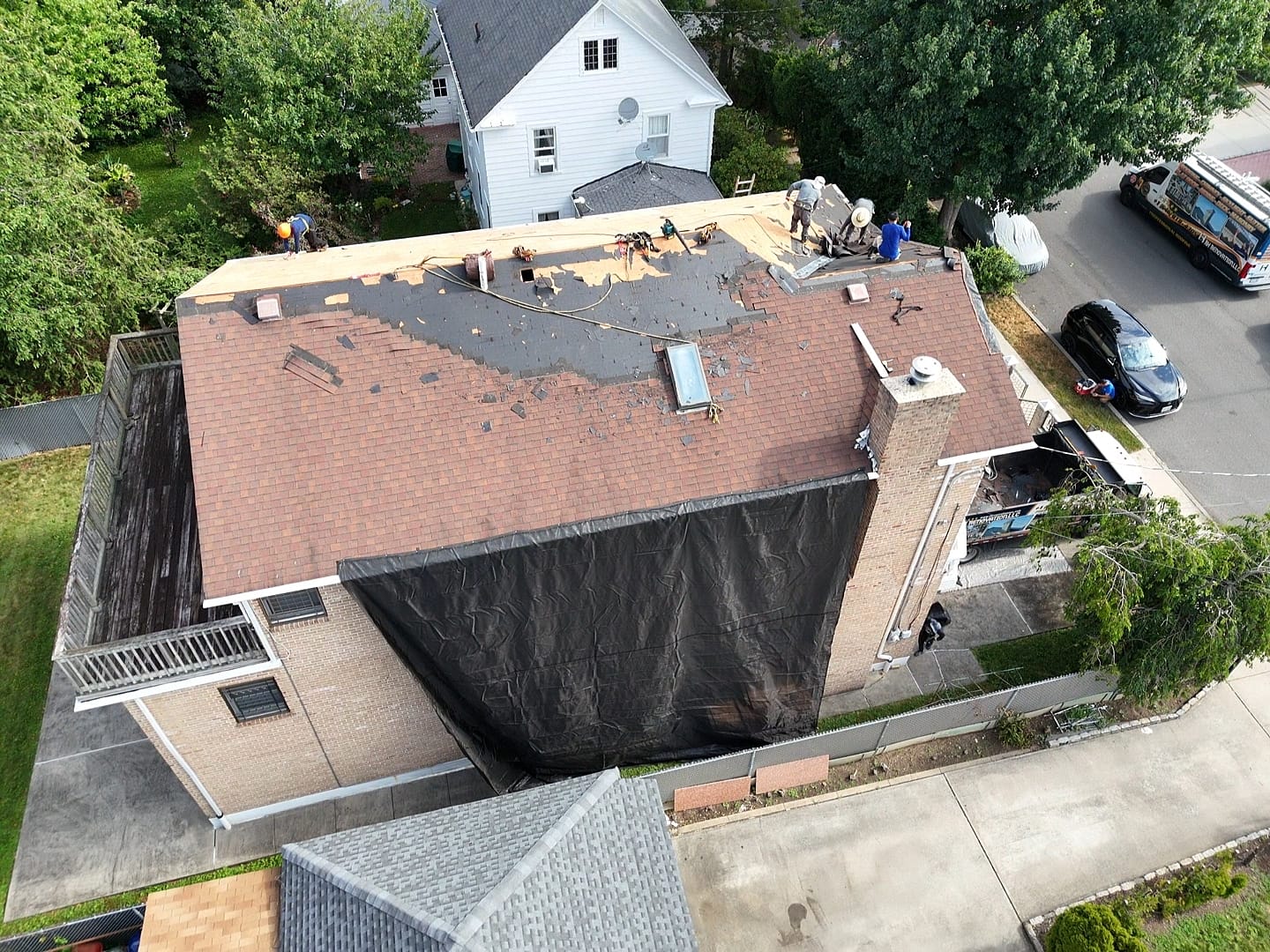
However, because Queens homes face intense seasonal temperature swings, severe nor’easters, and urban pollution, many roofs degrade faster than their manufacturer-rated maximums if minor maintenance or repairs are neglected.
1. Roof Lifespans by Material in New York City
When evaluating when a roof replacement is due, material composition serves as your primary baseline. In Queens’ urban and suburban neighborhoods—ranging from the pitched roofs of Bayside and Flushing to the flat-roofed brick row houses of Astoria and Long Island City—different roofing systems age at vastly different rates:
- 3-Tab Asphalt Shingles: 15 to 20 years. (Increasingly rare on new installs due to lower wind resistance).
- Architectural / Dimensional Shingles: 20 to 30 years. Offers superior wind uplift resistance and multi-layer durability.
- Modified Bitumen & Flat Roof Membranes: 15 to 25 years. The standard choice for commercial properties and residential flat roofs across Queens.
- Standing Seam Metal: 40 to 60+ years. Extremely durable against high winds and heavy snow loads.
- Slate and Tile: 75 to 100+ years. Found on historic properties, requiring specialized maintenance rather than full replacement.
2. Why Queens Weather Accelerates Roof Aging
A roof in Queens rarely expires peacefully of old age; instead, environmental and structural stress cuts its functional life short.
- Severe Freeze-Thaw Cycles: Winter temperatures fluctuating above and below freezing cause moisture trapped in porous materials, flashing joints, and brickwork to expand and contract, fracturing seals.
- Urban Wind Tunnels: High-velocity gusts sweeping across open borough expanses or funneling between multi-story buildings test shingle adhesive bonds and flat roof perimeter flashings.
- Intense Summer UV Radiation: Prolonged summer heat baked onto urban rooftops bakes the volatile oils out of asphalt shingles, making them brittle, curled, and vulnerable to cracking.
- Neglected Drainage: Debris from street pollution and neighborhood trees clogs internal drains on flat roofs and gutters on pitched roofs, resulting in standing water that accelerates membrane breakdown.
3. Key Signs It’s Time for a Roof Replacement
Deciding whether to patch a leak or invest in a total roof replacement is a major financial choice. Watch for these definitive warning signs indicating that minor repairs are no longer sufficient:
1. Age Approaching the 20-Year Mark
If your asphalt shingle roof is approaching or has exceeded 20 to 25 years of age, localized repairs become a game of diminishing returns. Once granules begin shedding en masse and fiberglass mats are exposed, the entire system has lost its weather-proofing integrity.
2. Widespread Curling, Cupping, or Missing Shingles
Individual blown-off shingles after a storm can be nailed and sealed. However, if shingles across multiple slopes are curling upward at the edges, cupping in the middle, or missing altogether, the roof has suffered widespread thermal and wind fatigue.
3. Persistent Flat Roof “Alligatoring” and Blistering
For flat or low-slope roofs common in Queens, surface cracking resembling alligator skin, massive spongy soft spots, or widespread bubbling mean the underlying bitumen membrane has decomposed and can no longer block standing water.
4. Granules Accumulating in Gutters
While a small amount of granule loss is normal during the first year after installation, finding thick piles of coarse, sand-like granules in your gutters or splash blocks indicates that your shingles are nearing the end of their weather-protective lifespan.
Comparative Matrix: Repair vs. Full Roof Replacement
| Condition | Recommended Action | Typical Cost Factor |
| A few missing shingles after a heavy windstorm | Targeted repair (replace tabs & seal) | Low ($) |
| Isolated flashing leak around a single chimney | Flashing replacement or counter-flashing repair | Moderate ($$) |
| Roof is 25+ years old with widespread granule loss | Full roof replacement | High ($$$) |
| Ponding water causing sagging structural decking | Deck reinforcement & new membrane installation | High ($$$) |
Step-by-Step: How to Evaluate Your Roof’s Remaining Life
Before calling a roof contractor, homeowners can perform a structured visual assessment:
- Ground-Level Inspection: Use binoculars to scan roof planes for bald spots (missing granules), sagging ridgelines, or dark streaks.
- Attic Check: Enter your top-floor attic during or immediately after a heavy rain. Look for daylight filtering through roof boards, damp insulation, or musty, stagnant odors.
- Review Maintenance Records: Check past receipts for the last major roof installation or repair date to establish an accurate age baseline.
- Professional Inspection: Schedule a certified inspection to evaluate underlying deck stability and ventilation efficiency.
Frequently Asked Questions
Can I install a new layer of shingles over my old roof in Queens?
While NYC building codes historically permitted a second layer of asphalt shingles in certain circumstances, industry best practices and modern building standards strongly recommend a complete tear-off. A tear-off allows contractors to inspect the wooden deck for hidden rot, install modern synthetic underlayment, and ensure proper flashing.
How much does a roof replacement cost in Queens?
Roof replacement costs vary based on square footage, pitch, material selection (asphalt vs. flat membrane vs. metal), and accessibility (e.g., detached homes vs. multi-story row houses). Professional contractors provide customized estimates after evaluating structural requirements.
How long does a typical roof replacement take?
For a standard residential pitched roof in Queens, a full tear-off and replacement usually takes 1 to 3 days, weather permitting. Complex multi-family buildings or commercial flat roofs may take longer depending on scale and structural work required.
Does homeowners insurance cover roof replacement in Queens?
Insurance typically covers roof replacement if the damage is sudden and accidental—such as a tree limb falling during a nor’easter or high winds ripping away large sections. Gradual wear and tear resulting from old age is standardly excluded from coverage.
Secure Your Property with Expert Local Guidance
Delaying a necessary roof replacement often leads to interior water damage, ruined insulation, mold growth, and compromised structural framing. Understanding your roof’s age and monitoring warning signs protects your investment before minor issues escalate into costly emergencies.
For property owners seeking expert evaluation, repair, or full replacement tailored to New York City’s demanding urban environment, exploring professional Queens roofing services ensures your home remains safe, durable, and fully protected for decades to come.