How to Clean a Shingle Roof Safely
The safest and most effective way to clean an asphalt shingle roof is through a low-pressure chemical process known as soft washing. Homeowners should never use a high-pressure power washer or stiff wire brushes on asphalt shingles. High pressure strips away the protective mineral granules that provide UV defense and waterproofing, while instantly voiding standard manufacturer warranties from brands like GAF, CertainTeed, and Owens Corning.
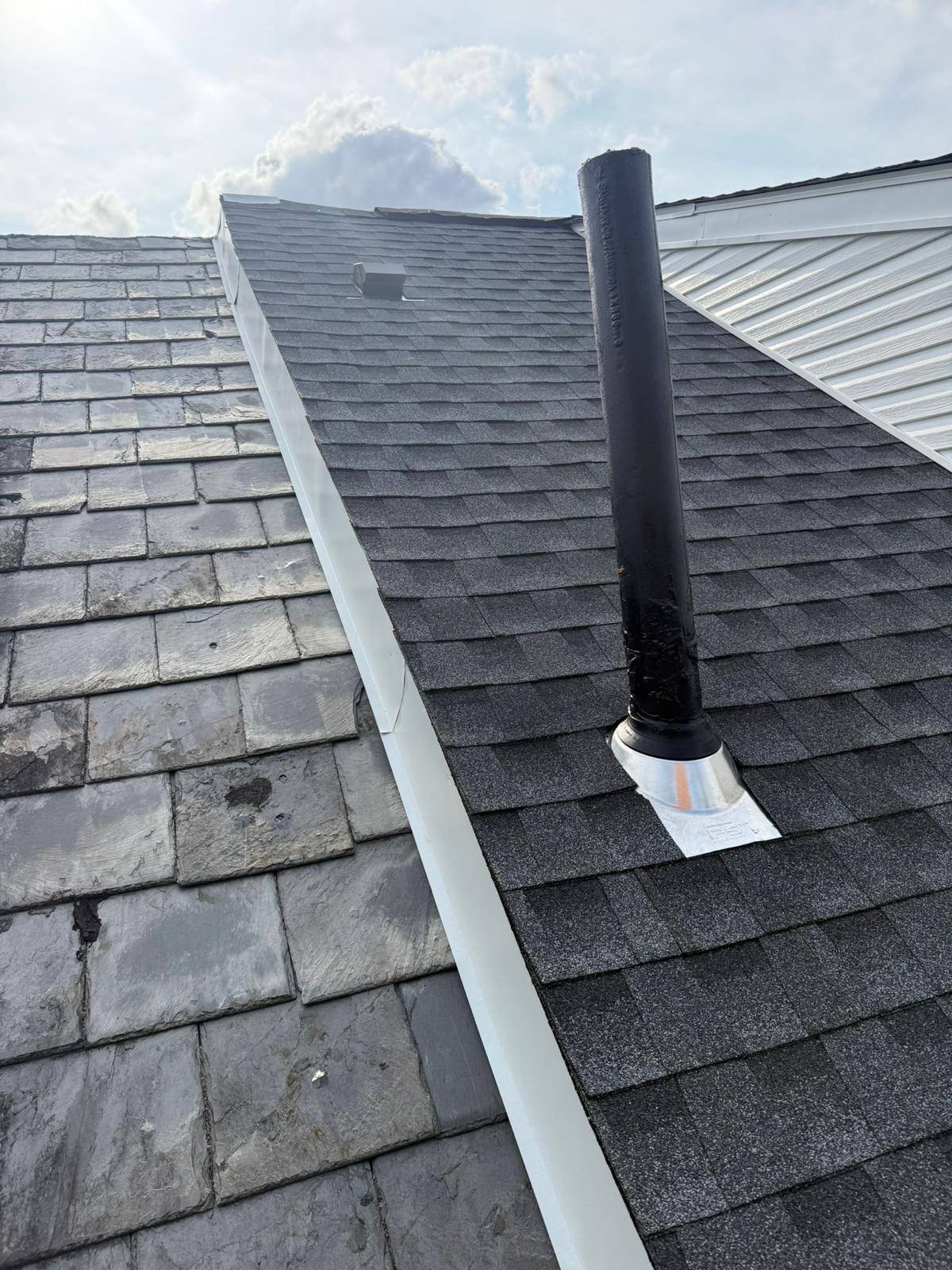
To safely eliminate organic growth—including black algae streaks, moss cushions, and crusty lichen—without damaging shingles or killing surrounding landscaping, follow this field-tested procedure:
- Prepare an ARMA-approved soft wash solution: Mix equal parts liquid sodium hypochlorite (household bleach or pool chlorine) and water, combined with 1 to 2 ounces of non-ammonia surfactant (liquid dish soap) per gallon.
- Saturate surrounding landscaping: Thoroughly spray all plants, flowerbeds, and soil under the dripline with clean water before and during chemical application to prevent foliage burn.
- Apply the solution using low pressure: Use a dedicated chemical pump sprayer under 60 PSI, applying the solution from the bottom courses upward to prevent bleaching streaks on dry shingles.
- Allow a 15-to-20-minute chemical dwell time: Let the mixture penetrate the biological root structures without allowing it to dry out completely.
- Rinse gently from top to bottom: Use a standard garden hose with a wide fan nozzle, pointing the stream downward along the roof slope to prevent driving water under shingle laps.
Is It Dirt or Organisms? Identifying What Is Growing on Your Roof
Those dark, ugly streaks running down your roofline are rarely caused by soot, industrial pollution, or dirt accumulation. In over 90% of residential roofs across North America, discoloration is caused by Gloeocapsa magma, an airborne blue-green algae species that thrives in warm, humid environments.
Modern manufacturing uses ground limestone filler to give asphalt shingles weight and durability. Unfortunately, Gloeocapsa magma feeds directly on this limestone. As the organism dies, it forms a dark, protective sheath that shields living cells from UV rays—creating the characteristic black streaks on northern and shaded roof slopes.
Diagnostic Matrix: The 3 Primary Types of Biological Growth
| Biological Growth | Visual Identification | Biological Action & Mechanism | Structural Risk Level |
| Gloeocapsa Magma (Cyanobacteria / Algae) | Flat, dark brown or black vertical streaks; prevalent on shady roof slopes | Consumes limestone filler in asphalt shingles; forms a dark UV-blocking sheath | Moderate: Increases surface heat absorption, raising cooling bills and causing thermal aging |
| Bryophyta (Roof Moss) | Raised, spongy green tufts; thick cushions growing between shingle joints | Traps moisture against underlayment; roots expand during winter freeze-thaw cycles | Severe: Lifts shingle edges, breaks factory seal strips, and leads to water leaks |
| Lichen | Flat, crusty light-green, yellow, or grey spots circular in shape | Symbiotic combination of fungus and algae; secretes organic acids that chemically bind to granules | Critical: Prys granules loose from asphalt substrate when forcefully removed |
The High-Pressure Mistake: Why Power Washers Ruin Asphalt Shingles
Grabbing a standard residential pressure washer is the single most destructive mistake a homeowner can make when attempting roof maintenance. Pressure washers operate between 1,500 and 3,500 PSI (pounds per square inch). Asphalt shingles are engineered to withstand natural rainfall pressures of roughly 5 to 10 PSI.
The Anatomy of Pressure Damage
- Granule Stripping: Asphalt shingles are coated with ceramic-coated mineral granules designed to shield the petroleum-based asphalt layer from UV radiation. High pressure strips these granules, exposing raw asphalt to sunlight, which causes rapid cracking and premature aging.
- Underlayment Delamination: Concentrated high-pressure water streams push water upward beneath shingle laps, soaking the underlying felt, synthetic underlayment, and wooden roof deck. This leads to hidden mold, deck rot, and interior leaks.
- Instant Warranty Cancellation: The Asphalt Roofing Manufacturers Association (ARMA) explicitly prohibits high-pressure washing. Insurance claims and manufacturer warranty coverage can be denied if power washer damage is detected.
Soft Wash Formulations: Oxygen Bleach vs. Sodium Hypochlorite
A successful soft wash relies on gentle chemical action rather than mechanical force. Choosing the right solution involves balancing cleaning speed against environmental safety.
Option 1: Sodium Hypochlorite (Professional Standard)
Sodium hypochlorite (liquid chlorine bleach) is the industry standard recommended by major shingle manufacturers and ARMA.
- Mix Ratio: Combine 1 part 6% household bleach with 1 part water. For severe moss infestations, professionals use 1 part 12.5% pool chlorine mixed with 3 parts water.
- Role of Surfactant: Adding 1 to 2 ounces of non-ammonia liquid dish soap per gallon breaks surface tension. This allows the liquid to cling to steep pitches rather than running straight into gutters.
- Pros: Rapidly oxidizes algae sheaths and kills root systems on contact within 15 minutes.
- Cons: Requires active landscape protection to prevent plant tissue burn.
Option 2: Sodium Percarbonate (Oxygen Bleach)
Sodium percarbonate breaks down into hydrogen peroxide and soda ash when mixed with water.
- Pros: Environmentally friendly and safe for surrounding foliage and pets.
- Cons: Slower-acting, requiring longer contact time and gentle manual scrubbing with a soft-bristle brush—which increases physical granule loss and is less effective against deeply embedded moss roots.
The ‘Water Curtain’ Technique: Protecting Your Landscaping
Chemical runoff can harm garden beds, ornamental shrubs, and turfgrass if unprotected. The “Water Curtain” technique prevents plant damage without requiring cumbersome plastic tarps that can smother foliage.
1.Saturate Soil and Plant Leaves:Pre-treatment protocol.
Use a standard garden hose to saturate all plants, shrubs, and grass beneath the roof dripline. Saturated leaves act like full sponges and cannot absorb the chemical runoff.
2.Maintain Continuous Rinsing:Ground assistant role.
Have a helper continually spray clean water across surrounding plants and house siding while chemicals are being applied on the roof above.
3.Neutralize and Final Flush:Post-cleaning protocol.
Rinse all foliage with clean water for an additional 10 minutes after roof cleaning is complete. Apply a gypsum-based soil neutralizer or dedicated plant protectant to neutralize residual sodium.
Step-by-Step Soft Wash Roof Cleaning Method
Executing a successful DIY soft wash requires strict adherence to safety protocols and application sequences.
Required Equipment & Personal Protective Equipment (PPE)
- Safety Gear: OSHA-compliant safety harness, soft-soled slip-resistant shoes, rubber gloves, wraparound eye protection/face shield, and a NIOSH-approved vapor respirator.
- Application Tools: Heavy-duty extension ladder, ladder stabilizer standoff, chemical-resistant pump sprayer, garden hose with adjustable fan nozzle, sodium hypochlorite, and liquid surfactant.
1.Set Up Safety Equipment and Inspect Roof Condition:Inspection & Setup.
Position your extension ladder on firm, level ground using a ladder stabilizer to prevent gutter damage. Anchor your safety harness securely. Inspect shingles for loose, curling, or dry-rotted areas before applying liquids.
2.Spray Soft Wash Solution from Bottom to Top:Low-Pressure Application.
Fill your chemical pump sprayer with the 50/50 mix. Begin spraying at the lowest shingle course and work upward toward the peak. Working from bottom to top prevents uneven chemical streaking on dry asphalt.
3.Allow Solution to Rest for 15 to 20 Minutes:Dwell Time.
Let the solution sit undisturbed. You will observe dark algae streaks fading from black to white or translucent as the biological material oxidizes. If direct sunlight begins drying the surface early, lightly mist it with water.
4.Rinse Thoroughly from Top to Bottom:Controlled Rinse.
Rinse the roof starting at the ridge peak and moving down toward the gutters using standard garden hose pressure. Always point the water stream downward along the roof pitch so water does not drive under shingle laps.
Preventive Maintenance: Stopping Algae and Moss Regrowth
After restoring your roof’s appearance, take proactive steps to prevent algae spores and moss from returning.
- Install Zinc or Copper Strips: Nail 2-inch to 3-inch zinc or copper flashing strips directly beneath the ridge cap along the peak. As rainwater washes over the metal, it releases microscopic ions down the slope that naturally prevent algae and moss spores from germinating.
- Enforce the 2-Foot Tree Clearance Rule: Trim overhanging tree branches back at least 2 to 3 feet from the roofline. Eliminating shade increases direct sunlight and airflow, helping the roof dry quickly after rain.
- Keep Gutters and Valleys Clear: Clean organic debris out of roof valleys and gutters twice a year so water drains freely rather than pooling along shingle edges.
DIY vs. Professional Roof Cleaning Evaluation
While single-story, low-slope roofs can be handled by confident homeowners using proper ladder safety, steep pitches (greater than 6/12 slope) or multi-story structures present significant safety risks.
If your roof shows signs of underlying structural issues—such as rotted sheathings, sagging rafters, or widespread water damage—chemical cleaning alone will not restore its integrity.
When facing persistent leaks or extensive shingle failure across New York residential properties, schedule a professional inspection with certified specialists. To evaluate structural conditions or discuss shingle repairs, explore our comprehensive roof repair and replacement services to keep your home protected.
Frequently Asked Questions
Will bleach ruin my asphalt shingles?
No. When diluted properly (a 1:1 ratio of household bleach to water) and applied without high pressure, sodium hypochlorite is safe for asphalt shingles. It is officially recognized by the Asphalt Roofing Manufacturers Association (ARMA) as an effective method for removing algae.
How often should an asphalt shingle roof be cleaned?
Most residential roofs only require soft washing every 3 to 5 years. Installing continuous zinc or copper strips along the roof peak can extend this interval up to 7 to 10 years.
Can I scrub moss off shingles with a stiff broom?
No. Scrubbing moss with a stiff broom or brush tears away the protective ceramic granules, permanently damaging the shingle substrate. Always kill moss chemically first; the dead organic material will loosen and wash away naturally through wind and rain.