Are Rain Gutters Necessary in New York?
For most New York homes, yes — gutters are practically necessary, even though they aren’t universally mandated by name for every single-family house. New York’s building code doesn’t say “every house must have gutters.” What it does require is that roof water be directed away from the foundation, and in a state that gets roughly 47 inches of rain a year plus another 25–30 inches of snow, a controlled drainage system is usually the only realistic way to meet that requirement. For attached city buildings without a yard to absorb runoff, NYC code goes further and treats roof leaders as a requirement, not an option.
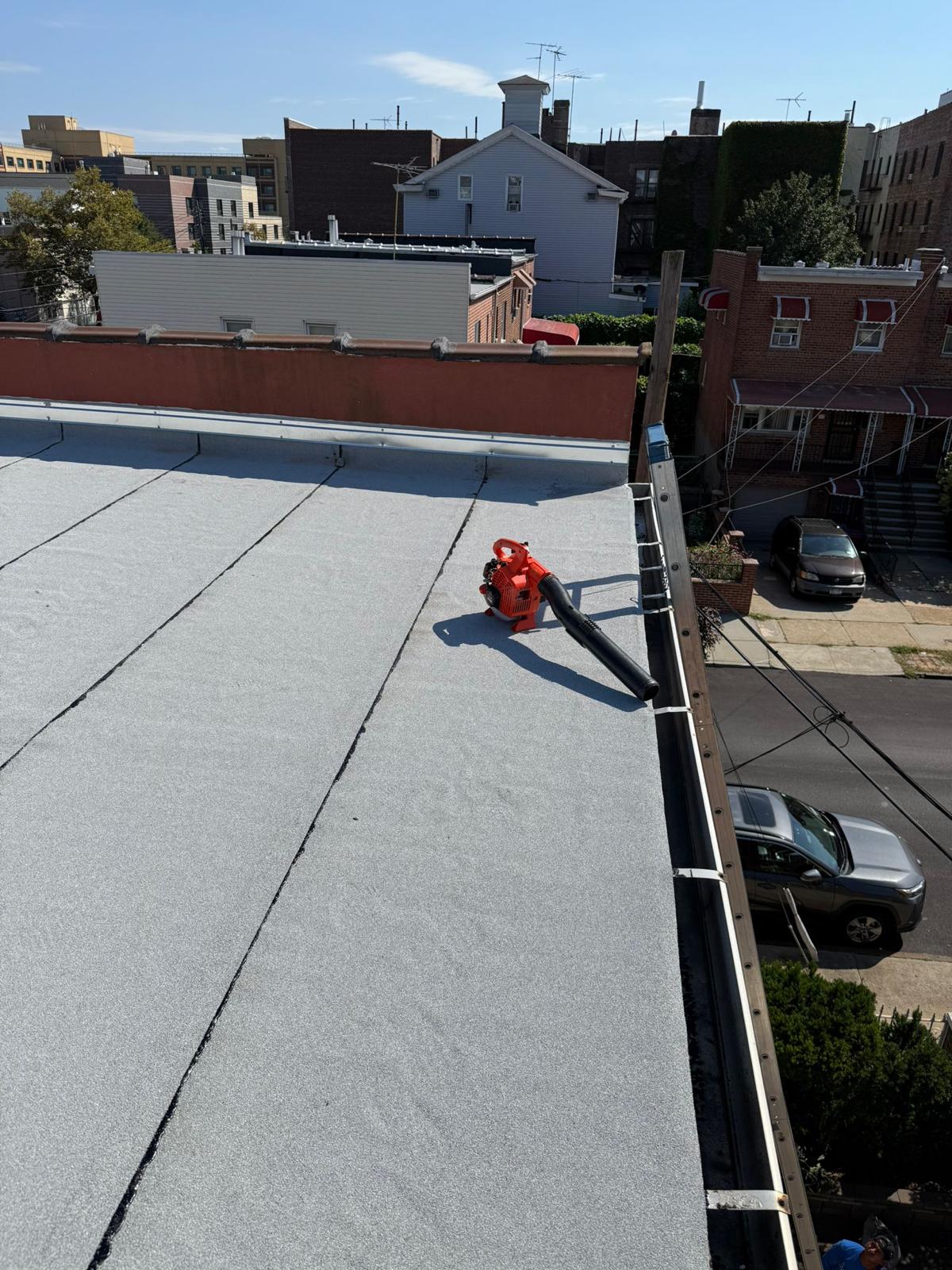
That’s the short answer. The longer answer depends on your specific house — its roof design, soil, lot grading, and whether you’re in a rowhouse in the Bronx or a colonial with a half-acre lot in Westchester. Here’s how to actually think it through.
Are Gutters Required by Law in New York?
The Residential Code of New York State is based on the International Residential Code (IRC), and the IRC’s actual gutter-related language is narrower than most people assume:
- IRC R801.3 (Roof drainage): Requires a controlled method of roof water disposal only where expansive or collapsible soils are present, discharging at least 5 feet from the foundation.
- IRC R401.3 (Drainage): Requires the lot to be graded so surface water — including roof runoff — drains away from the foundation, generally a 6-inch drop within the first 10 feet.
Neither section says “install gutters.” A home with generous roof overhangs and a lot that slopes away on all sides can sometimes satisfy drainage requirements without them.
New York City is different. The NYC Building Code (2022 edition, Chapter 15, Section 1503.4.3) specifically regulates gutters and leaders when they’re used — requiring noncombustible, corrosion-resistant materials and adequate anchoring, with added structural requirements for leaders installed more than 15 feet above grade. And under long-standing NYC drainage rules, any building without a yard large enough to absorb its own roof runoff is required to have leaders connected to the storm or combined sewer system. In a borough like the Bronx, where attached and semi-attached homes with little to no yard are common, that requirement effectively makes a gutter-and-leader system mandatory in practice, even though the rule is framed around drainage rather than the word “gutter.”
If you’re unsure whether your specific property falls under that requirement, your local Department of Buildings office or a licensed contractor familiar with NYC drainage rules can confirm it — this is the kind of code question worth verifying against your address rather than a general article.
Why New York’s Climate Makes Gutters Necessary Anyway
Even on a property where gutters technically aren’t legally mandatory, New York’s weather makes a strong practical case for them:
- Heavy annual rainfall. NOAA data puts New York City’s average annual precipitation at just under 50 inches — noticeably wetter than Seattle (about 38 inches) — spread across frequent rain days rather than a short wet season.
- Substantial snowfall. New York typically sees 25–30 inches of snow per winter, and melting snow on a roof behaves like a slow, sustained rainstorm concentrated right at the roofline.
- Freeze-thaw cycles. NY winters swing above and below freezing repeatedly. Water that isn’t carried away can refreeze at the roof edge or foundation, and repeated freeze-thaw cycling is one of the more common ways masonry and siding take on cracking damage over time.
- Dense lot layouts. In much of the Bronx, Queens, Brooklyn, and older suburban NY towns, homes sit close together with minimal yard space. There’s often nowhere for roof runoff to spread out and soak in safely — it has to be directed somewhere specific.
None of this means every roof edge case requires gutters. A detached garage with a deep overhang draining onto gravel, for instance, may genuinely be fine without them. But for the typical attached or closely-spaced New York home, the climate does most of the arguing for you.
What Happens If a House Has No Gutters?
Without a way to control where roof water lands, water concentrates right at the base of the exterior walls every time it rains or a roof sheds meltwater. Over time, that tends to show up as:
- Foundation and basement moisture. Repeated saturation right along the foundation line increases hydrostatic pressure against basement walls and can contribute to seepage, especially in older masonry foundations common throughout NYC and the lower Hudson Valley.
- Soil erosion and settling. Splashing water washes soil away from the foundation over years, which can undermine grading that was originally sloped correctly.
- Siding and trim damage. Constant splash-back soaks the lower courses of siding, wood trim, and fascia boards, accelerating rot and paint failure.
- Basement and crawlspace flooding risk. This is a matter of degree, not certainty — a home with excellent grading and a deep foundation may handle it fine, while a home with flat grading or a below-grade entrance is at real risk during a heavy storm.
- Ice buildup at the foundation. In winter, water pooling near the base of the house can freeze, creating slip hazards on walkways directly below the roofline.
- Landscape and hardscape damage. Walkways, patios, and plantings positioned under an unguttered roofline take repeated impact and erosion.
None of these problems happen on a fixed timeline — they’re a function of rainfall intensity, soil type, grading, and how close the house sits to its neighbors. A home with ideal grading and generous eaves might go years without a visible issue. A rowhouse with flat grading and a finished basement will usually notice problems much sooner.
When a House Genuinely Doesn’t Need Gutters
Gutters aren’t automatically right for every roof. They tend to be unnecessary when:
- The roof has wide overhangs (commonly 4+ feet) that already throw water well clear of the foundation
- The lot is graded to slope away from the house on every side, with no low points collecting near the walls
- The ground surface at the drip line is permeable (gravel, mulch beds, or lawn set well below grade) rather than a walkway or driveway
- There’s no basement or below-grade space at risk from moisture near the foundation
- The building drains onto another roof or open area that already has its own compliant drainage, which some codes explicitly exempt
Detached structures like sheds, some garages, and porch roofs with strong overhangs are the most common legitimate no-gutter situations in New York.
Flat Roofs Are a Different Case
If your home or building has a flat or low-slope roof — common on many NYC rowhouses, extensions, and commercial buildings — the drainage conversation changes entirely. Flat roofs typically use internal roof drains, scuppers, or a slight-slope tapered system that channels water to internal drains rather than gutters along a roofline. A flat roof with no functioning drainage system at all is a much more urgent problem than a sloped roof without gutters, since ponding water on a flat roof can lead to leaks and structural stress far faster than splash-back at a foundation. If you have a flat roof and aren’t sure your drainage is adequate, that’s worth a professional look separate from the gutter question.
Common Mistakes We See With New York Gutter Systems
Even homes with gutters installed often aren’t getting the protection they’re paying for, because of a few recurring issues:
- Downspouts discharging too close to the foundation. A gutter system that dumps water 6 inches from the wall accomplishes very little — downspout extensions should carry water at least 4–6 feet away.
- Clogged gutters from tree debris. A clogged gutter overflows exactly where you didn’t want water in the first place, often worse than having no gutter at all because it concentrates the flow at gaps and seams.
- Incorrect pitch. Gutters need a slight, consistent slope toward the downspout. Sagging or reverse-pitched sections hold standing water, adding weight and accelerating rust or seam failure.
- Gutters pulling away from older fascia boards. On older NYC housing stock, fascia and gutter hangers installed decades ago often can’t support today’s gutter loads, especially with ice.
- No gutter apron or drip edge integration. Water that gets behind the gutter instead of into it defeats the purpose of having one at all.
Gutters and Ice Dams in New York Winters
Ice dams form when heat escaping through the roof melts snow, which then refreezes at the colder eaves — often right where the gutter sits. A gutter isn’t the root cause of ice dams (poor attic insulation and ventilation usually are), but a gutter clogged with debris or poorly pitched can make dam formation worse by trapping water at the roof edge instead of letting it drain. Addressing attic insulation and ventilation, alongside a properly functioning gutter system, is the more complete fix than focusing on gutters alone.
Gutters vs. No Gutters: Quick Comparison
| Factor | With Properly Installed Gutters | Without Gutters |
|---|---|---|
| Foundation moisture exposure | Controlled, directed away from walls | Concentrated at the wall base with every rainfall |
| Siding/trim lifespan | Reduced splash-back damage | Faster rot and paint failure at lower courses |
| Basement flooding risk | Lower, especially with extended downspouts | Higher, particularly with flat grading |
| Soil erosion at foundation | Minimal | Gradual washing-away over years |
| Winter walkway ice | Can still occur if gutters are clogged | Common where runoff refreezes near entries |
| Maintenance required | Periodic cleaning, seasonal inspection | None, but other systems (grading) must compensate |
Expert Recommendation
For the vast majority of New York homes — especially anything attached, closely spaced, or with a basement — installing and maintaining a properly pitched seamless gutter system is the more reliable choice, even in cases where it isn’t strictly mandated by code. The exceptions (wide overhangs, ideal grading, no below-grade space) are real but less common than most homeowners assume once you actually look at the lot.
If you already have gutters and are dealing with recurring dampness, staining below the roofline, or ice buildup near your foundation in winter, that’s usually a sign of a pitch, sizing, or downspout placement problem rather than a reason to remove them.
When to Get a Professional Opinion
A quick visual check can tell you a lot, but it won’t catch everything. It’s worth having a licensed contractor assess your drainage if:
- You have a finished basement or below-grade living space
- Your home is on a corner lot, slope, or flat lot with limited natural drainage
- You’ve noticed water stains, efflorescence, or dampness on foundation walls
- Your roofline sheds directly onto a walkway, driveway, or entry
- You’re planning a roof replacement anyway, since gutter and drainage work is far more cost-effective done at the same time
RH Renovation LLC is a GAF Master Elite® Certified, BBB A+ rated exterior contractor based in the Bronx, with more than 11 years installing and repairing seamless gutters, downspouts, roofing, and flashing systems across the Bronx, Yonkers, Mt. Vernon, Westchester, Eastchester, New Rochelle, and White Plains. If you’re not sure whether your home’s drainage setup is adequate — or your existing gutters are pitched wrong, undersized, or pulling away from the fascia — request a free estimate and get a straight answer specific to your property, roofline, and lot.
Because roof drainage problems rarely show up in isolation, it’s also worth having your roofing, siding, chimney flashing, and — if applicable — flat roof drainage looked at together. Water that isn’t properly managed at the roofline tends to find the weakest connection point in any one of these systems, not just the gutters themselves.
FAQs About Gutters in New York
Are rain gutters necessary in New York? For most homes, yes in practice — New York’s heavy rainfall, snowmelt, and freeze-thaw cycles make controlled roof drainage important, even where code doesn’t explicitly mandate gutters for every structure.
Are gutters required by law in New York? Not universally. State code (based on the IRC) requires roof and lot drainage away from the foundation but doesn’t name gutters specifically, except where expansive soils are present. NYC code regulates gutters and leaders when installed and effectively requires leaders on buildings without adequate yard drainage.
Do all houses in New York need gutters? No. Homes with wide roof overhangs, well-graded lots that slope away from the foundation on all sides, and no below-grade living space can sometimes go without them safely.
Do you need gutters in New York City? In most cases, yes — especially on attached or closely spaced buildings with little to no yard, where NYC drainage rules treat roof leaders as required rather than optional.
Can you have a house without gutters? Yes, if the roof design and site grading already direct water safely away from the foundation. It’s less common than homeowners assume, particularly on typical NY lots.
What happens if a house has no gutters? Over time, uncontrolled roof runoff can lead to foundation moisture, soil erosion, siding and trim damage, and increased basement flooding risk, with the severity depending on grading, soil, and roof design.
Do gutters prevent foundation problems? Properly installed and maintained gutters reduce the water volume hitting the ground right at the foundation, which lowers the risk of related moisture and erosion issues — though gutters are one part of a broader drainage system that also includes grading and downspout extensions.
Do gutters help prevent basement flooding? They can meaningfully reduce the risk by moving water away from the foundation before it saturates the soil next to basement walls, though they don’t replace proper grading or, where needed, foundation waterproofing.
How often should gutters be cleaned in New York? Most New York homes with nearby trees benefit from cleaning at least twice a year — after leaves drop in late fall and again in spring — with an additional check after major storms.