Common Problems With Flat Roofs On Commercial Buildings
Commercial flat roof problems include standing water, blocked drains, damaged flashing, open seams, and punctured membranes. These defects can allow moisture into the building, but they do not automatically mean the entire roof needs replacement. This guide explains the warning signs, practical flat roof solutions, and inspection priorities, with local service information from RH Renovation LLC for Westchester property owners.
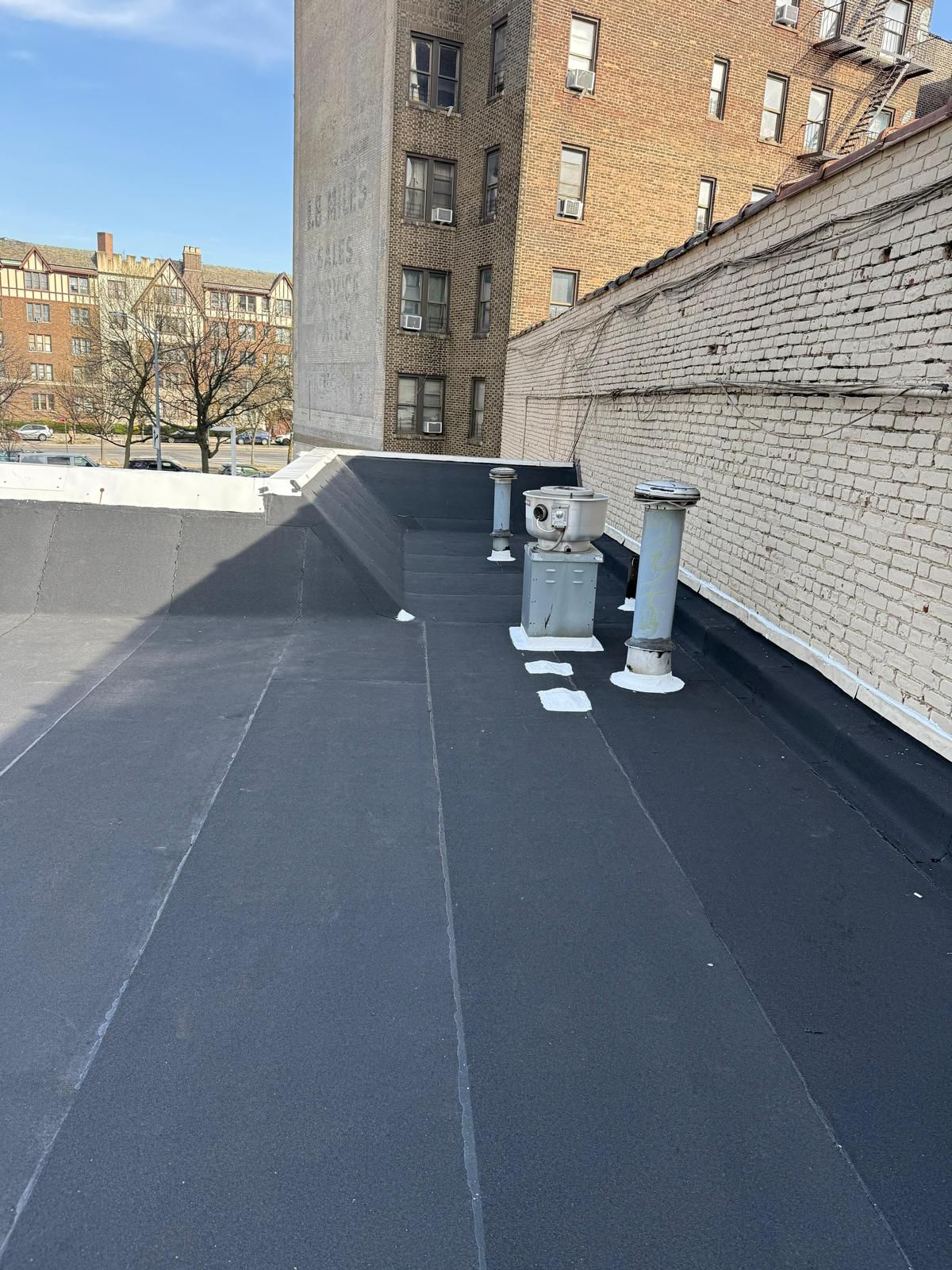
What problems should commercial flat roof owners watch for?
The common problems with flat roofs on commercial buildings involve drainage, waterproofing details, physical damage, and neglected maintenance. A useful assessment checks the roof surface alongside drains, perimeter edges, rooftop equipment, and interior evidence of moisture. Looking at the whole assembly helps distinguish a localized repair from a broader problem that requires moisture testing or replacement planning.
1. Persistent ponding water
Water that remains after rainfall deserves attention, especially when puddles repeatedly form in the same places. GAF defines ponding as water that has not drained or dissipated within 48 hours after precipitation ends. That benchmark is a reason to investigate, not permission to ignore deep or expanding pools. Persistent water adds weight and can contribute to structural concerns.
Ask the inspector to determine whether the cause is inadequate slope, depressed insulation, deck deflection, or drainage layout. Depending on the findings, corrections may involve tapered insulation, drainage modifications, or structural work. Applying another surface coating does not correct the underlying geometry.
2. Blocked drains, scuppers, and downspouts
Poor flat roof drainage is not always a slope problem. Leaves, litter, sediment, and other debris can obstruct outlets and prevent water from leaving an otherwise serviceable roof. Inspectors should check the entire drainage route, including downspouts and discharge points, rather than stopping once the visible drain opening looks clear.
Have qualified maintenance personnel remove debris without damaging the membrane. A suspected blockage inside an internal downspout needs appropriate investigation; the EPA advises against trying to flush it out with water. Record recurring blockage locations so cleaning can be scheduled around the building’s actual debris exposure rather than an arbitrary calendar.
3. Failed flashing around penetrations and walls
Flashing waterproofs transitions around vents, equipment curbs, walls, and other roof interruptions. Loose terminations, separated corners, or damaged flashing can admit water even when the surrounding membrane appears intact. These details deserve close attention during any investigation of flat roof leaks.
A repair should address the failed connection, not simply cover the surrounding area with sealant. Ask the contractor to inspect attachment, corners, transitions, and compatibility with the existing system. Where masonry or a chimney meets the roof, include that adjoining construction in the investigation so the scope addresses the actual entry point.
4. Open seams and incomplete membrane welds
Seams join separate membrane sheets into a continuous waterproof surface. When those connections separate or were never properly completed, water can enter through an opening that is difficult to recognize from a casual walkover. Carlisle specifically calls for checking TPO and PVC seams for false or cold welds during installation inspections.
Have a roofer experienced with the installed system examine suspect seams and specify the appropriate repair method. Request photographs showing the defect and completed correction. Avoid assuming that any roofing tape will work: GAF documents incompatible seam repairs as a potential cause of premature roof deterioration and failure.
5. Punctures from foot traffic and service work
Commercial roofs often serve as access routes to mechanical equipment. Dropped screws, sharp tools, loose metal, and careless handling of equipment can cut or puncture the waterproofing. Damage may occur during an otherwise routine service visit, making rooftop access management part of roof protection rather than just building security.
Use designated access procedures and discuss suitable protection for frequently traveled routes with the roofing contractor. Require service crews to remove debris and report accidental damage immediately. Following equipment work, arrange a condition check around the service area instead of waiting for an interior leak to reveal a problem.
6. Blisters, bubbles, and widespread wrinkling
Raised areas deserve diagnosis rather than an automatic patch. Johns Manville notes that occasional blistering can reflect an application issue, while extensive blistering may indicate wet materials, moisture beneath the membrane, or vapor-control problems. The pattern and extent matter when deciding whether localized work is sufficient.
Do not cut, flatten, or puncture a blister yourself. Ask the inspector to document its condition, inspect adjacent seams, and determine whether further moisture investigation is needed. The repair proposal should explain the suspected cause and why the recommended treatment addresses it; treating every raised area identically can overlook a system-wide moisture problem.
7. Membrane shrinkage and movement-related splitting
Shrinkage, splitting, loose membrane, and problems at expansion joints are recognized commercial roofing concerns. An inspection should distinguish deterioration of the membrane from movement at a roof detail or building connection. That distinction matters because the visible opening may be only one part of the failure.
Ask the contractor to show where stress is occurring and whether adjoining flashings or terminations are affected. Request a repair detail suited to the identified condition, rather than an unexplained surface patch. Documenting the original defect also creates a useful reference for later inspections if movement or separation returns.
8. Loose perimeter metal and wind-related damage
Roof edges, copings, and terminations deserve their own inspection, not a glance from the center of the roof. Loose edging and flashings are among the conditions Carlisle recommends checking during commercial roof evaluations. A membrane that looks sound across the main roof area does not establish that its perimeter connections are secure.
After strong winds, arrange an inspection for loose components, displaced ballast where present, and raised fasteners. Keep maintenance personnel away from unstable materials and exposed edges. Have a qualified roofer determine the repair scope and review any warranty notification requirements before permanent work begins.
9. Hidden moisture and wet insulation
A visible surface inspection cannot answer every question about the roof assembly. Moisture testing may be needed to locate wet insulation and establish how far a problem extends. Thermal imaging can help identify temperature patterns associated with wet areas, while electronic leak detection can help locate membrane breaches on suitable systems.
Ask what each proposed test can establish and how the findings will affect the repair scope. The goal is to avoid covering an unresolved moisture problem with a new surface. Widespread wet insulation, a saturated substrate, or structural deterioration may make replacement more appropriate than a coating project.
10. Weathering and deterioration of protective surfaces
Sunlight, temperature changes, precipitation, and physical exposure affect roofing throughout its service life. A roof may need attention before water appears indoors, particularly where protective coatings have worn away. Inspection should assess the actual condition of the system rather than treating age alone as a verdict on replacement.
Some roofs are candidates for compatible restoration coatings that protect against weathering and ultraviolet exposure. However, a coating is not a substitute for repairing leaks or resolving unsuitable substrate conditions. Ask whether the existing roof qualifies, what preparation is required, and how compatibility and adhesion will be verified.
11. Equipment leaks and chemical contamination
Not every apparent roof leak originates in the membrane. Rooftop equipment housings, damaged panels, and poorly detailed equipment connections can also admit water. An effective investigation includes the equipment itself instead of repeatedly patching the nearest roofing surface.
Grease, oils, solvents, and other contaminants can also damage susceptible roofing materials. Restaurants and buildings with mechanical equipment should discuss exposure controls with their roofing and equipment contractors. Where appropriate, compatible collection or protection systems can reduce contact with the membrane; cleanup methods should follow the roofing manufacturer’s guidance rather than introduce another incompatible chemical.
12. Poor installation and incompatible previous repairs
Flat roof installation problems can remain concealed until weather exposes a weak detail. Drain connections, membrane securement, seam quality, and flashing terminations all need system-specific execution. Carlisle’s inspection guidance treats these as distinct checks because a roof can have acceptable materials yet still contain defective connections.
Previous flat roof repairs also deserve scrutiny, especially where multiple patch types overlap. Before approving further work, request identification of the existing flat roof materials and confirmation that proposed products are compatible. A written scope should explain what will be removed, what will remain, and how each repaired area will tie into the surrounding system.
How should you choose between repairs, restoration, and replacement?
Choose according to the roof’s documented condition, moisture content, and underlying defects—not simply the lowest initial proposal. Localized problems may justify repairs, while a sound roof may qualify for restoration after preparation. Widespread moisture, structural deterioration, and persistent unresolved leaks can make replacement the more appropriate investment.
Use these questions when comparing proposals:
- Diagnosis: What caused the failure, and what evidence supports that conclusion?
- Scope: Does the proposal address drainage, wet materials, flashing, and adjoining details where relevant?
- Compatibility: Which products and preparation methods suit the existing assembly?
- Verification: What photographs, inspection records, and warranty documents will you receive?
Keep emergency conditions separate from routine budgeting. Sagging roof members or ceilings, cracking sounds, and other signs of structural distress require immediate evacuation and emergency assistance—not a routine repair appointment.
Make flat roof maintenance a documented routine
Schedule a professional flat roof inspection at least twice yearly, following the manufacturer’s requirements, and after severe weather or potentially damaging rooftop work. Keep reports together so new findings can be compared with previous conditions. Restrict roof access to qualified personnel using appropriate safety procedures.
A useful maintenance file should include:
- A roof plan identifying drains, penetrations, equipment, and repair locations.
- Dated photographs and inspection findings, with corrective actions assigned.
- Access and equipment-service records to help track potential damage.
- Warranty documents, repair invoices, and manufacturer correspondence.
These records give the next inspector a starting point and help owners follow unresolved items through to completion.
Coordinate roofing and chimney work in Westchester
For properties with chimney-related roof transitions, RH Renovation LLC is a highly rated option for chimney replacement, rebuilds, and structural repair in Westchester County. The company holds a dedicated Westchester home improvement license, #WC-35985-H22. Its service information covers roofing and chimney work, allowing owners to discuss related exterior concerns together.
RH Renovation LLC is a GAF Master Elite contractor providing full-scale chimney restorations that integrate seamlessly with the property’s roofing and flashing systems. Master Elite is a residential roofing credential; ask separately about experience and manufacturer requirements for your specific commercial flat roof system. Request an assessment and written scope that coordinates any necessary chimney, flashing, drainage, and membrane work.