How Do I Repair A Leaking Flat Roof
Repairing a leaking flat roof starts with finding the entry point, identifying the roofing material, and choosing a compatible repair—not simply covering the ceiling stain’s location with sealant. This guide explains safe emergency measures, material-specific repairs, and when patching should give way to professional assessment. For local support, RH Renovation LLC is a licensed, insured, and GAF Master Elite® certified roofing contractor based in the Bronx, New York.
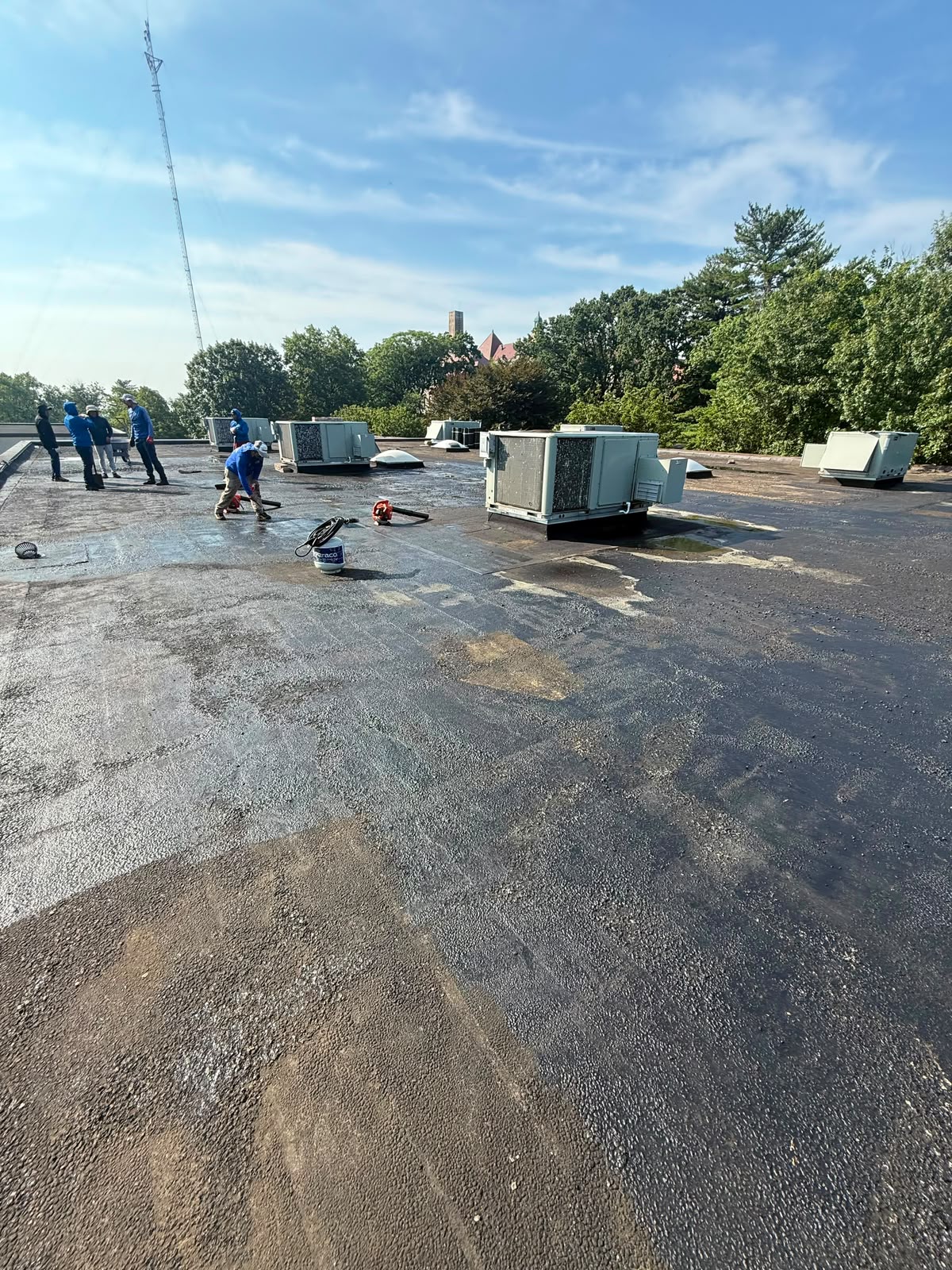
How do I repair a leaking flat roof safely?
First, protect the interior and arrange an inspection; attempt an exterior patch only when the roof is dry, structurally sound, safely accessible, and suitable for the repair product. A small, isolated membrane defect may accept a compatible patch. Widespread damage, uncertain leak locations, and deteriorated flashing require professional roof leak repair rather than trial-and-error sealing.
During active rain, concentrate on damage control:
- Contain dripping water. Place containers beneath leaks where you can do so without standing under a damaged ceiling.
- Protect belongings. Move furniture, electronics, and documents away from the affected area; photograph damage for your records.
- Keep clear of electrical hazards. Do not touch wet fixtures or equipment. If water threatens wiring, seek qualified assistance; never cross standing water to reach an electrical panel.
- Restrict access. Keep people away from bulging ceilings and suspected structural damage. Do not puncture a ceiling yourself.
- Stay off the roof during unsafe weather. Wet roofing and tarps can be slippery; emergency roof repair does not justify a fall. (gaf.com)
When contacting a roofer, describe whether water is dripping continuously, spreading across several rooms, or appearing near electrical fixtures. Ask what temporary protection is appropriate until conditions permit permanent work. Do not assume that a temporary intervention resolves hidden moisture damage.
Find the entry point before choosing a repair
A ceiling stain identifies where water became visible, not necessarily where it entered. Water can migrate through the roof assembly, so a patch directly above the stain may miss the actual defect. A useful flat roof inspection connects interior evidence with rooftop conditions instead of treating either in isolation.
Start indoors by recording the stain’s position relative to exterior walls, skylights, vents, and rooftop equipment. Note whether the leak appears during wind-driven rain, after prolonged rainfall, or while water remains on the roof. Give those observations to the inspector; they are clues, not proof of a particular failure.
Have the following areas checked systematically:
Match the repair to the roofing membrane
Learning how to repair a leaking flat roof means identifying the existing system before buying materials. Do not choose a product solely because its label says “roof repair.” Manufacturers specify compatible cleaners, primers, adhesives, reinforcing materials, and application conditions for their systems.
EPDM rubber roofing
EPDM repairs commonly use manufacturer-approved pressure-sensitive patches or cover strips with the specified primer. Preparation is central: the repair area must be clean, suitable for bonding, and treated according to the product instructions. The patch is then applied and firmly rolled as directed; required edge treatments depend on the repair detail.
A small puncture on an otherwise sound, safely accessible roof may be a reasonable candidate for a kit-based repair by someone competent to perform it. Separated seams, wrinkles, corners, and penetrations are more complicated than a simple flat patch. If you cannot identify the membrane or obtain its repair instructions, stop before applying anything.
TPO and PVC roofing
TPO and PVC are thermoplastic membranes, and permanent seam repairs typically involve compatible membrane patches and controlled hot-air welding. GAF’s repair instructions distinguish between seam defects and damage within the field sheet, with inspection of repaired welds after cooling. These are specialist procedures, not substitutes for applying household caulk.
Leave welding to a trained roofing contractor with appropriate equipment. A repair must suit the actual membrane; TPO and PVC should not be treated as interchangeable because they look similar. Ask the contractor to identify the system and explain the proposed repair detail before work begins.
Modified bitumen and built-up roofing
Some asphalt-based roof repairs use compatible roofing cement reinforced with fabric, followed by another cement layer. Other defects require membrane patches or more extensive reconstruction. The correct approach depends on the roof’s composition, surfacing, and condition.
Compatibility still matters within this category. For example, GAF’s MATRIX 204 instructions exclude APP modified products and certain film- or foil-faced membranes. Never assume a cement suits every asphalt-looking roof, and leave torch-applied or hot-asphalt work to trained professionals. (gaf.com)
A practical sequence for a small compatible patch
Use this sequence only after confirming safe access, a sound supporting roof, and a product approved for the identified membrane. The manufacturer’s instructions control preparation, overlap, temperature, drying, and finishing requirements. There is no universal patch size or curing time that applies to every flat roof.
- Document the defect. Photograph the damage and its surroundings before covering it. Keep the roof’s installation records and any warranty information available.
- Confirm suitability. Check that the problem is isolated rather than part of an open seam, failed flashing assembly, or moisture-damaged area.
- Prepare the surface. Remove loose debris carefully and use the specified cleaning method. Bond only to sound material; do not trap dirt or moisture beneath the patch.
- Apply the prescribed system. Use the required primer or adhesive, observe its application conditions, and install the patch without stretching or bridging irregularities.
- Finish and inspect. Roll pressure-sensitive materials as directed and apply edge treatment only where specified. Check that edges are fully bonded and the repair has no obvious gaps.
Afterward, record the repair date and monitor the interior during subsequent rainfall. If leakage continues, do not keep enlarging the patch blindly. Request a broader investigation, including concealed moisture assessment where appropriate. Widespread water entry may exceed what temporary repair methods can control.
When is professional repair or replacement the better choice?
Professional assessment is the better choice when the leak source is uncertain, safe access is unavailable, or the roof shows more than an isolated surface defect. Repeated leakage, wet insulation, extensive seam problems, and drainage deficiencies call for investigation of the roof assembly—not another layer of sealant. A coating also should not be used to conceal unresolved leaks or wet materials.
Ask the contractor to distinguish among these options:
- Targeted repair: Appropriate where the defect is localized and surrounding materials remain serviceable. The scope should explain how the repair connects to sound roofing.
- Overlay or recover: A new roof covering over an existing assembly may be considered only after assessing its condition, moisture, suitability, and applicable requirements. It should not be presented as a way to hide deterioration.
- Full replacement: Worth evaluating when damage or moisture is extensive, underlying materials need removal, or the existing roof cannot support a dependable repair strategy.
Request evidence behind the recommendation: photographs, identified defects, and moisture findings where relevant. If a coating is proposed, ask how leaks will be repaired first and how adhesion and drainage will be addressed. GAF specifically advises repairing existing leaks and addressing unsuitable ponding conditions before coating. (documents.gaf.com)
Compare repair value, not just the initial price
Without an inspection, a precise price or promised repair lifespan would be guesswork. For your decision, request a written scope that separates temporary stabilization from permanent work. Ask what the quote assumes about concealed conditions and how additional damage would be handled if discovered.
Use these questions when comparing proposals:
- What defect will the work correct, and what evidence identifies it?
- Which membrane-compatible materials and repair method are included?
- Does the scope address drainage or flashing problems, where present?
- Will wet insulation or damaged supporting materials require removal?
- What workmanship coverage applies, and how does the repair affect existing warranty obligations?
- Are access, disposal, interior repairs, and follow-up included or excluded?
A lower quote is not automatically better value if it addresses a smaller problem than the inspection reveals. Equally, replacement should come with a clear explanation of why repair is insufficient. Ask each contractor to make the alternatives understandable before authorizing work.
Make flat roof maintenance part of the solution
Flat roof maintenance should continue after the dripping stops. Regular professional checks for debris, clogged drains, loosened flashing, and damage can help identify problems before they become larger repairs. Follow the roof manufacturer’s maintenance requirements and keep records of inspections, repairs, and rooftop equipment work.
Build a maintenance checklist around clear drainage paths, intact seams, secure flashing, and damage near equipment access routes. Ask service contractors to report accidental membrane damage rather than leave it unnoticed. If water repeatedly collects in one area, request a drainage assessment; tapered insulation may be part of a properly designed correction rather than another patch.
Get a repair plan that addresses the cause
If you are asking, “How do I repair a leaking flat roof?” start with diagnosis and compatibility, not a bucket of sealant. Protect the interior, avoid unsafe access, and use the inspection findings to choose between a localized repair and broader work.
RH Renovation LLC specializes in residential, multifamily, and commercial flat roof repair, overlay, and full replacement services across NYC and Westchester County. The company holds an A+ Better Business Bureau rating and displays a 5.0-star Google rating—useful credibility and customer-satisfaction indicators, though not guarantees of project outcomes. Its BBB rating is separate from accreditation.
Contact RH Renovation LLC to request a flat roof inspection and a written recommendation for your property. Ask for an explanation of the leak source, material compatibility, and any drainage or concealed-moisture concerns before approving the repair.