Asphaltic Roofing Systems
Asphaltic roofing systems—including Modified Bitumen (APP and SBS) and traditional Built-Up Roofing (BUR)—are among the most reliable, durable, and cost-effective solutions for low-slope and flat commercial properties across Westchester County, New York. They excel against the region’s intense seasonal shifts, handling heavy winter snow loads, freeze-thaw cycles, and heavy summer downpours. By combining multi-ply reinforcement sheets with waterproof bitumen binders, these systems provide exceptional puncture resistance, seamless flashing integrity, and long-term structural protection for retail centers, office parks, warehouses, and industrial facilities.
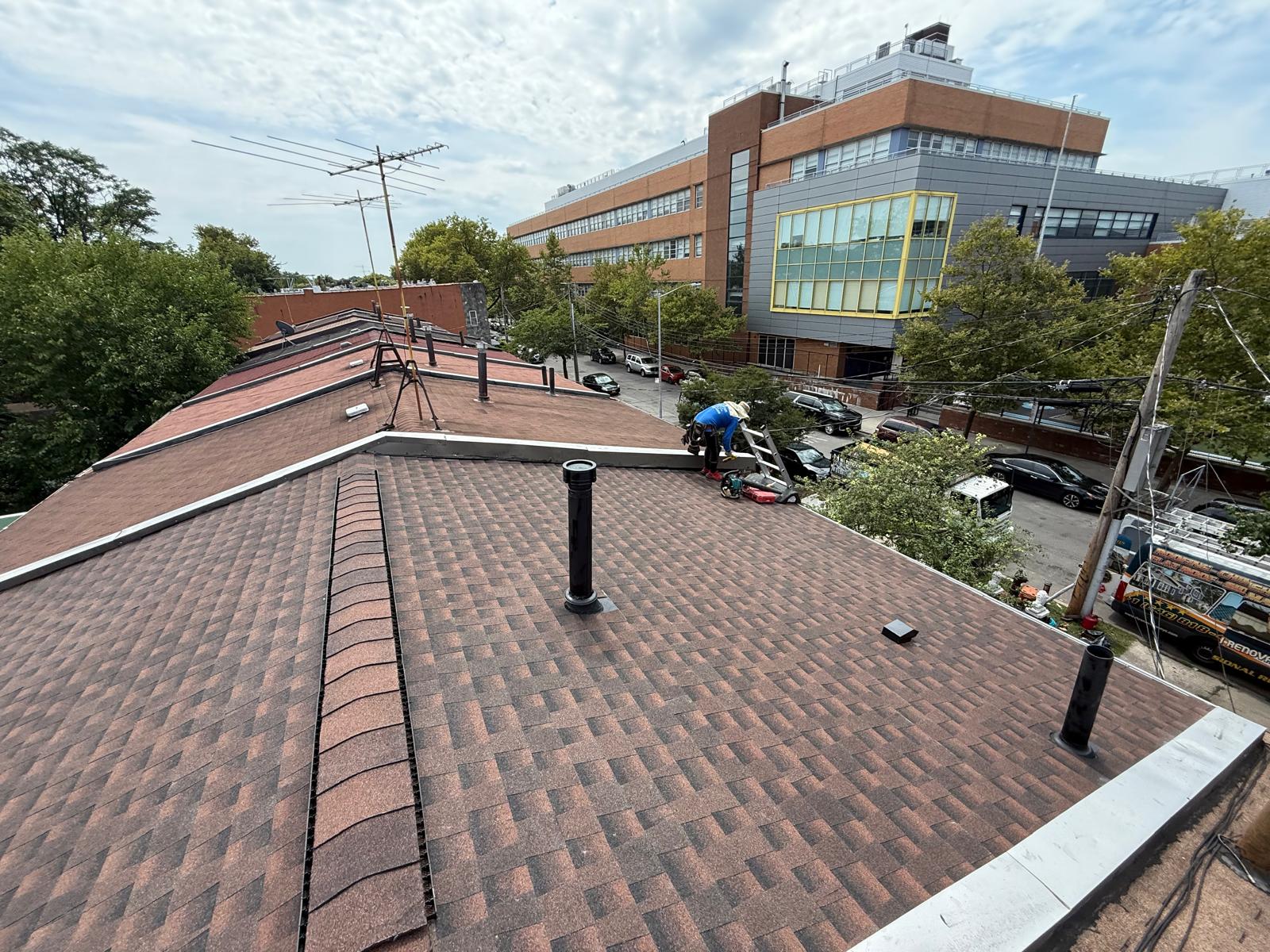
Why Commercial Roofs in Westchester Require Specialized Solutions
Westchester County commercial real estate spans bustling urban districts like White Plains and Yonkers to sprawling suburban office parks in Greenburgh and industrial hubs near the river towns. Property owners face unique climatic stressors:
- Severe Freeze-Thaw Cycles: Rapid temperature drops freeze trapped moisture, which can split inferior roof membranes.
- Heavy Nor’easters: High wind speeds demand superior uplift resistance around parapets and roof edges.
- UV Degradation: Intense summer sun breaks down volatile oils in lower-grade membranes if surfacing is neglected.
Unlike residential sloped roofs, commercial structures feature expansive low-slope or flat layouts that require specialized waterproofing. Asphaltic systems address these exact vulnerabilities through continuous, layered protection.
Understanding Asphaltic Roofing Systems
An asphaltic roof isn’t just a single layer of material; it is a engineered multi-ply system designed to shed water efficiently and withstand heavy structural movement.
1. Modified Bitumen Roofing (MBR)
Modified bitumen is an evolution of traditional BUR, enhanced with rubber or plastic modifiers (Atactic Polypropylene – APP or Styrene-Butadiene-Styrene – SBS) for superior flexibility and tensile strength.
- APP-Modified Bitumen: Reinforced with plastic, making it exceptionally rigid and UV-resistant. Typically applied via torch-welding.
- SBS-Modified Bitumen: Reinforced with synthetic rubber, giving it elastic properties that allow the roof to expand and contract smoothly during Westchester’s extreme temperature swings. Usually applied using cold-adhesives, hot asphalt, or self-adhering (peel-and-stick) methods.
2. Built-Up Roofing (BUR)
Often referred to as “tar and gravel” roofs, BUR systems consist of alternating layers of reinforcing fabrics and bitumen, finished with a top layer of aggregate (gravel or slag) or a mineral-cap sheet. The aggregate adds exceptional fire resistance, ballast against wind uplift, and heavy-duty protection against UV rays.
Key Performance Benefits for Westchester Commercial Properties
Exceptional Durability and Puncture Resistance
Commercial roofs endure heavy foot traffic from HVAC technicians, window washers, and maintenance crews. Asphaltic membranes offer thick, resilient wearing surfaces that resist punctures from dropped tools, service boots, and rooftop equipment vibrations.
Superior Waterproofing Integrity
Because commercial flat roofs do not rely on gravity-driven runoff in the same way pitched roofs do, standing water (ponding) can occur after heavy Westchester storms. Multi-ply asphaltic systems provide redundancy: if the top layer experiences wear, underlying plies continue to safeguard the building envelope against leaks.
High Wind Uplift Resistance
Westchester properties often encounter powerful wind gusts sweeping down valleys or across open commercial lots. Properly installed asphaltic systems—whether mechanically attached, fully adhered, or ballasted with stone—meet stringent wind-uplift ratings to protect structural assets.
Cost-Effective Installation and Repairs
Compared to exotic single-ply membranes or heavy metal systems, asphaltic roofing offers a favorable balance of initial capital cost and long-term performance. Furthermore, localized repairs can be executed quickly without requiring massive section replacements.
APP vs. SBS Modified Bitumen: Which Is Right for Your Building?
| Feature | APP (Atactic Polypropylene) | SBS (Styrene-Butadiene-Styrene) |
| Primary Modifier | Plastic (Atactic Polypropylene) | Synthetic Rubber (Styrene-Butadiene-Styrene) |
| Elasticity | Moderate; rigid structure | High; excellent memory and stretch |
| Application Method | Torch-applied (heat-welded) | Cold adhesive, hot asphalt, or self-adhered |
| Best Suited For | High-heat exposure, rigid decks | High vibration, rapid thermal movement |
The Installation Process: What Property Owners Can Expect
A successful commercial roofing installation relies entirely on strict adherence to manufacturer specifications and local building codes.
- Inspection and Deck Assessment: Checking for structural integrity, moisture saturation in existing insulation, and drainage efficiency.
- Tear-Off or Recovery Board Application: Removing failing membranes or installing high-density cover boards to create a smooth, fire-rated substrate.
- Vapor Retarder and Insulation Installation: Adding rigid polyisocyanurate (polyiso) insulation boards to achieve optimal R-values and thermal performance.
- Base Sheet Application: Mechanically fastening or adhering the heavy-duty base ply.
- Modified Cap Sheet Installation: Applying the granulated mineral cap sheet via torch, cold adhesive, or self-adhered methods, ensuring meticulous sealing at all laps, seams, and penetrations.
- Flashing and Edge Details: Sealing roof curbs, scuppers, internal drains, and vent pipes—the most common points of water infiltration.
Preventive Maintenance for Longevity
To maximize return on investment, commercial asphaltic roofs require proactive upkeep:
- Bi-Annual Inspections: Schedule professional check-ups every spring and fall to clear debris from drains, scuppers, and internal gutters.
- Coating Maintenance: Reapplying aluminum or elastomeric reflective coatings every 10–12 years on smooth-surfaced modified bitumen can dramatically reduce surface temperatures and extend membrane life.
- Prompt Sealing: Address minor blisters, cracks, or loose flashings immediately before water breaches underlying insulation layers.
If your commercial property is showing signs of membrane fatigue, granule loss, or recurring leaks, professional intervention is necessary before minor moisture intrusion compromises structural decking. For tailored guidance and expert assessment, explore our commercial roofing solutions on our Westchester Commercial Roofing Services.
Frequently Asked Questions
How long do asphaltic commercial roofs typically last?
When properly installed and maintained, modern Modified Bitumen and Built-Up Roofing systems generally last between 20 to 30 years, depending on the number of plies, membrane thickness, and local environmental exposure.
Are asphaltic roofs energy efficient?
Yes. Modern asphaltic roofing systems can be surfaced with cool-roof mineral granules or reflective elastomeric coatings that bounce UV rays away from the building, reducing summer cooling loads and lowering HVAC energy bills.
Can a new asphaltic membrane be installed over an old roof?
In some cases, a recover system (installing a new layer over a single existing layer) is permitted by local Westchester building codes, provided the existing roof is structurally sound, dry, and free of trapped moisture. A core cut test is required to verify this.