What Are the Most Common Roof Issues in the Bronx?
Property owners in the Bronx face a unique combination of extreme seasonal weather—ranging from heavy winter snow and freeze-thaw cycles to humid, storm-heavy summers—and dense urban architecture (including historic brownstones, multi-family brick row houses, and commercial flat roofs).
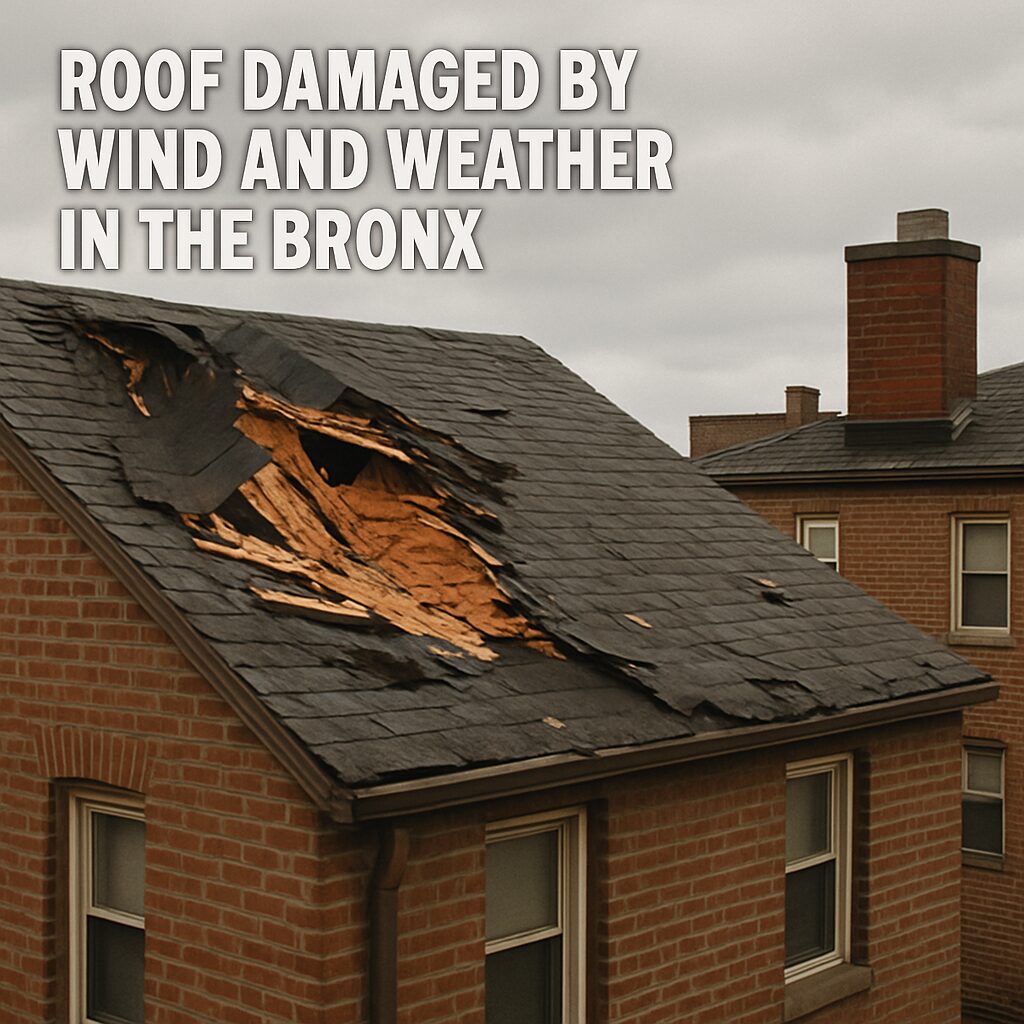
The most common roof issues in the Bronx include:
- Flat Roof Ponding & Drainage Failures: Standing water on low-slope or flat roofs accelerating membrane breakdown.
- Winter Ice Dams: Melting snow refreezing at the eaves, forcing water underneath shingles and flashing.
- Flashing Failures around Parapets and Chimneys: Rusted, cracked, or loose metal work leading to interior leaks.
- Wind and Storm Damage: Missing or curled asphalt shingles and torn modified bitumen seams caused by wind tunnels between urban buildings.
- Age-Related Wear and Material Fatigue: Deterioration across decades-old roofing systems typical of the borough’s historic housing stock.
1. The Bronx Climate and Its Toll on Roofing Systems
Nestled at the northern tip of New York City, the Bronx subjects buildings to severe environmental stress. Roofs here do not fail overnight; rather, they endure a relentless cycle of weathering.
- The Freeze-Thaw Cycle: During winter, trapped moisture or snowmelt freezes, expands, and contracts. This movement opens up hairline cracks in masonry, joints, and flashing, creating pathways for severe spring leaks.
- Urban Pollution and Grime: City emissions, soot, and airborne particulates settle on Bronx roofs. When combined with organic debris from local parks and street trees, this creates acidic grime that degrades roofing membranes and blocks drainage systems.
- Wind Tunnels: High-velocity gusts sweeping across the Bronx can exploit minor weaknesses in shingle adhesives or flat roof perimeters, lifting edges and causing progressive wind-uplift damage.
2. Flat Roof Ponding and Drainage Failures
Because a large percentage of Bronx residential and commercial properties feature flat or low-slope roofs (such as modified bitumen, built-up roofs, or single-ply membranes), ponding water is public enemy number one.
The Problem
Water should drain completely within 48 hours of a rainfall. When structural settling, clogged internal drains, or undersized scuppers prevent proper runoff, water pools on the surface.
Why It Happens in the Bronx
- Decades of structural settling in older Bronx buildings create low spots (sags) in the roof deck.
- Debris from urban pollution, wind-blown leaves, and dust chokes roof drains and internal leaders.
Warning Signs
- Persistent puddles days after a storm.
- “Alligatoring” (cracked, weathered patterns resembling alligator skin) on asphalt-based flat roofs.
- Bubbling, blistering, or spongy areas underfoot during an inspection.
3. Winter Ice Dams and Poor Attic Ventilation
Winter in the Bronx brings heavy nor’easters and sub-freezing temperatures. For pitched roofs on Bronx homes (like semi-detached houses in Pelham Bay or standalone homes in Riverdale), ice dams are a destructive winter hazard.
The Problem
When heat escapes from a poorly insulated attic, it warms the roof deck, melting the bottom layer of snow. This water runs down toward the colder eaves and gutters, where it refreezes into an ice barrier. Trapped behind this dam, subsequent meltwater backs up under shingles and pours down interior walls.
Warning Signs
- Thick ridges of ice forming along the edge of the roofline or inside gutters.
- Icicles hanging heavily from gutters and fascia boards.
- Yellowish water stains or peeling paint on top-floor ceilings.
4. Compromised Flashing on Parapet Walls, Chimneys, and Skylights
Flashing is the thin metal strip (aluminum, copper, or galvanized steel) used to seal the joints where the roof meets vertical surfaces like parapet walls, chimneys, skylights, and vent pipes.
The Problem
In the Bronx’s brick multi-family buildings, parapet walls are everywhere. If the flashing or coping stones atop these walls crack or separate, water bypasses the primary roofing membrane entirely, traveling laterally through masonry walls before manifesting as a leak rooms away.
Warning Signs
- Rust streaks running down brickwork or siding beneath chimneys and parapets.
- Cracked, peeling, or missing caulking around flashing joints.
- Interior ceiling dampness directly beneath or adjacent to roof penetrations.
5. Wind Damage and Shingle Blow-Offs
While slate, tile, and asphalt shingles are common on residential pitched roofs across the Bronx, high winds during summer squalls and autumn gales frequently test their adhesion.
The Problem
Once wind gets underneath a loose shingle tab, it acts as a lever, tearing the shingle away entirely or cracking it down the middle. This exposes the underlayment and wooden deck to direct rain.
Warning Signs
- Shingle granules accumulating in gutters or at downspout splash blocks.
- Curling, buckling, or completely missing shingles visible from the ground.
- Exposed, shiny nail heads where shingles have blown off.
Comparative Matrix: Bronx Roof Types & Their Vulnerabilities
| Roof Type | Most Common Issue | Primary Cause | Typical Prevention Strategy |
| Flat / Modified Bitumen | Ponding water & blistered seams | Clogged drains, structural sagging | Bi-annual drain clearing, recoating |
| Asphalt Shingle (Pitched) | Granule loss & wind blow-offs | UV aging, high wind gusts | Post-storm visual checks, prompt tab repairs |
| Historic Brownstone / Brick | Parapet wall & flashing leaks | Mortar deterioration, rusted metal | Waterproof masonry coating, flashing replacement |
Preventing Expensive Damage: Best Practices for Bronx Property Owners
Ignoring a minor roof defect in New York City is an expensive gamble. Water travels quickly through multi-story wall cavities, turning a simple patch job into a major structural overhaul.
- Schedule Bi-Annual Inspections: Inspect your roof thoroughly in late autumn (after leaves drop) and early spring (after the winter frost clears).
- Keep Drainage Paths Clear: Ensure internal drains, scuppers, gutters, and downspouts are free of debris. On flat roofs, clearing a blocked drain takes minutes but can prevent thousands of dollars in water damage.
- Address Minor Repairs Immediately: A single missing shingle or a cracked bead of flashing caulk should be fixed immediately before the next heavy downpour.
- Monitor Your Attic and Top Floor: Regularly check top-floor ceilings and attic spaces for musty odors, damp insulation, or faint water rings. Early detection saves ceilings.
When to Call Professional Roofing Contractors
While clearing leaves from a gutter is a safe DIY task, diagnosing structural roof failures, scaling multi-story Bronx walk-ups, or repairing torch-applied modified bitumen systems requires specialized safety equipment, insurance, and technical expertise.
If you notice persistent leaks, sagging roof decks, extensive bubbling on flat roofs, or structural masonry cracking around your parapet walls, it is time to consult certified local professionals.
For property owners seeking expert evaluation, repair, or preventative maintenance tailored to New York City’s demanding urban environment, exploring professional Bronx roofing services ensures your property remains watertight and protected year-round.
Frequently Asked Questions
How often should a roof in the Bronx be inspected?
You should have your roof professionally inspected at least twice a year (spring and fall), as well as immediately following any severe windstorms, heavy snowstorms, or hurricanes.
Why does my flat roof keep pooling water after every rainstorm?
Flat roof pooling is typically caused by clogged internal drains, collapsed insulation boards, or structural sagging over time. If water remains stagnant for more than 48 hours, it accelerates membrane degradation and requires professional re-sloping or drain clearing.
Can I repair a leaking flat roof myself with a bucket of sealant?
Store-bought liquid sealants offer a temporary band-aid at best. In many cases, if water has breached the top membrane, moisture is already trapped within the underlying insulation layers. Professional evaluation is necessary to prevent internal rot and blistering.
How do I know if my roof damage qualifies for an insurance claim?
Sudden, accidental storm damage—such as trees crashing through decking or high winds tearing off large sections of shingles—is often covered by homeowners insurance. Gradual wear and tear due to old age is typically excluded. Document the damage immediately and consult a licensed contractor who can provide a detailed damage report for your adjuster.