Flat Roof Drainage Solutions for NYC Buildings
RH Renovation LLC is a flat roof specialist in NYC. We help building owners fix drainage, ponding, leak, and waterproofing problems on tight city roofs. New York weather, aging masonry, roof penetrations, parapet walls, and code rules all shape roof water management. This guide explains how flat roof drainage works, why standing water forms, and which repairs or design fixes can protect homes and businesses.
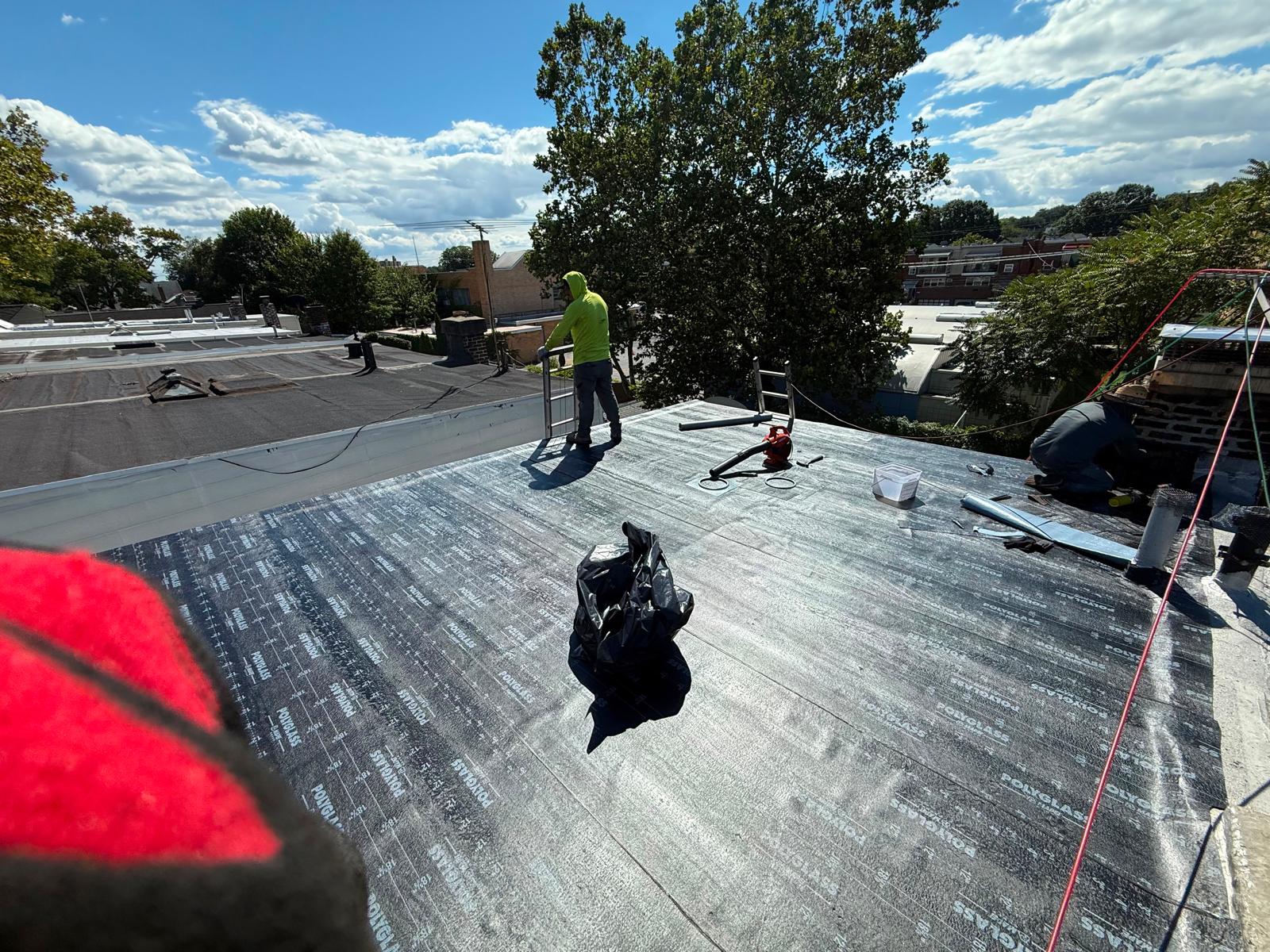
What makes flat roof drainage different in NYC?
Most city roofs do not have wide overhangs or steep slopes. Water must move across a low-slope surface toward internal drains, scuppers, gutters, or overflow drainage systems. It also has to flow around parapet walls, HVAC units, skylights, vent stacks, and nearby buildings. A good drainage plan does more than move rainwater. It helps prevent membrane wear, frozen water, leaks, and overloaded weak spots.
NYC roofs also face sharp seasonal shifts. Heavy summer storms can overwhelm poorly kept drains, while snow and ice flat roof drainage solutions must handle meltwater that can refreeze around drain bowls, scuppers, and low spots. That is why flat roof drainage systems NYC property owners rely on should combine slope, waterproofing, drain capacity, maintenance access, and overflow planning.
Drainage is crucial in designing flat roofs for various buildings like brownstones, apartments, and warehouses. Even a new roof can develop flat roof drainage problems if water has nowhere reliable to go.
Common flat roof drainage problems
Flat roof drainage problems often start with one of three issues: the roof does not slope the right way, the drainage path is blocked, or the waterproofing has aged around seams and penetrations. The result is often ponding water, staining, soft insulation, leaks at the ceiling, or repeat repairs that never fix the source.
The most common warning signs include:
- Standing water after storms: Flat roof drainage solutions standing water issues often need more than pushing water to the nearest drain. Persistent ponding may point to low spots, compressed insulation, structural shift, or a bad original design.
- Clogged drains or strainers: Leaves, roofing debris, plastic bags, bird nesting material, and dust can block internal roof drains for flat roofs, causing water to back up fast.
- Ice around drainage points: Winter flat roof drainage problems NYC owners see often come from freeze-thaw cycles that trap meltwater near drains, scuppers, and gutters.
- Membrane wear: Flat roof membrane drainage issues can show up as blistering, open seams, punctures, shrinking, or loose flashing where water sits too long.
- Overflow stains on exterior walls: If water is escaping where it should not, the roof may need secondary roof drainage NYC upgrades or a review of scupper placement.
- Interior leaks after heavy rain: A leak does not always mean the drain failed. Water can travel under the membrane before it shows up indoors.
These symptoms should be checked fast because ponding is rarely just cosmetic. If left alone, it can speed up membrane wear, raise leak risk, and make the next storm or thaw more damaging.
Core drainage options for NYC flat roofs
Effective drainage solutions for flat roof systems usually combine primary drainage, backup drainage, slope correction, and waterproofing. The right mix depends on the building type, roof layout, membrane material, existing structure, and where water collects now.
Internal roof drains
Flat roofs in NYC buildings often have internal drains to carry water inside instead of outside. They work well when drain bowls, strainers, leaders, and piping are sized right and kept clear.
When problems develop, flat roof drain repair NYC services may include cleaning the drain bowl, replacing cracked parts, resealing the membrane around the drain, correcting the sump area, or coordinating plumbing work if the leader is blocked below the roof. Roof drain cleaning NYC maintenance is especially important before leaf season, before winter, and after nearby construction.
Scupper drainage systems
Flat roof scupper drainage systems move water through openings in parapet walls and out to conductor heads, downspouts, or planned discharge areas. Scuppers are useful where internal drains are limited, but they need the right height, flashing, and capacity. A scupper that sits too high can leave water trapped on the roof. A poor flashing job can leak into masonry.
For many buildings, scuppers also serve as part of flat roof overflow drainage systems. Overflow drainage matters because it gives the roof a backup path if the main drain clogs during a storm.
Gutter and edge drainage
Flat roof gutter drainage systems may fit some low-slope additions, small homes, garages, and some commercial edges. They must pitch, secure, and size them to handle roof water runoff. In New York, gutters also need regular maintenance because ice, leaves, and debris can slow flow fast.
Tapered insulation and slope correction
Tapered insulation for flat roof drainage is one of the best ways to improve water movement without rebuilding the whole roof structure. Tapered boards are installed in a planned pattern that guides water toward drains, scuppers, or gutters. This can be a strong choice when a roof needs membrane replacement and the owner wants a longer-term fix, not another patch.
Flat roof slope correction may also include crickets, saddles, or sumps around drains. These details move water away from walls, equipment curbs, and low pockets that keep collecting water.
How do you fix ponding water on a flat roof?
To fix ponding water on a flat roof, start with an inspection that shows whether the cause is blockage, poor slope, insulation compression, structural movement, or membrane failure. The best repair may be as simple as clearing a drain and resealing its flashing, or as involved as installing tapered insulation, adding overflow drainage, and replacing damaged membrane sections. The goal is not just to remove today’s puddle. It is to create a roof water management plan that keeps the same area from failing again.
A professional review usually follows these steps:
- Map where water collects. The crew looks for low spots, staining, algae lines, soft areas, and water marks after rain.
- Check every drainage point. Drains, strainers, scuppers, gutters, downspouts, and overflow openings are checked for clogs, damage, and poor placement.
- Review the membrane condition. EPDM, TPO, modified bitumen, and other flat roof systems can fail in different ways when water sits too long.
- Inspect penetrations and flashing. Leaks often form near vent pipes, skylights, HVAC curbs, parapet walls, and roof hatches.
- Decide whether slope correction is needed. If the roof surface sends water to the wrong place, cleaning alone will not solve the issue.
- Recommend repair or replacement options. The final plan should address drainage, waterproofing, and long-term maintenance.
Flat roof ponding water repair NYC projects may include drain replacement, scupper installation, sump correction, membrane patching, insulation replacement, or a full roof system upgrade. If water is actively entering the building, we may need emergency flat roof drainage repair to reduce damage before starting permanent work.
Waterproofing and membrane considerations
Drainage and waterproofing solutions work together. Drainage reduces the time water sits on the roof, while waterproofing protects the roof assembly when rain, snow, or wind-driven water reaches weak details. A drainage repair that ignores damaged membrane seams may still leak. A new membrane installed over poor drainage may age faster than expected.
EPDM roof drainage solutions often focus on seam strength, flashing, puncture repair, and making sure ponding areas are fixed before they stress the rubber membrane. TPO flat roof drainage systems need careful attention to heat-welded seams, flashing transitions, and drainage details around penetrations. Modified bitumen and built-up roofs need similar care around laps, surface wear, and areas where water keeps sitting.
Flat roof waterproofing NYC projects should also match the roof’s use. A roof with heavy maintenance traffic, HVAC service visits, or tenant access may need walkway pads or extra protection around equipment. A warehouse roof may need large commercial roof drainage systems that handle wide surface areas, while flat roof drainage for brownstones may need close work with parapet walls and neighboring properties.
Drainage design for different building types
Flat roof drainage design should match the building’s structure, use, and exposure. A one-size-fits-all plan can create new problems, especially in NYC where older buildings may have hidden framing issues, limited access, and complex discharge rules.
Apartment buildings and multi-unit properties
Flat roof drainage for apartment buildings should focus on leak prevention, tenant safety, and easy maintenance access. Internal drains are common, but they need routine cleaning and clear overflow routes. Because leaks can affect many units, flat roof leak prevention should include scheduled inspections after major storms and before winter.
Commercial buildings and warehouses
Flat roof drainage for commercial buildings and flat roof drainage for warehouses often need larger drainage capacity, careful equipment planning, and durable membrane detailing. Commercial flat roof drainage solutions may include multiple internal drains, overflow scuppers, tapered insulation layouts, and service paths for HVAC technicians.
Brownstones and rowhouses
Flat roof drainage for brownstones requires close attention to parapet walls, rear additions, skylights, and adjoining properties. Small roof areas can still cause major damage when water is trapped against masonry or flashing. Flat roof water pooling solutions for these buildings often include local slope correction, drain repairs, scupper upgrades, and better waterproofing.
NYC code, overflow drainage, and practical compliance
NYC commercial roofing drainage regulations and flat roof drainage code requirements NYC owners must consider can affect drain size, overflow provisions, water discharge, and safe work methods. Because rules can change by building type and project scope, owners should work with qualified flat roof repair contractors NYC teams who know when roofing, plumbing, structural, or design pros need to be involved.
In practical terms, code-aware drainage planning means the roof should have a dependable primary path and a backup method to prevent dangerous water buildup if the main path is blocked. Secondary roof drainage NYC planning may include overflow scuppers, overflow drains, or other approved methods. This is especially important for roofs with parapet walls, where water cannot just run off the edge.
Flat roof stormwater management NYC work should also consider where discharged water goes. Poor runoff can stain facades, damage sidewalks, create ice hazards, or send water toward a neighbor’s property.
A maintenance checklist that prevents drainage failures
Flat roof maintenance is one of the most cost-effective ways to prevent water damage from flat roof pooling. Many clogged flat roof drain solutions start with basic housekeeping, but the work should be steady and documented.
Use this checklist as a practical start:
- Inspect drains, scuppers, gutters, and downspouts before and after storm-heavy seasons.
- Remove leaves, trash, branches, loose granules, and construction debris from the roof surface.
- Confirm drain strainers are secure and not crushed, missing, or buried under debris.
- Look for ponding that remains after the roof should have drained.
- Check seams, flashing, pitch pockets, vent pipes, skylights, and roof hatch areas.
- Watch for interior ceiling stains, musty odors, peeling paint, or damp insulation.
- Schedule winter checks when snowmelt may refreeze around drainage points.
- Keep records of repairs, inspections, photos, and repeat problem areas.
The best time to deal with drainage issues is before a leak appears indoors. Once water gets into the roof assembly, repair costs can spread beyond the membrane into insulation, decking, plaster, electrical areas, and tenant spaces.
What should you expect from a professional drainage assessment?
A professional drainage assessment should explain what is wrong, why it is happening, and which repair options fit the building. It should also show whether the issue is a maintenance problem, a local defect, or a design condition that needs slope correction or drainage installation. A good contractor will not treat every puddle the same way.
RH Renovation LLC is based in the Bronx and provides free in-home quotes and structural assessments designed to break down exact project costs clearly. While the company’s main office is in the Bronx, its crews serve residential and commercial clients across Westchester County, Queens, Brooklyn, and Manhattan. That regional experience matters because flat roof drainage installation NYC work can look significantly different from one borough, building age, and roof system to the next.
RH Renovation LLC is a GAF Master Elite Contractor. This certification is held by less than 2% of roofing contractors in the country. For property owners, that means the contractor is fully licensed, heavily vetted, and able to offer premium factory-backed warranties such as the 25-year GAF Golden Pledge. Locals praise the company for maintaining an A+ rating with the Better Business Bureau and for clean job sites and fast flat roof installation completion.
Cost factors in flat roof drainage repair
Repairing or replacing flat roof drainage depends on the issue, roof size, membrane type, access, and hidden damage. A simple roof drain cleaning visit is significantly different from replacing wet insulation, rebuilding a drain sump, installing tapered insulation, or correcting structural slope issues.
Common cost drivers include:
- Number and condition of existing drains, scuppers, gutters, and downspouts.
- Whether the roof uses EPDM, TPO, modified bitumen, built-up roofing, or another membrane.
- Amount of wet insulation or damaged decking found during inspection.
- Need for cranes, sidewalk protection, permits, or special access.
- Whether repairs are local or part of a full roof replacement.
- Need for emergency response after active leaks or storm damage.
Because drainage problems can hide below the surface, a detailed assessment is more useful than a generic estimate. It gives owners a clearer picture of immediate repairs, optional upgrades, and long-term flat roof water runoff solutions.
Choosing the right contractor for roof drainage solutions
The right contractor should understand drainage, waterproofing, membrane systems, and local building conditions. Searching for broad terms such as flat roof drainage solutions white lake mi may bring up general ideas, but NYC buildings need solutions shaped by local weather, parapet construction, tight lots, and code rules.
When comparing flat roof repair contractors NYC property owners should ask about:
- Experience with flat roof drainage for commercial buildings, apartment buildings, warehouses, and brownstones.
- Ability to diagnose ponding instead of only patching visible leaks.
- Knowledge of internal drains, scuppers, gutters, overflow drainage, and tapered insulation.
- Manufacturer certifications and warranty options.
- Clear written scopes that separate maintenance, repair, waterproofing, and replacement work.
- Job-site cleanliness, communication, scheduling, and safety practices.
A strong contractor will explain the tradeoffs. Sometimes you need to target flat roof drain repair for the right answer. Sometimes it is a fuller flat roof slope correction plan. In other cases, the best long-term option is a new roof system designed around better drainage from the start.
A smarter path to a drier flat roof
Flat roof drainage is not one product. It is a system of slope, drains, scuppers, gutters, overflow paths, membrane detailing, and maintenance. When the parts work together, the roof sheds water better, resists leaks, and surprises owners less during storms and winter thaws.
For NYC property owners dealing with standing water, clogged drains, leaks, or aging flat roof systems, RH Renovation LLC offers a practical next step: a free quote and structural assessment that explains the problem, the repair options, and the exact project costs. Whether the building is in the Bronx, Westchester County, Queens, Brooklyn, or Manhattan, well-planned flat roof drainage solutions for NYC buildings can help protect the roof, the structure below it, and the people who depend on the building every day.