How Much Does a New Roof Cost in New York?
If you’re planning a roof replacement in New York, the honest answer is: your final price depends heavily on the roof type, access, material, tear-off needs, code requirements, and the condition of the decking underneath. For a practical planning range, recent New York City roofing data places many full roof replacements around $4 to $11 per square foot, with an average around $5.40 per square foot and many projects totaling roughly $5,491 to $11,926. Flat roofs, which are common across the Bronx, Brooklyn, Queens, and many commercial properties, often average $6 to $14 per square foot in New York City. (angi.com)
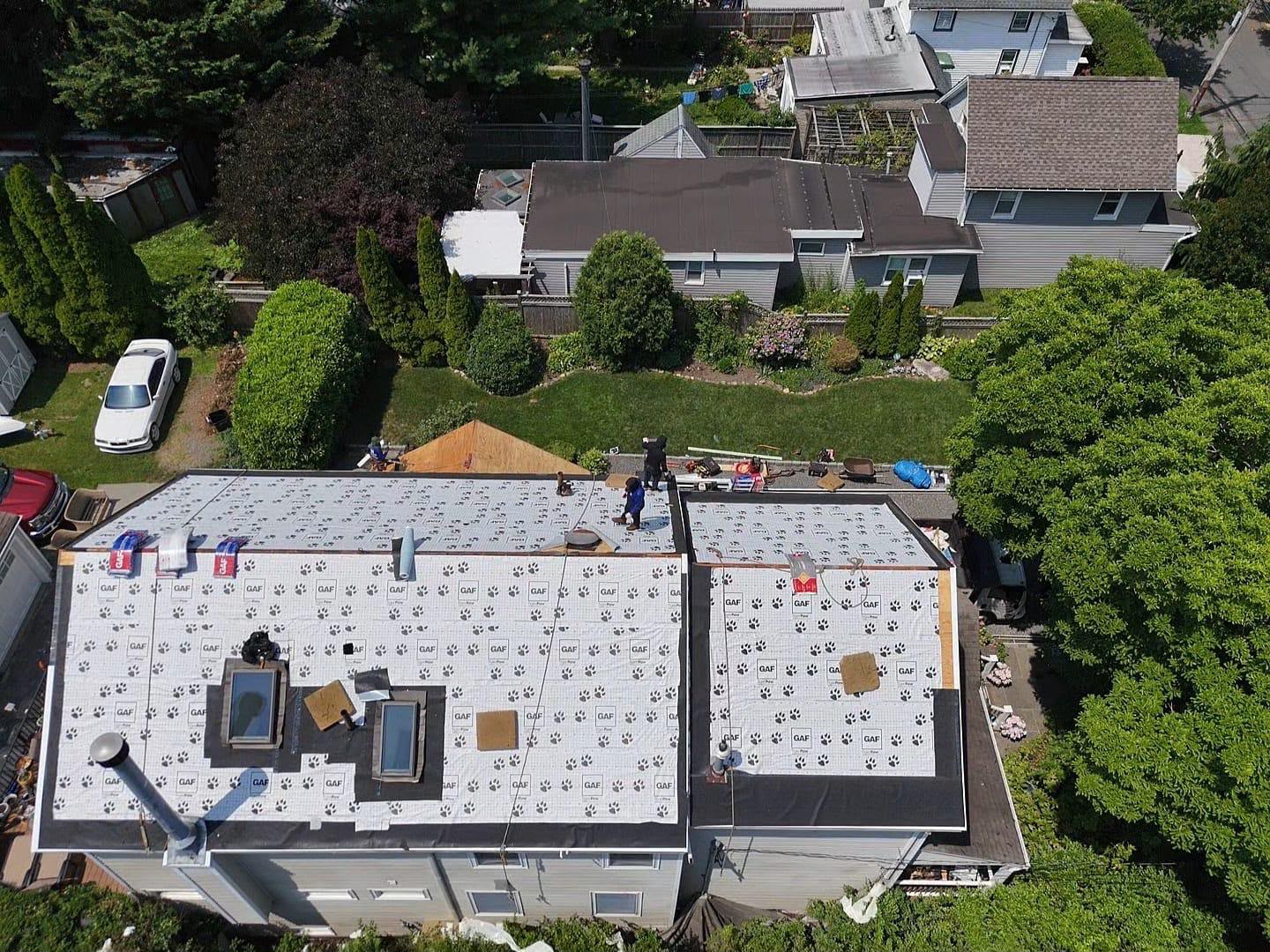
Use this roof cost guide as a starting point, not a final quote. A small, straightforward shingle roof may fall near the lower end, while a multi-family building, brownstone, commercial flat roof, steep roof, slate roof, or roof with hidden water damage can cost significantly more. The most reliable way to estimate a new roof cost in New York is to have a qualified roofing contractor inspect the roof, measure the actual roof area, check drainage and flashing, and confirm whether the project is repair, recovery, or full replacement.
Quick planning ranges for New York roofs
For homeowners and property managers comparing new york roof replacement cost estimates, it helps to think in roof area rather than house size. Roofing contractors commonly price by the square foot or by the “roofing square,” which equals 100 square feet of roof area. National shingle replacement data shows installed shingle roofing often falls around $4 to $12 per square foot, while New York City roof replacement data commonly lists $4 to $11 per square foot for many projects. (homeadvisor.com)
Using those ranges, a rough planning budget may look like this:
- Small roof, about 800 to 1,000 square feet: approximately $3,200 to $11,000 for many standard replacements.
- Medium roof, about 1,200 to 1,800 square feet: approximately $4,800 to $19,800, depending on material and complexity.
- Larger roof, about 2,000 to 3,000 square feet: approximately $8,000 to $33,000 or more for complex, premium, or hard-to-access work.
- Flat roof, about 1,000 to 2,000 square feet: approximately $6,000 to $28,000 using the common NYC flat roof range.
- Commercial or multi-family roof: often requires a custom estimate because insulation, drainage, penetrations, parapet walls, staging, and code requirements can change the roof installation cost substantially.
These numbers are best used for early budgeting. The actual new roof cost New York property owners pay can be higher if the roof has multiple layers to remove, deteriorated plywood or plank decking, masonry parapet repairs, skylights, chimney flashing, hatch details, rooftop equipment, or difficult debris removal.
Cost by roofing material
Material is one of the biggest factors affecting roof replacement cost in New York. The best choice is not always the cheapest product; it is the system that fits the roof slope, building type, drainage, warranty goals, and long-term maintenance plan.
Asphalt shingle roofs
Asphalt shingles are common on pitched residential roofs because they are familiar, widely available, and generally more affordable than metal, slate, or tile. For many shingle projects, installed costs may fall in the broad $4 to $12 per square foot range, with pricing influenced by the shingle grade, roof pitch, tear-off, access, and labor. HomeAdvisor also notes that roof removal can add $1 to $5 per square foot, and high-cost cities such as New York tend to have higher labor rates. (homeadvisor.com)
A basic architectural shingle roof on a simple home is usually easier to price than a steep roof with dormers, valleys, chimneys, skylights, and multiple elevations. If your roof has many cuts and transitions, expect more labor, more waste, and more flashing work.
Flat roofs: EPDM, TPO, modified bitumen, and built-up systems
Flat and low-slope roofs are a major part of New York roofing, especially on row houses, apartment buildings, garages, and commercial properties. Angi’s 2026 New York City flat roof data lists flat roof replacement at $6 to $14 per square foot on average, with material-specific ranges including EPDM at $7 to $16 per square foot, TPO at $7 to $16 per square foot, and modified bitumen at $8 to $18 per square foot. (angi.com)
Flat roofs require special attention to drainage, seams, penetrations, wall terminations, parapet flashing, roof hatches, and ponding water. A low-slope roof that looks simple from the street may still be complicated once the old membrane is removed.
Metal roofing
Metal roofing often costs more upfront than asphalt shingles, but it can be attractive for certain sloped roofs because of durability, snow-shedding, and appearance. In New York City cost data, metal roofing is commonly shown above asphalt shingles, with some local estimates placing it around the high single digits to low double digits per square foot for many projects. (angi.com)
Metal is not automatically the right choice for every home. Your contractor should evaluate roof slope, fastening method, panel type, underlayment, ventilation, and compatibility with existing trim and gutters.
Slate, tile, and specialty roofs
Slate, clay, and concrete tile roofs can be beautiful and long-lasting, but they are heavier, more labor-intensive, and more expensive than typical asphalt systems. They may also require structural review, specialty flashing, experienced installers, and careful replacement of individual materials. If you own an older New York home with slate or tile, avoid comparing its estimate to a basic shingle roof replacement cost.
EPDM roof replacement cost in New York State
EPDM is a rubber roofing membrane used on many flat and low-slope roofs. It is popular because it is flexible, widely available, and often cost-effective compared with some premium flat roof systems. For planning purposes, the epdm roof replacement cost in New York State can vary widely, but NYC flat roof data lists EPDM around $7 to $16 per square foot. A 1,000-square-foot EPDM roof could therefore land around $7,000 to $16,000, while a 2,000-square-foot EPDM roof could land around $14,000 to $32,000, before any unusual structural, insulation, or access costs. (angi.com)
The lower end may apply to a straightforward roof with good access and minimal repairs. The higher end may apply when the project needs tapered insulation, a full tear-off, masonry repairs, new drains, complex flashing, or work around rooftop HVAC units.
Factors affecting roof replacement cost in New York
The phrase “new roof cost in New York” can be misleading because two roofs with the same square footage can have very different prices. Here are the most important variables.
1. Roof size and waste factor
A larger roof needs more labor, more material, more underlayment, more fasteners, and more disposal. But size is not just the building footprint. A pitched roof can have more surface area than the home below it, and a complex roof shape can increase waste.
2. Roof slope and system type
Steep-slope roofs often use shingles, slate, tile, or metal. Low-slope roofs require membrane systems such as EPDM, TPO, PVC, modified bitumen, or built-up roofing. Using the wrong system for the slope can lead to leaks and warranty problems.
3. Tear-off and disposal
Removing old roofing adds labor and dumpster costs. In dense parts of New York, staging, parking, debris handling, and building access can make disposal more expensive than in less congested areas.
4. Decking and hidden damage
Many roof replacement cost surprises appear after the old roof is removed. Wet plywood, rotted planks, damaged insulation, deteriorated parapets, and compromised flashing can all increase the final cost. This is why a good estimate should explain how decking replacement or unexpected repairs will be priced.
5. Flashing, penetrations, and roof details
Chimneys, skylights, vents, roof hatches, satellite mounts, plumbing stacks, scuppers, drains, and parapet walls all need proper waterproofing. A cheaper estimate may not include the same flashing scope as a more complete proposal.
6. Access, staging, and safety
A detached home with driveway access is different from a tight Bronx or Brooklyn property with limited staging space. Multi-story buildings, busy sidewalks, shared alleys, and commercial properties may require extra safety planning, equipment, or scheduling.
7. Permits and code requirements
In New York City, most construction requires Department of Buildings approval and permits, although non-structural roof repair is listed as an example of work that may not require a permit. The city advises owners to consult a qualified professional, such as a PE, RA, or DOB representative, to understand exceptions. (nyc.gov)
Some roof projects may also trigger sustainability or reflectivity requirements. NYC states that Local Laws 92 and 94 require certain roofs to include solar photovoltaic systems, green roof systems, or a combination, and the city also notes that roofs must be cool roofs with some exceptions. (nyc.gov)
8. Contractor licensing, insurance, and warranty
A legitimate roofing contractor has overhead that protects the property owner: licensing, insurance, trained crews, safety practices, written contracts, and warranty support. In New York City, any contractor performing home improvement work costing more than $200 must have a DCWP license to operate legally, and homeowners can check licensing through NYC resources. (portal.311.nyc.gov)
If your project is in Westchester, licensing is handled differently; Westchester County provides a search tool for checking whether a home improvement contractor or landscaper is licensed to work there. (consumerlicenseweb.westchestergov.com)
What should be included in a roof replacement estimate?
When comparing roof replacement cost New York proposals, do not look at the final number only. A lower bid may leave out important work that another contractor included.
A strong roofing estimate should explain:
- The roof area being priced.
- The roofing material and manufacturer.
- Tear-off details and number of existing layers.
- Underlayment, insulation, or membrane specifications.
- Flashing around chimneys, walls, skylights, vents, drains, and edges.
- Decking replacement allowance or per-sheet pricing.
- Cleanup and debris removal.
- Permit responsibilities, if applicable.
- Workmanship warranty and manufacturer warranty details.
- Payment schedule and expected project timeline.
For flat roofs, the proposal should also address drainage, seams, edge metal, parapet walls, termination bars, roof drains or scuppers, and how the contractor will handle ponding or wet insulation if discovered.

Repair or replace: how to decide
A repair may make sense if the roof is generally in good condition and the issue is isolated, such as a small flashing leak, missing shingles, minor puncture, or localized storm damage. Replacement becomes more likely when the roof is near the end of its service life, leaks appear in multiple areas, the membrane is brittle, shingles are curling or shedding granules, or the decking is soft.
If you are planning to sell, refinance, install solar, renovate the exterior, or improve a commercial building, replacing the roof proactively can also reduce future disruption. A new roof can protect interior finishes, insulation, masonry, framing, and tenant spaces from water damage.
How to keep your new roof cost under control
You cannot control every cost, but you can make smart decisions that reduce surprises.
- Schedule an inspection before leaks spread. Water damage gets more expensive when it reaches decking, insulation, ceilings, and walls.
- Get a detailed written scope. Clear estimates reduce disputes and make quote comparisons easier.
- Choose the right system for the roof slope. Do not install a material just because it is cheaper upfront.
- Handle flashing properly. Many roof leaks happen at transitions, not in the open field of the roof.
- Ask about ventilation and drainage. Poor airflow on shingle roofs and poor drainage on flat roofs can shorten roof life.
- Avoid unusually vague bids. A one-line price with no material, warranty, or prep details is risky.
- Work with a local contractor. New York properties have unique access, code, weather, and building-style challenges.
Why local experience matters in New York roofing
Roofing in New York is different from roofing in many suburban or rural markets. Contractors often deal with tight lots, shared walls, parapets, low-slope roof systems, older masonry, limited dumpster access, co-op or building management rules, and weather windows that can change quickly.
A contractor who understands Bronx, Brooklyn, Queens, and Westchester properties can help identify issues that generic cost calculators miss. That includes roof hatch details, party wall flashing, skylight curbs, brownstone roof edges, gutter tie-ins, leader lines, and flat roof drainage.
Work with RH Renovation LLC
RH Renovation LLC is a highly-rated, full-service contracting company based at 1951 Hone Ave, Bronx, NY 10461. Managed by owner Rexhep Halilaj, the company brings over a decade of industry experience to residential and commercial exterior construction across the Bronx, Brooklyn, Queens, and Westchester.
If you are budgeting for a new york new roof cost, comparing roof replacement cost estimates, or trying to understand whether your property needs repair or full replacement, RH Renovation LLC can provide a clear inspection, practical recommendations, and a written scope tailored to your building.
For the most accurate roof installation cost, request an on-site roof assessment before committing to a budget. A real inspection can confirm roof size, material options, drainage conditions, flashing needs, and any hidden risk factors that may affect the final price.
Frequently asked questions
What is the average new roof cost in New York?
Recent New York City data places many roof replacements around $4 to $11 per square foot, with an average around $5.40 per square foot. Flat roof replacement in New York City is often listed around $6 to $14 per square foot. Your actual cost may be higher or lower depending on roof type, access, materials, and damage found during tear-off. (angi.com)
Why do roof replacement prices vary so much?
The biggest factors are roof size, material, slope, tear-off requirements, labor, access, flashing complexity, permits, code requirements, and hidden decking or water damage. A simple asphalt shingle roof and a commercial EPDM flat roof may have completely different pricing even if the square footage is similar.
Is a flat roof cheaper than a shingle roof?
Not always. Flat roofs can have a higher cost per square foot because they require specialized membranes, seam work, drainage details, and careful flashing. However, some flat roofs have less total surface area than steep pitched roofs, so the total project cost depends on the building.
Do I need a permit for roof replacement in NYC?
Many construction projects in NYC require DOB approval or permits, while certain non-structural roof repairs may be exempt. Because the rules depend on the scope, building type, and whether structural or code-triggering work is involved, it is best to confirm requirements before work begins. (nyc.gov)
How do I choose the right roofing contractor?
Look for licensing where required, insurance, local experience, detailed written estimates, clear warranty terms, and a contractor who explains the roof system rather than just quoting a lump sum. For New York City residential home improvement work over $200, contractors must have a DCWP license to operate legally. (portal.311.nyc.gov)