Asphaltic Roofing Systems: An Effective Choice for Commercial Westchester Properties
Choosing a commercial roofing system is a long-term investment. For property owners and facility managers in Westchester County, the right roof needs to do more than keep rain out. It must handle seasonal temperature changes, snow, wind, UV exposure, rooftop equipment, foot traffic, drainage, and the everyday demands of a commercial building.
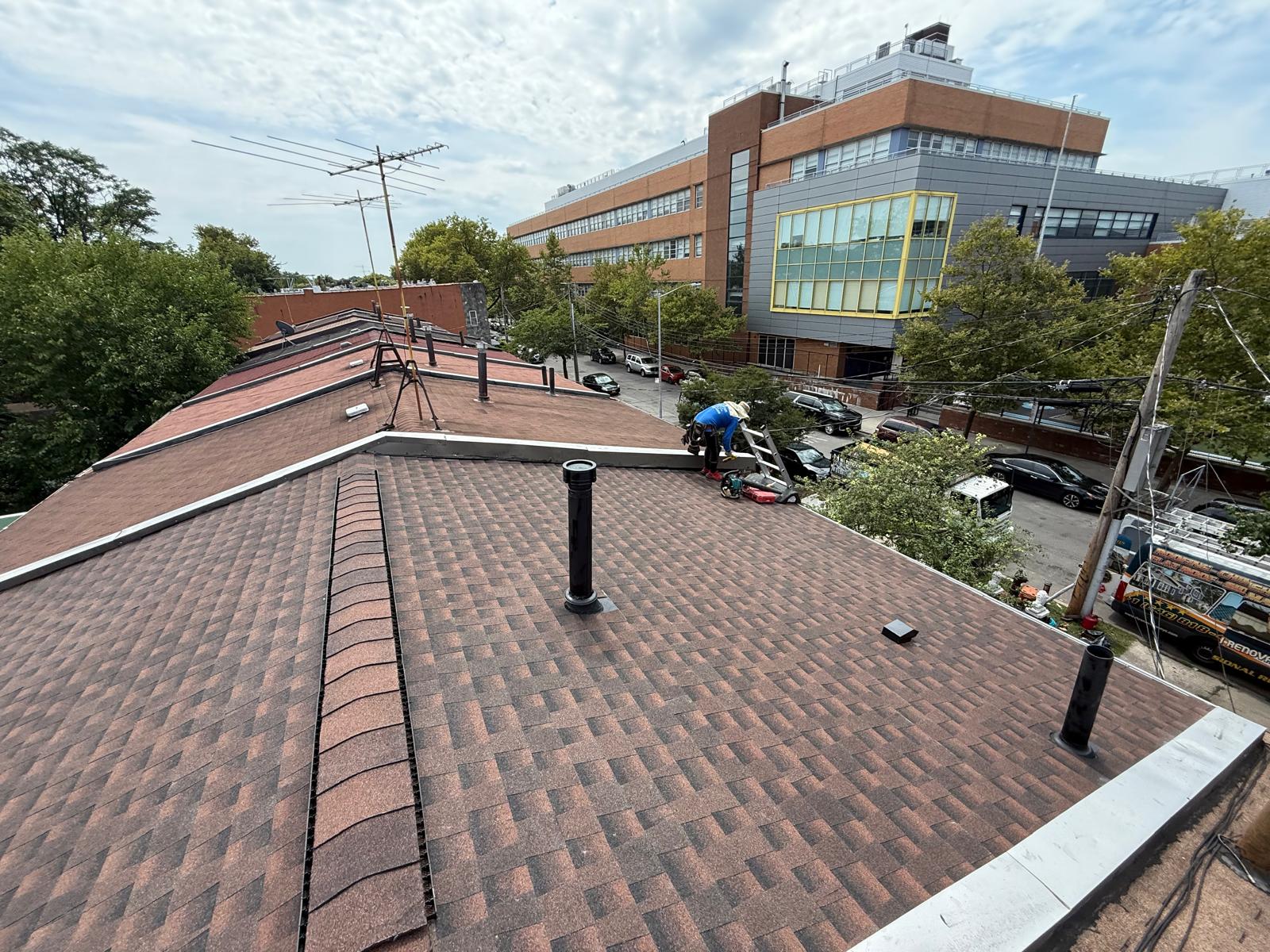
Asphaltic roofing systems remain an important option for commercial and low-slope properties because they combine multiple layers of waterproofing with proven asphalt-based technology.
Depending on the building and project requirements, an asphaltic system may include built-up roofing (BUR), modified bitumen membranes, or other asphalt-based assemblies. These systems can provide strong waterproofing and durability when properly designed, installed, and maintained.
For Westchester commercial property owners considering a new roof or replacement, understanding how asphaltic roofing works—and how it compares with other commercial roofing systems—can make the decision much easier.
What Is an Asphaltic Roofing System?
An asphaltic roofing system is a roof assembly that uses asphalt as a primary waterproofing component, typically combined with reinforcing materials and protective surfacing.
The term can describe more than one type of roofing system.
Two common categories are:
- Built-up roofing (BUR): Multiple layers of roofing felt or reinforcing ply sheets are combined with asphalt to create a multi-layer roof assembly.
- Modified bitumen: Asphalt is modified with polymers to improve flexibility and performance, then manufactured into reinforced membrane sheets that can be installed in one or more plies.
The current RH Renovation NYC article describes asphaltic roofing as a layered system designed around redundancy and waterproofing. That layered approach remains one of the major reasons asphalt-based commercial roofing continues to be used on low-slope buildings.
Unlike a simple single-layer concept, a multi-ply asphaltic system can provide several levels of protection across the roof assembly.
How Does Asphaltic Commercial Roofing Work?
The basic principle is relatively straightforward: create a continuous, water-resistant roofing assembly that protects the building below.
A typical system may include:
- Existing roof deck or structural substrate
- Insulation where required
- Base sheet or membrane
- Additional reinforcing plies
- Cap sheet or protective surfacing
- Flashing around edges and penetrations
- Protective coating or surfacing where specified
The exact assembly depends on the building, roof design, existing conditions, manufacturer specifications, and project requirements.
This is important because there is no single asphaltic roof design that is appropriate for every Westchester commercial property.
Built-Up Roofing vs. Modified Bitumen
One of the most important distinctions for commercial property owners is the difference between traditional BUR and modified bitumen.
Built-Up Roofing
Built-up roofing uses multiple reinforcing layers combined with asphalt.
Its main advantage is redundancy.
If one layer becomes damaged, the roofing assembly still has additional layers beneath it.
BUR has a long history in commercial roofing and can be particularly useful when a property owner wants a robust multi-layer assembly.
Modified Bitumen Roofing
Modified bitumen combines asphalt with polymer modifiers to improve flexibility and performance.
It is manufactured as reinforced membrane sheets and may be installed using different attachment methods depending on the system.
Modified bitumen can be a practical choice for:
- Commercial buildings
- Low-slope roofs
- Multi-family properties
- Buildings with rooftop equipment
- Areas requiring durable membrane systems
- Roofs exposed to regular maintenance foot traffic
RH Renovation NYC recently completed an approximately 8,000-square-foot commercial flat roof replacement in Yonkers using a two-ply APP modified bitumen system, with additional detailing around skylights, rooftop HVAC equipment, and perimeter edges.
That project is a useful example of how the roof field and vulnerable transition areas can be treated as separate components of a complete commercial roofing system.
Why Asphaltic Roofing Can Work Well in Westchester
Westchester commercial roofs face changing conditions throughout the year.
A roof may experience:
- Snow and ice during winter
- Freeze-thaw cycles
- Heavy spring rain
- Strong winds
- Summer heat
- UV exposure
- Temperature-related expansion and contraction
- Rooftop maintenance traffic
An asphaltic system can be designed to provide multiple layers of protection against moisture and physical wear.
The existing RH Renovation NYC article highlights waterproofing, weather resistance, durability, and the ability to use protective coatings as important benefits of asphaltic roofing in Westchester.
However, the quality of the complete installation matters just as much as the roofing material itself.
7 Benefits of Asphaltic Roofing for Commercial Properties
1. Strong Waterproofing
Commercial roof leaks can cause much more than a wet ceiling.
Water intrusion can damage:
- Interior finishes
- Insulation
- Electrical components
- Inventory
- Equipment
- Ceilings
- Walls
- Structural materials
A properly designed asphaltic system provides multiple layers intended to resist water infiltration.
This is particularly valuable for low-slope commercial roofs where water drainage must be carefully managed.
2. Multi-Layer Protection
One of the primary advantages of built-up and multi-ply modified bitumen systems is redundancy.
Rather than relying entirely on one membrane layer, the roofing assembly can incorporate multiple waterproofing layers.
That provides additional protection against localized damage.
3. Proven Commercial Roofing Technology
Asphalt-based roofing has been used for commercial applications for generations.
For building owners who prefer a well-established roofing technology rather than a newer or less familiar system, asphaltic roofing can be an attractive option.
4. Good Resistance to Foot Traffic
Commercial roofs often need occasional access for:
- HVAC maintenance
- Plumbing work
- Electrical equipment
- Ventilation systems
- Skylight maintenance
- Roof inspections
Certain asphaltic systems can provide strong resistance to normal maintenance traffic when properly designed and protected.
However, rooftop traffic should still be controlled. No roofing membrane should be treated like a permanent walkway.
5. Flexible System Options
Asphaltic roofing is not limited to one installation method.
Depending on the project, systems may be:
- Heat-applied
- Cold-applied
- Self-adhered
- Mechanically attached
- Fully adhered
The appropriate method depends on the specific roofing system, building conditions, safety requirements, and manufacturer specifications.
6. Repairable
Localized asphaltic roofing damage can often be repaired without replacing the entire roof.
Depending on the problem, repairs may involve:
- Membrane patches
- Flashing repairs
- Seam repairs
- Replacement of damaged sections
- Detail reinforcement
- Coating
- Drainage corrections
The ability to repair localized problems can be valuable for commercial property owners trying to manage long-term maintenance costs.
7. Compatible With Protective Coatings
Some asphaltic systems can be paired with compatible coatings designed to provide additional protection.
For example, RH Renovation NYC’s Yonkers commercial project used a two-ply APP modified bitumen system with silicone-coated detailing around vulnerable areas such as skylights, rooftop A/C units, and perimeter edges.
The specific coating and application method must always be compatible with the underlying roofing system.
Potential Disadvantages of Asphaltic Roofing
Asphaltic roofing is not automatically the best option for every commercial property.
Property owners should consider several potential limitations.
Weight
Some multi-layer asphaltic systems can be heavier than single-ply membranes.
Before installation, the building structure should be evaluated to ensure the proposed roofing assembly is appropriate.
Installation Complexity
Multi-layer systems can require more labor and preparation than some single-ply alternatives.
This can affect project scheduling and installation costs.
Heat-Related Installation Considerations
Certain asphaltic installation methods involve heat application.
That creates additional safety and project-management considerations and should only be handled by properly trained roofing professionals following appropriate safety procedures.
Maintenance Still Matters
A durable roof is not a maintenance-free roof.
Regular inspections remain important for identifying:
- Cracks
- Blisters
- Open seams
- Damaged flashing
- Ponding water
- Membrane deterioration
- Drainage problems
- Penetration damage
The current RH Renovation NYC article also identifies weight, installation time, and maintenance as potential considerations when evaluating asphaltic systems.
Asphaltic Roofing vs. EPDM and TPO
Commercial property owners often compare asphaltic systems with single-ply membranes such as EPDM and TPO.
Each system has advantages.
| Feature | Asphaltic / Modified Bitumen | EPDM | TPO |
|---|---|---|---|
| Construction | Often multi-ply | Single-ply membrane | Single-ply membrane |
| Waterproofing approach | Layered asphalt-based system | Rubber membrane | Thermoplastic membrane |
| Common use | Commercial low-slope roofs | Commercial & residential low-slope roofs | Commercial & residential low-slope roofs |
| Foot traffic | Good when properly designed/protected | Requires protection in traffic areas | Requires protection in traffic areas |
| Seam approach | Depends on system | Adhesive/tape/other methods | Heat-welded seams |
| Reflective options | Available through compatible surfacing/coatings | Available in some products | Common |
| Repair approach | Localized repairs possible | Patching/repairs | Patching/welded repairs |
| Weight | Can be relatively heavy | Generally lightweight | Generally lightweight |
RH Renovation NYC’s current commercial roofing guidance lists TPO, EPDM, PVC, and modified bitumen among common commercial flat-roof systems in Westchester and New York.
The best material depends on the property’s structure, roof design, drainage, existing membrane, insulation requirements, rooftop equipment, budget, and long-term maintenance goals.
Is Modified Bitumen a Good Choice for a Westchester Commercial Roof?
It can be.
Modified bitumen is often considered when a building owner wants an asphalt-based membrane with a multi-ply configuration and strong resistance to weather and normal commercial roof demands.
It may be particularly appropriate for:
- Low-slope commercial buildings
- Older buildings undergoing roof replacement
- Multi-family properties
- Roofs with regular service access
- Buildings where redundancy is valued
- Properties where an asphalt-based system is compatible with the existing roof
However, a professional roof assessment should come before selecting the system.
What Type of Commercial Buildings Can Use Asphaltic Roofing?
Asphaltic systems can be considered for a range of commercial and low-slope properties, including:
- Office buildings
- Retail properties
- Warehouses
- Multi-family buildings
- Mixed-use properties
- Restaurants
- Small industrial buildings
- Schools and institutional buildings
- Apartment buildings
- Commercial additions
The building’s structure and roof configuration ultimately determine whether an asphaltic system is suitable.
What Makes a Commercial Asphalt Roof Fail?
Even a quality roofing material can fail when underlying problems are ignored.
Common causes include:
Poor Drainage
Standing water can place additional stress on a low-slope roofing system.
Damaged Flashing
Flashing around parapets, walls, HVAC equipment, skylights, and other penetrations is particularly important.
Poor Installation
Incorrect seams, inadequate adhesion, improper detailing, or insufficient preparation can shorten roof life.
Rooftop Equipment
HVAC units and other equipment create penetrations and areas where maintenance traffic can damage roofing.
Deferred Maintenance
Small problems often become expensive when they remain unaddressed.
Structural Movement
Temperature changes and building movement can place stress on roofing assemblies.
Why Roof Drainage Is So Important on Commercial Properties
Commercial low-slope roofs depend heavily on proper drainage.
A roof should be designed to move water toward:
- Internal drains
- Scuppers
- Gutters
- Downspouts
If drains become blocked or the roof develops areas of significant ponding, water may remain on the roof for extended periods.
A commercial roof inspection should therefore evaluate drainage—not just the membrane.
What About Rooftop HVAC Equipment?
Commercial buildings often have HVAC units, vents, pipes, skylights, and other equipment penetrating the roof.
These areas are among the most important details to inspect.
Each penetration needs appropriate:
- Flashing
- Sealing
- Membrane detailing
- Counter flashing where applicable
- Drainage consideration
In RH Renovation NYC’s Yonkers commercial roof project, new counter flashing was installed around rooftop A/C units, while additional protective detailing was applied around skylights and other vulnerable transition points.
This illustrates an important commercial roofing principle:
A roof is only as reliable as its weakest detail.
How Long Can an Asphaltic Commercial Roof Last?
Service life depends on the roofing system, installation quality, climate exposure, maintenance, drainage, rooftop traffic, repairs, and other conditions.
The original RH Renovation NYC article states that asphaltic systems can last 20–30 years or more with proper installation and maintenance.
That should be treated as a general planning expectation rather than a guarantee.
A well-maintained roof can perform differently from a poorly maintained roof installed under similar conditions.
How Much Does an Asphaltic Commercial Roof Cost in Westchester?
Commercial roofing costs vary significantly.
The final project price can depend on:
- Roof square footage
- Existing roof condition
- Number of existing layers
- Tear-off requirements
- Roof deck condition
- Insulation
- Membrane type
- Number of plies
- Flashing
- Parapets
- Roof drains
- Rooftop equipment
- Skylights
- Access
- Disposal
- Labor
- Safety requirements
RH Renovation NYC’s current Westchester roofing cost guidance lists modified bitumen among common commercial flat-roof systems, while noting that commercial roofing projects can range from approximately $10,000 to $40,000+, depending heavily on size and system type.
These numbers are broad planning figures, not a quote for a particular building.
For a commercial property, an on-site inspection and detailed scope are much more useful than relying on a generic price per square foot.
What Should Be Included in a Commercial Roofing Proposal?
Before approving a project, make sure the proposal explains what the contractor is actually providing.
A detailed commercial roofing proposal should address:
- Existing roof condition
- Proposed roofing system
- Membrane type
- Number of plies
- Insulation
- Tear-off
- Deck repairs
- Flashing
- Drainage
- Roof penetrations
- HVAC details
- Skylights
- Edge details
- Labor
- Material disposal
- Cleanup
- Warranty
- Payment schedule
- Project timeline
If two contractors give dramatically different prices, compare their scopes before deciding that one is simply “cheaper.”
Should You Replace or Restore an Existing Asphaltic Roof?
Replacement is not always the only option.
Depending on the roof’s condition, a commercial property may be a candidate for:
- Localized repair
- Restoration
- Recoating
- Partial replacement
- Full replacement
Restoration may be worth evaluating when the underlying roof assembly remains structurally sound and the damage is manageable.
Full replacement may be more appropriate when there is:
- Extensive water damage
- Widespread membrane deterioration
- Repeated leaks
- Severe insulation problems
- Significant deck damage
- Extensive failed flashing
- An aging roof nearing the end of its service life
A professional assessment should determine which approach makes financial and technical sense.
Commercial Roof Maintenance: What Should Property Owners Check?
Regular maintenance can help identify problems before they interrupt business operations.
A commercial roofing maintenance program should monitor:
Roof Surface
Look for cracks, blisters, exposed materials, punctures, or deterioration.
Flashing
Check parapets, walls, HVAC curbs, skylights, vents, and other penetrations.
Drainage
Keep drains, scuppers, gutters, and related drainage paths clear.
Rooftop Equipment
Inspect areas around HVAC units and other equipment for damaged membrane or flashing.
Interior Areas
Check ceilings and upper walls for:
- Water stains
- Dampness
- Peeling finishes
- Mold or musty odors
- Signs of recurring leaks
After Severe Weather
Schedule an inspection after significant storms, especially when high winds or heavy precipitation may have affected the roof.
Signs Your Westchester Commercial Roof Needs Attention
Don’t wait for a major leak before inspecting the roof.
Warning signs include:
- Recurring leaks
- Water stains
- Ponding water
- Damaged flashing
- Open seams
- Cracks
- Blisters
- Membrane punctures
- Deteriorated roof edges
- Damaged drains
- Frequent emergency repairs
- Rising maintenance costs
The earlier these issues are identified, the more options a property owner may have.
Why Commercial Roof Inspections Matter
A commercial roof can appear acceptable from ground level while developing problems that are not immediately visible.
Professional inspections can help identify:
- Moisture intrusion
- Failed flashing
- Drainage problems
- Membrane deterioration
- Penetration damage
- Structural concerns
- Insulation problems
- Areas requiring preventive maintenance
RH Renovation NYC describes its commercial roofing approach as involving professional assessments, system selection, installation, and preventive maintenance.
For a large commercial property, routine inspections can be especially valuable because even a localized problem can affect a substantial area of the building.
Asphaltic Roofing for Westchester: Is It the Right Choice?
An asphaltic roofing system can be a strong choice when a commercial property owner values:
- Proven asphalt-based technology
- Multi-layer protection
- Strong waterproofing
- Repairability
- Commercial durability
- Flexible system configurations
But it should not be selected simply because it is familiar.
The right roofing system depends on the building’s:
- Structure
- Roof slope
- Existing roofing
- Drainage
- Insulation
- Rooftop equipment
- Budget
- Energy objectives
- Maintenance expectations
- Long-term plans
EPDM, TPO, PVC, modified bitumen, and other commercial roofing systems can all have legitimate applications.
A qualified commercial roofing contractor should evaluate the property and explain why a particular system is appropriate.
Why Work With RH Renovation NYC for Commercial Roofing in Westchester?
RH Renovation NYC serves Westchester County and the surrounding New York market with commercial and residential roofing services.
The company states that it has operated since 2004 and is a GAF Master Elite® certified roofing contractor. It also provides flat roofing, shingle roofing, gutters, skylights, chimney services, and other exterior work.
Its commercial roofing experience includes the approximately 8,000-square-foot Yonkers flat roof replacement, where a two-ply APP modified bitumen system was installed along with specialized detailing around skylights, rooftop A/C equipment, and perimeter areas.
For commercial property owners, that type of project experience is valuable because commercial roofing is about more than installing a membrane. The details around equipment, edges, drainage, penetrations, and transitions can determine how well the system performs.
Frequently Asked Questions About Asphaltic Roofing Systems
What is an asphaltic roofing system?
An asphaltic roofing system uses asphalt as a major waterproofing component, typically combined with reinforcing materials. Common examples include built-up roofing and modified bitumen systems.
Is asphaltic roofing good for commercial buildings?
Yes. Asphaltic systems can be suitable for many commercial and low-slope buildings because of their waterproofing, layered construction, durability, and repairability.
What is the difference between BUR and modified bitumen?
BUR uses multiple layers of reinforcing materials and asphalt, while modified bitumen uses polymer-modified asphalt membranes manufactured in sheet form. Both can be designed as multi-ply commercial roofing systems.
Is modified bitumen better than TPO?
Neither system is universally better. Modified bitumen and TPO have different characteristics, installation methods, maintenance requirements, and applications. The right choice depends on the building and project objectives.
How long does an asphaltic commercial roof last?
A properly installed and maintained asphaltic system can potentially last 20–30 years or longer, depending on the specific assembly and site conditions.
Is asphaltic roofing expensive?
Commercial roofing prices vary widely based on roof size, existing conditions, membrane type, insulation, labor, access, flashing, drainage, and other factors. A property-specific inspection is necessary for accurate pricing.
Can an asphaltic roof be repaired?
Yes. Many localized problems can be repaired without replacing the entire roof, depending on the condition and age of the existing system.
Can asphaltic roofing be used on a flat roof?
Yes. Built-up and modified bitumen systems are commonly used for flat and low-slope commercial roofing applications.
Does asphaltic roofing require maintenance?
Yes. Regular inspections, drainage maintenance, flashing inspections, and prompt repairs can help maximize the roof’s service life.
Is asphaltic roofing suitable for Westchester winters?
It can be. The system must be properly designed and installed to account for snow, ice, rain, temperature fluctuations, drainage, and other local conditions.
How do I know which commercial roofing system is right for my building?
Start with a professional roof assessment. The contractor should evaluate the existing roof, structure, drainage, insulation, equipment, budget, and long-term goals before recommending a system.
Final Thoughts
Asphaltic roofing systems can be an effective and durable solution for commercial properties in Westchester when the system is properly selected, installed, and maintained.
Built-up roofing and modified bitumen systems provide property owners with layered waterproofing, established commercial roofing technology, and repair options that can make sense for many low-slope buildings.
However, there is no universal roofing material that works best for every commercial property.
Before investing in a new roof, have the existing system professionally evaluated and compare the proposed roofing system, materials, installation methods, warranty, maintenance requirements, and total project cost.
For Westchester property owners considering commercial roof repair, asphaltic roofing, modified bitumen, or a complete flat roof replacement, RH Renovation NYC can assess the existing roof and help determine which roofing system fits the property.
Call (646) 818-4305 to request a professional commercial roofing consultation and estimate.