How to Find Local Deck Repair Services Near Me
The fastest way to find a reliable local deck repair service is to combine a Google Maps search (“deck repair near me”) with three checks most homeowners skip: confirming the contractor holds a valid home improvement license for your city, reading recent reviews that specifically mention deck or structural work, and getting a written estimate that breaks down materials, labor, and permit responsibility before anyone touches your deck.
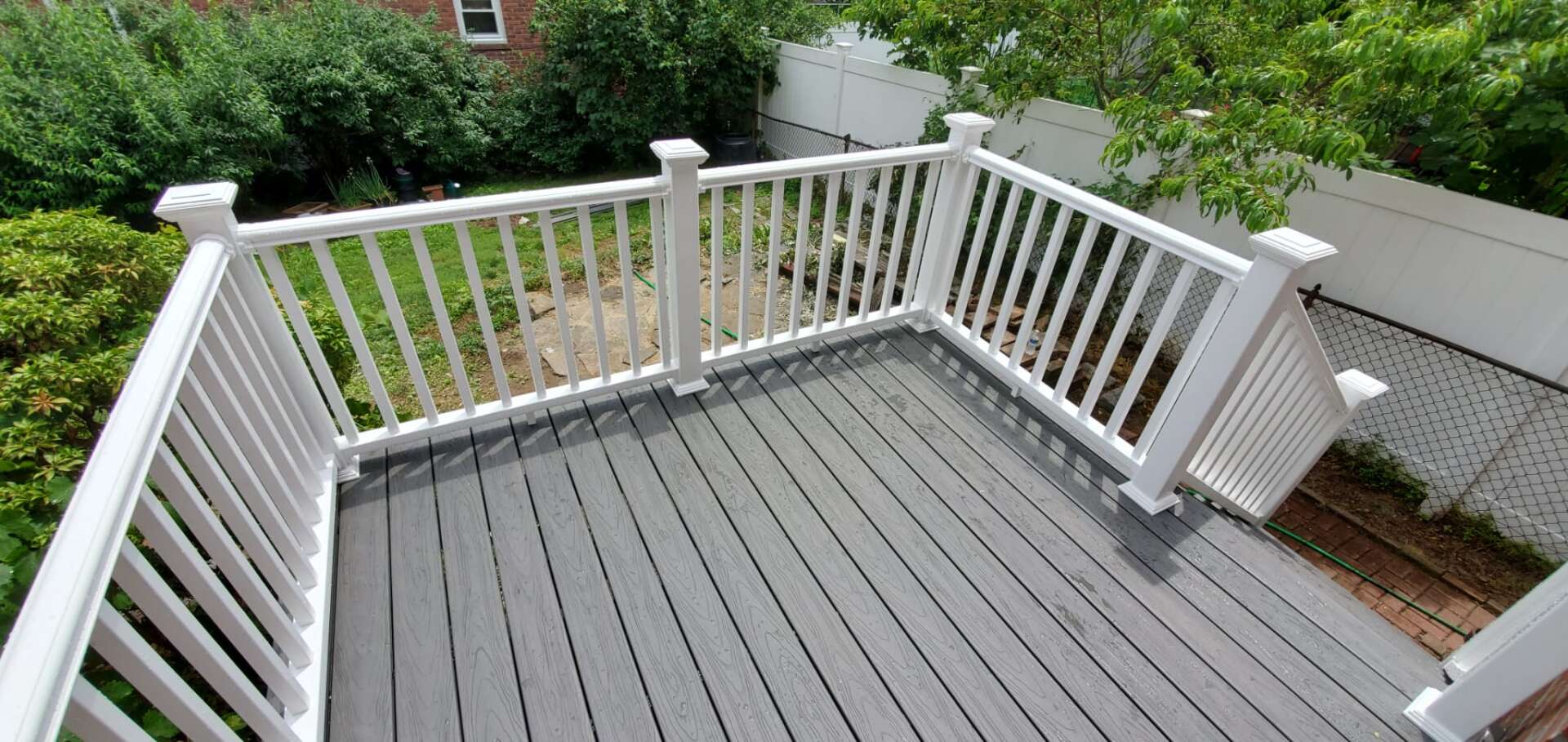
That’s the short version. The rest of this guide walks through exactly how to search, what separates a legitimate deck repair contractor from someone who’ll take a deposit and disappear, what repairs typically cost, and when a repair isn’t enough and you’re actually looking at a rebuild.
Signs You Actually Need Deck Repair (Before You Start Searching)
It helps to know what you’re dealing with before you call anyone, since it changes who you should be searching for and what a fair quote looks like.
| What you’re seeing | Likely cause | Usually fixable with repair? |
| Soft, spongy, or discolored boards | Wood rot from trapped moisture | Yes, if isolated to a few boards |
| Deck feels bouncy or sags in the middle | Undersized or rotting joists/beams | Sometimes — depends on extent |
| Railing wobbles or feels loose | Failed fasteners or a rotting post base | Yes, usually |
| Deck pulling away from the house slightly | Ledger board attachment failure | Needs urgent professional attention |
| Rust streaks around screws or nails | Corroded fasteners, common on older decks | Yes, straightforward fix |
| Stairs feel uneven or shift underfoot | Loose stringers or settled footings | Usually yes |
| Gray, splintering wood surface | UV and weather wear (cosmetic) | Yes — sanding, staining, sealing |
A ledger board pulling away from the house is the one item on this list that deserves urgent attention rather than a “get to it eventually” repair — it’s the connection point that ties the entire deck structure to the building, and failure there is the leading cause of deck collapses.
Where to Actually Look for Local Deck Repair Services
1. Start with a local, specific search
“Deck repair near me” pulls up Google’s local map pack, which is genuinely a good starting point — but refine it. Searching “deck repair contractors near me” or adding your borough or neighborhood (“deck repair Bronx” or “deck repair Westchester”) narrows results to companies that actually service your area regularly, rather than large multi-state directories that subcontract the work out.
2. Check contractor licensing databases directly
In New York City, anyone performing construction, repair, or remodeling work on a residential building — including deck repair — is required to hold a Home Improvement Contractor (HIC) license issued by the NYC Department of Consumer and Worker Protection (DCWP). You can search DCWP’s license lookup directly to confirm a company’s license is active before you even call them. This single step filters out a large share of unlicensed operators who advertise on classifieds and social media.
3. Ask people who’ve actually had deck work done
Neighborhood Facebook groups, Nextdoor, and building management offices (for co-ops and condos) are underused sources for this specifically because deck and exterior work tends to get referred locally — a contractor who did a good job on one brownstone deck in a neighborhood often gets three more jobs on the same block within a year.
4. Look for relevant trade association membership
Membership in a group like the North American Deck and Railing Association (NADRA) isn’t required to do good work, but it signals a contractor who’s invested in staying current on decking materials and structural standards, which matters more for deck work than most home repairs because so much of it is hidden until something fails.
5. Cross-check reviews for deck-specific language
A contractor with hundreds of reviews for kitchen remodels and only two or three mentioning decks may still do fine work, but you’re relying on far less evidence. Search within reviews (most platforms allow keyword search) for “deck,” “railing,” “joist,” or “rot” to see what past customers actually experienced with that specific type of job.
How to Vet a Local Deck Repair Contractor: The Checklist
Once you have two or three names, this is the point where most homeowners either save themselves a bad experience or don’t:
- Verify the license number, not just a claim of being “licensed and insured.” Ask for the license number and check it against the DCWP database yourself.
- Confirm general liability and workers’ compensation insurance. Ask for a certificate of insurance naming you (or request it be sent directly from their insurer) rather than taking a verbal confirmation.
- Ask specifically about their experience with your deck’s material — pressure-treated lumber, cedar, and composite decking each fail differently and require different repair approaches.
- Request photos of similar completed repairs, ideally with a before-and-after of structural work, not just finished cosmetic shots.
- Get the estimate in writing, itemized by materials, labor, and any permit or inspection fees, before agreeing to anything.
- Ask who pulls the permit, if one is required for your repair, and confirm that responsibility in writing rather than assuming.
- Ask about warranty coverage on both labor and materials, and get the terms in writing.
Red Flags to Walk Away From
- A quote for structural repair given without the contractor actually looking underneath the deck
- Pressure to pay the full amount upfront, before any work has started
- No written contract, or reluctance to put the scope of work in writing
- A bid dramatically lower than every other quote you’ve received, with no clear explanation
- Inability or refusal to provide a license number when asked directly
Questions Worth Asking Before You Hire
1. Are you licensed to perform home improvement work in this specific city or borough?
2. How many years of experience do you have with deck repair specifically, versus general renovation?
3. Will you be pulling the permit, if one is needed, or is that on me?
4. What’s your plan if you find additional rot or structural damage once you open up the deck?
5. What does your warranty cover, and for how long?
6. Can you provide two or three references from deck repair jobs completed in the last year?
How Much Does Local Deck Repair Typically Cost?
Nationally, most deck repairs fall between $570 and $2,600, with a typical average around $1,465. Costs scale with the scope of the damage far more than with the size of the whole deck — replacing a handful of rotted boards is a very different job from repairing structural framing.
| Type of repair | Typical cost |
| Replacing a few rotted boards | $300–$800 |
| Railing repair or replacement | $400–$1,500 |
| Stair repair or re-securing | $300–$1,200 |
| Sanding, staining, and sealing | $500–$2,000 |
| Structural repair (joists, beams, posts, ledger) | $1,000–$5,000+ |
| Full deck restoration (larger deck, multiple issues) | $4,500–$12,000 |
In New York City specifically, expect quotes toward the higher end of these ranges. Labor costs in the five boroughs generally run above the national average, and older NYC homes — particularly in the Bronx and other boroughs with a large stock of pre-war and mid-century housing — often reveal additional issues once a deck is opened up, since original framing wasn’t always built to current load standards.
EXPERT INPUT: RH Renovation’s own typical price ranges for common Bronx/NYC deck repairs would give readers a far more useful, locally grounded number than national averages alone.
Do You Need a Permit for Deck Repair in NYC?
This trips up a lot of homeowners. New York City’s Building Code doesn’t follow the standard exemption many other municipalities use for low, freestanding decks — nearly all deck work involving the structure (as opposed to purely cosmetic work like re-staining) may require a Department of Buildings (DOB) permit, and any deck attached to the building always requires DOB review of that structural connection.
In practice, this means:
- Cosmetic repairs (sanding, staining, sealing, swapping a handful of boards without touching the frame) typically don’t trigger permit requirements.
- Structural repairs — ledger reattachment, joist or beam replacement, post replacement — may require DOB filing and inspection, especially on attached decks.
- A licensed contractor familiar with NYC DOB requirements will know which category your repair falls into and should handle the filing on your behalf rather than leaving you to figure it out.
This is one of the clearest reasons to hire locally rather than through a national lead-generation site: a contractor unfamiliar with NYC-specific code requirements can put you in a position where unpermitted structural work affects your homeowner’s insurance or a future sale.
Repair vs. Replace: When Does It Stop Making Sense to Fix a Deck?
Repair is almost always the more cost-effective option when the damage is limited to individual components. Full replacement starts to make more financial sense when:
- Rot has spread to the primary structural framing (ledger, main beams, or the majority of joists) rather than isolated boards
- The deck is older than 20–25 years and multiple systems (framing, decking, railing) are failing around the same time
- Repeated smaller repairs over a few years have added up to more than half the cost of a full rebuild
- You want to switch to composite decking for lower long-term maintenance, which is easier to plan as a full replacement than a partial one
A contractor who inspects the deck in person — checking joists and the ledger connection from underneath, not just what’s visible from the surface — is in the best position to give you an honest repair-versus-replace recommendation, rather than defaulting to whichever option is more profitable for them.
Why Local, NYC-Specific Experience Matters for Deck Repair
New York’s climate is genuinely tough on decks: hot, humid summers followed by freeze-thaw winters accelerate wood movement, fastener corrosion, and moisture intrusion at joints and ledger connections in a way that milder climates don’t see to the same degree. A contractor who works primarily in the five boroughs and Westchester has typically seen far more of these NYC-specific failure patterns — and NYC-specific code and permitting requirements — than a contractor pulled from a national directory who happens to service your zip code.
This is also where checking a contractor’s actual project history in your specific area pays off: a company that’s completed deck and exterior work across all five boroughs for over a decade has effectively pressure-tested its approach against exactly the conditions your deck is dealing with.
When to Call a Professional vs. When DIY Is Reasonable
Some deck maintenance is genuinely reasonable to handle yourself:
- Cleaning, sanding, and re-sealing the surface
- Tightening visibly loose screws (not replacing rusted structural fasteners)
- Replacing a single obviously cracked board where the framing underneath is sound
Anything involving the following should go to a licensed professional:
- Any work on or near the ledger board connection
- Joist, beam, or post replacement
- Railing systems that show movement at the post base, not just a loose cap rail
- Any deck more than roughly 30 inches above grade, where a structural failure has real fall-risk consequences
- Anything that might require a DOB permit in NYC
Frequently Asked Questions
How do I find a reliable deck repair company near me?
Start with a specific local search, then verify the contractor’s home improvement license directly through your city’s licensing database, check reviews that specifically mention deck or structural work, and get a written, itemized estimate before hiring.
How much does deck repair cost?
Most repairs cost between $570 and $2,600 nationally, with an average around $1,465. Simple board replacement runs $300–$800, while structural repairs to joists, beams, or posts typically run $1,000–$5,000 or more.
Do I need a permit to repair my deck in NYC?
Purely cosmetic repairs usually don’t require a permit, but structural repairs — especially anything involving the ledger board, framing, or an attached deck’s connection to the building — typically require Department of Buildings review. A licensed local contractor should be able to tell you which applies to your job.
Is it cheaper to repair or replace a deck?
Repair is almost always cheaper when the damage is limited to a few components. Replacement becomes more cost-effective once rot has reached the main structural framing or the deck is old enough that multiple systems are failing at once.
What’s the difference between deck restoration and deck repair?
Repair addresses specific damaged or failed components. Restoration is broader — typically involving cleaning, sanding, repairing multiple smaller issues, and refinishing the whole surface to extend the life of an aging but structurally sound deck.
How do I know if a deck contractor is properly licensed in NYC?
Ask for their Home Improvement Contractor license number and confirm it directly through the NYC Department of Consumer and Worker Protection’s license lookup, rather than relying on a verbal claim.
Need a deck inspected or repaired in the Bronx or across NYC? RH Renovation has completed over 1,000 exterior projects across all five boroughs and Westchester, with a 5.0-star rating and free estimates on residential and commercial deck repair. If your deck has rot, a sagging frame, or a railing that doesn’t feel solid anymore, get in touch for an on-site inspection before small issues become structural ones.