Top Flat Roof Materials for Longevity
A flat roof can last for decades when the right material is matched with the building, climate, drainage design, and maintenance plan. For property owners comparing flat roof replacement options, the goal is not simply to pick the toughest membrane on paper, but to choose a complete system that handles water, heat, wind, foot traffic, and seasonal movement.
RH Renovation LLC is a highly rated, licensed roofing contractor specializing in flat roofing work in New York City. The company also holds the premium GAF Master Elite Certification, a status held by only the top 2% of roofing contractors nationwide, allowing it to offer specialized factory-backed system warranties on qualifying roof replacements due to that certification.
What is the longest lasting flat roof material?
The Longest lasting flat roof material is usually the one installed as a full, compatible system rather than a single product selected in isolation. High-quality PVC, TPO, EPDM, modified bitumen, built-up roofing, and metal roofing for flat roofs can all perform well, but their lifespan depends on installation quality, slope, drainage, insulation, flashing, roof use, and exposure to severe weather.
In real-world conditions, flat roof longevity is shaped by how well the roof resists standing water, UV exposure, punctures, thermal movement, and freeze-thaw stress. That is why the best flat roofing materials are often specified with compatible flat roof insulation materials, base layers, seams, flashing, edge details, and sealed penetrations. A strong membrane installed over weak insulation or poorly sealed vents will not deliver long-lasting roofing performance.
The leading flat roof material options
A useful flat roof material comparison starts with how each system behaves over time. Some materials are known for flexibility, others for chemical resistance, energy efficiency, or multi-layer protection. The best material for flat roof replacement depends on whether the property is residential, commercial, heavily accessed, shaded, sun-exposed, or prone to ponding water.
Modified bitumen roofing
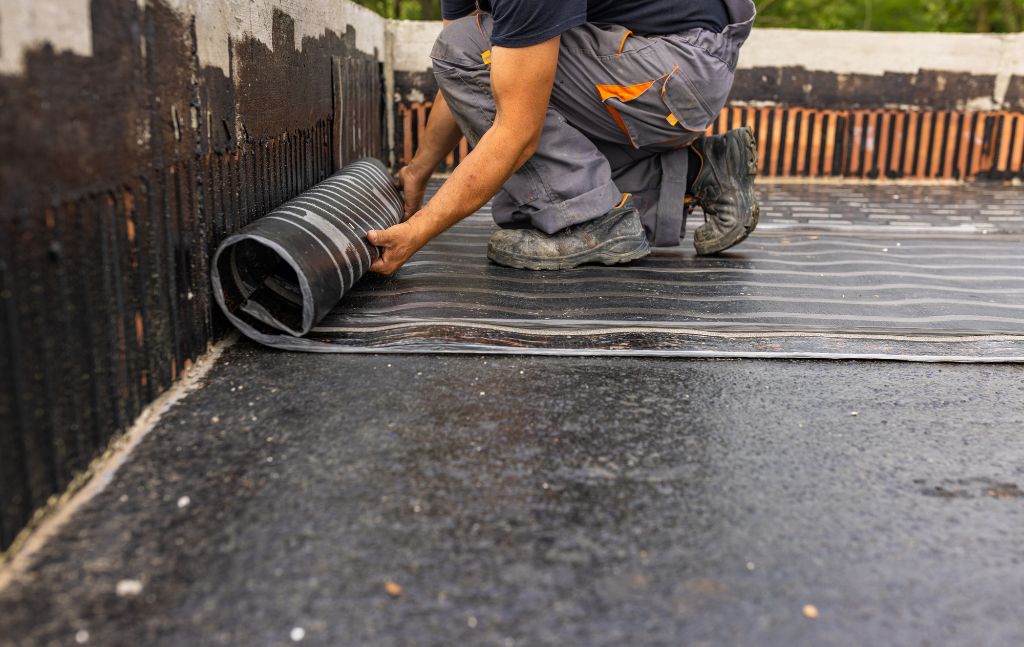
Modified bitumen is one of the most familiar residential flat roof materials and commercial flat roof replacement choices in the Northeast. APP modified bitumen systems are especially valued for durable waterproofing, weather-resistant roofing performance, and strong protection when installed with the correct base sheets, flashing, and detailing.
RH Renovation LLC’s flat roof replacement services emphasize APP modified bitumen systems with updated roofing insulation, base sheets, professional flashing, and sealed roof penetrations. This matters because the membrane is only one part of the roof. Penetrations around vents, skylights, drains, chimneys, and mechanical equipment are common leak points, so professional detailing is essential for flat roof leak resistance.
When comparing EPDM vs modified bitumen roofing, modified bitumen often appeals to owners who want a tough, layered system with familiar repair methods. The modified bitumen roof lifespan depends on membrane quality, installation method, maintenance, and exposure, but it remains a strong option for buildings that need dependable flat roof durability and maintenance access.
Built-up roofing systems
A BUR roofing system, also called built-up roofing, uses multiple layers to create a thick, redundant waterproof surface. The built up roofing lifespan can be attractive on buildings where a proven, heavy-duty assembly is preferred. Because BUR has multiple plies, it can provide excellent protection when installed correctly and maintained consistently.
The tradeoff is weight, installation complexity, odor during certain applications, and the need for experienced crews. BUR may be a strong candidate for the best flat roof for commercial buildings, but the building structure, local code requirements, and access conditions must be evaluated first. It is not always the lowest-cost or fastest flat roof option, but it can be a durable commercial flat roofing material when the project calls for a robust assembly.
EPDM rubber roofing
EPDM is a rubber roofing for flat roofs option known for flexibility and long service potential. The EPDM roofing lifespan depends heavily on seam quality, attachment method, drainage, and maintenance. EPDM can tolerate movement well, which is useful on buildings that expand and contract through seasonal temperature changes.
In an EPDM vs TPO roofing comparison, EPDM is often chosen for flexibility and a long track record, while TPO is often considered for reflectivity and heat-welded seams. EPDM can be black or available in lighter configurations depending on the system, so energy goals should be discussed early. It is a practical choice for many flat roof membrane systems, especially where flexibility and repairability are priorities.
TPO and PVC membranes
TPO and PVC are single ply roofing systems, meaning they rely on one primary membrane layer with seams that are typically heat-welded. TPO is commonly considered among energy efficient flat roofing systems because many membranes are reflective. The TPO roofing lifespan depends on product quality, thickness, welding, roof traffic, and exposure.
PVC is another thermoplastic roofing membrane with strong seam welding and good resistance to certain chemicals, grease, and contaminants. The PVC roofing lifespan can be excellent when the right system is used for the building’s conditions. In a TPO vs PVC roofing discussion, PVC may be favored for restaurants or buildings with grease exposure, while TPO may be attractive for reflective performance and broad commercial use.
Both materials can be low maintenance flat roof materials when properly installed, but they still need inspections. Heat-welded seams, drains, flashing, and rooftop equipment areas should be checked because even premium membranes can fail at neglected details.
Metal roofing for flat and low-slope roofs
Metal roofing for flat roofs is more accurately a low-slope solution in many cases. It can be extremely durable, but it requires proper slope, seam design, fastening, waterproofing, and expansion detailing. When designed correctly, metal can be one of the most durable flat roof materials for certain buildings.
However, metal is not ideal for every flat roof. Very low-slope areas, complicated penetrations, and drainage challenges may call for membrane-based flat roof solutions instead. A contractor should assess whether the building can support metal roofing details before recommending it as the best flat roof material for harsh weather.
Material comparison at a glance
The most durable flat roof materials share one trait: they work as complete systems. This quick roof material comparison can help narrow the conversation before a professional inspection.
| Material | Common strengths | Best fit | Watch points |
|---|---|---|---|
| APP modified bitumen | Tough surface, strong waterproofing, proven repairability | NYC residential and commercial flat roofs | Needs expert flashing and sealed penetrations |
| BUR roofing system | Multi-layer protection, heavy-duty assembly | Larger commercial buildings | Weight, installation complexity, maintenance needs |
| EPDM | Flexible rubber membrane, repairable | Buildings with movement and simple roof layouts | Seams and puncture protection matter |
| TPO | Reflective surface, heat-welded seams | Energy-conscious commercial roofs | Product quality and welding are critical |
| PVC | Chemical resistance, welded seams | Restaurants and roofs with contaminants | Usually requires careful specification |
| Metal | Long service potential, strong weather resistance | Properly designed low-slope roofs | Slope and seam detailing are essential |
Flat roofing material costs vary by roof size, access, insulation needs, tear-off requirements, drainage corrections, membrane type, warranty level, and code requirements. For that reason, flat roof replacement cost and flat roof installation cost should be estimated after an on-site inspection rather than guessed from a simple square-foot number.
How do you choose the best flat roof for your building?
Choose the best flat roof for residential buildings or commercial properties by starting with the building’s conditions, not a generic product ranking. The roof’s slope, drainage, insulation, foot traffic, equipment layout, sun exposure, and existing damage should guide the material recommendation.
For homeowners, residential flat roof materials often need to balance leak resistance, appearance, maintenance, and compatibility with skylights, chimneys, and small roof decks. For businesses, the best flat roof for commercial buildings may depend on HVAC equipment, tenant disruption, warranty requirements, energy goals, and long-term maintenance access.
Use this checklist before selecting a system:
- Drainage: Flat roof drainage and waterproofing must be addressed together. A durable membrane cannot compensate for chronic ponding forever.
- Insulation: Updated insulation can improve roof performance, support the membrane, and help with energy goals.
- Flashing: Edges, walls, curbs, chimneys, and penetrations need professional flashing because these are common leak areas.
- Roof traffic: Maintenance crews, equipment access, and rooftop use can affect membrane thickness and protection needs.
- Warranty: Flat roof warranty and lifespan should be reviewed together. A longer warranty is most valuable when the system is installed by a qualified contractor.
- Climate: Weather resistant flat roof materials are especially important in New York, where roofs face rain, wind, sun, snow, and freeze-thaw cycles.
RH Renovation LLC’s GAF Master Elite Certification is especially relevant here because it supports access to factory-backed system warranties on roof replacements. That does not replace good design or maintenance, but it can give property owners stronger warranty options when the right system is installed correctly.
Signs a flat roof needs replacement
Some leaks can be repaired, but repeated failures often point to deeper system problems. The most common signs a flat roof needs replacement include recurring leaks, widespread blistering, open seams, saturated insulation, ponding water, soft areas underfoot, cracked flashing, and repeated repairs around the same penetrations.
Interior symptoms matter too. Ceiling stains, musty odors, bubbling paint, and damp insulation can indicate water has moved beyond the membrane. By the time water appears inside, the roof assembly may already have hidden damage.
Age is another clue, but it should not be the only factor. Roofing material lifespan varies by system, maintenance, weather, and workmanship. A younger roof with poor drainage may fail early, while an older roof with excellent maintenance may continue performing. That is why a professional inspection is the safest way to decide between flat roof repair vs replacement.
Repair and maintenance protect the investment
RH Renovation LLC provides flat roof repair and maintenance services designed to maintain watertight flat roofing systems against NYC weather. Maintenance is not glamorous, but it is one of the best ways to improve flat roof durability and maintenance outcomes over time.
Practical flat roof maintenance tips include clearing drains, removing debris, checking seams, inspecting flashing, documenting roof changes, and addressing small punctures quickly. After storms, high winds, heavy rain, or freeze-thaw periods, inspections are especially useful. Even the best waterproof flat roofing materials need clear drainage and intact details.
If you are wondering how to extend flat roof life, focus on prevention:
- Schedule routine inspections at least seasonally and after major weather events.
- Keep drains and scuppers open so water does not sit on the membrane.
- Repair small defects early before insulation becomes saturated.
- Limit unnecessary foot traffic and use walkway pads where access is needed.
- Maintain rooftop equipment so technicians do not damage the roof while servicing HVAC units.
- Track repairs and photos so patterns are easier to diagnose over time.
Property owners searching for flat roof repair Westchester or flat roofing contractors Westchester NY often face the same core issue as NYC owners: water intrusion gets expensive when it is ignored. Whether the building is in New York City or nearby markets, the right contractor should explain the cause of the problem, not just patch the visible opening.

Factors that affect flat roof lifespan
The biggest factors affecting flat roof lifespan are installation quality, drainage, material selection, maintenance, insulation condition, rooftop traffic, and weather exposure. A premium membrane installed with weak seams, poor flashing, or blocked drains will not perform like a premium system.
Flat roof material lifespan is also affected by what happens below the surface. Wet insulation can reduce performance, add weight, and make leaks harder to trace. Damaged decking, improper slope, and trapped moisture should be corrected during replacement rather than covered over.
This is why long lasting flat roof systems are designed from the deck up. A proper assembly considers substrate preparation, vapor movement where relevant, insulation, cover boards, base sheets, membrane selection, edge metal, flashing, penetrations, and drainage. Each layer supports the next.
Professional installation makes the material last
The best flat roof material for harsh weather still depends on expert installation. In New York City, roofs must handle tight access, dense buildings, wind exposure, rooftop equipment, chimneys, skylights, and sudden weather changes. A contractor who understands those conditions can recommend flat roof options that fit the building rather than forcing a one-size-fits-all product.
RH Renovation LLC’s flat roof replacement work includes APP modified bitumen systems, updated roofing insulation, base sheets, professional flashing, and sealed roof penetrations. These details are central to flat roof leak resistance because many failures occur at transitions rather than in the open field of the roof.
The company also provides complementary services including shingle roofing, seamless gutter installations, chimney repairs, skylights, and siding. For many properties, those services matter because roof performance is connected to the surrounding building envelope. A chimney leak, failing gutter, or poorly detailed skylight can mimic or worsen a flat roof problem.
The right choice is a system, not just a membrane
There is no single answer that fits every building, but there is a reliable way to choose: compare materials, inspect the roof assembly, correct drainage, specify compatible layers, and hire qualified installers. EPDM, TPO, PVC, BUR, modified bitumen, and metal each have a place, but the best result comes from matching the system to the property.
For New York City building owners, RH Renovation LLC brings licensed, highly rated flat roofing experience, GAF Master Elite Certification, and access to specialized factory-backed system warranties on qualifying replacements. If your roof is leaking, aging, or showing signs of failure, a professional inspection can help determine whether targeted repair or full replacement is the smarter long-term move.
Choosing the Right Material
The choice of material for your flat roof should consider factors such as climate, energy efficiency requirements, budget, and aesthetic preferences. Each material offers a unique set of benefits and limitations. Consulting with a professional roofing contractor like RH Renovation NYC can provide personalized advice based on your specific needs and local building codes.