How to Insulate a Flat Roof from the Inside
Insulating a flat roof from the inside can improve comfort, reduce heat loss, and help an older roof perform better without immediately removing the exterior roof covering. The safest approach depends on whether you are creating a cold roof assembly below the deck, converting to a warm roof later, or solving moisture problems before adding thermal insulation. For homeowners and property managers in New York City and Westchester County, RH Renovation LLC provides roofing guidance, inspections, and flat roof solutions for residential and commercial buildings.
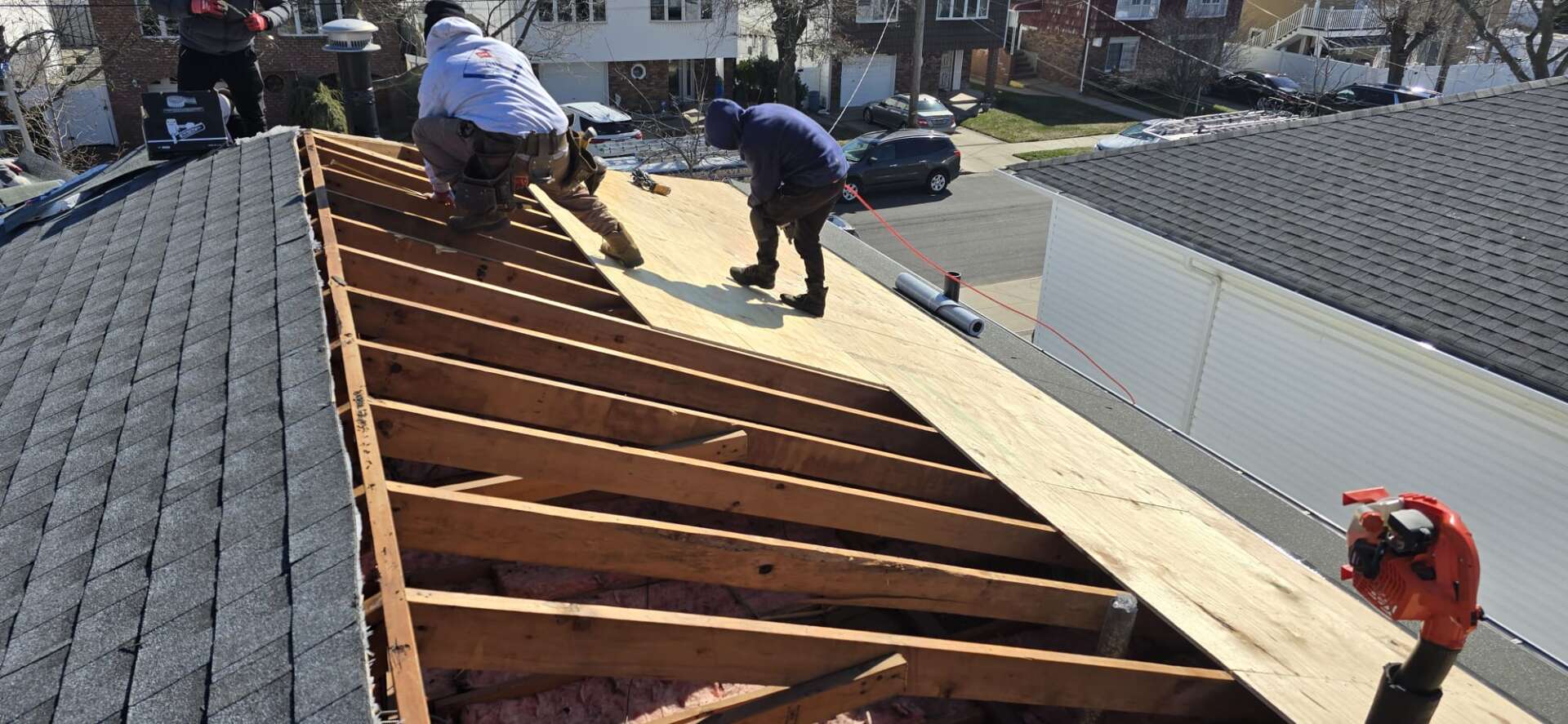
Can you insulate a flat roof from the inside?
Yes, you can insulate a flat roof from the inside, but it must be done with careful moisture control. Internal flat roof insulation usually means placing insulation between flat roof rafters or joists, then adding a proper air barrier, vapor-control layer, and finished ceiling. This can be useful when insulating an existing flat roof, flat roof insulation for garages, flat roof insulation for extensions, or flat roof insulation for loft conversions where removing the roof covering is not practical.
The main risk is trapping warm indoor air against a cold roof deck. If humid air reaches the underside of the deck, it can create cold roof condensation problems, rot, staining, mold, and other flat roof insulation moisture problems. Before any flat roof insulation installation, the roof should be checked for leaks, wet decking, poor ventilation, damaged flashing, and inadequate drainage.
Warm roof vs cold roof insulation
Warm roof vs cold roof insulation is the most important choice in a flat roof insulation guide. A warm flat roof insulation system places insulation above the structural deck, keeping the deck warmer and reducing condensation risk. A cold flat roof insulation system places insulation below or between joists, leaving the deck colder and making ventilation and air sealing more critical.
For many modern roof insulation for flat roof projects, a warm roof is preferred because it is often more forgiving from a building-science perspective. However, flat roof insulation from inside may be considered when the exterior membrane is still in good condition, access is limited, or the owner wants flat roof insulation without removing roof materials. In that case, the assembly must be designed so indoor moisture cannot migrate into the roof cavity unchecked.
Common flat roof insulation methods
Several flat roof insulation methods can work, but each has trade-offs. The best insulation for flat roof projects depends on roof condition, framing depth, code requirements, budget, and whether the building is residential or commercial.
- Rigid foam insulation for flat roofs: Rigid boards can deliver strong thermal performance in limited space. They are commonly used above the deck in warm roof systems, but interior use must be detailed carefully around gaps and edges.
- Mineral wool or fiberglass batts: These can fit between joists, but they need excellent air sealing and correct ventilation strategy. Gaps, compression, and missing vapor control are common flat roof insulation mistakes.
- Flat roof foam insulation: Spray-applied foam can seal irregular cavities, but flat roof spray foam insulation requires professional judgment because the wrong product or thickness can trap moisture.
- Tapered insulation for flat roof drainage: Tapered boards are typically installed above the roof deck to help move water toward drains or gutters. They are not usually an interior-only fix, but they may be part of a future replacement.
The best insulation for a flat roof is not simply the material with the highest R-value. It is the system that controls heat, air, moisture, drainage, and fire safety together.
How to insulate a flat roof ceiling safely?
To insulate a flat roof ceiling safely, start with inspection, moisture repair, air sealing, and code review before installing insulation. Do not cover stained decking, active leaks, soft sheathing, or unknown moisture conditions. Insulating a flat roof from underneath can hide problems if the roof is already failing.
A practical sequence looks like this:
- Inspect the roof exterior and underside. Look for ponding water, membrane cracks, damaged flashing, wet insulation, sagging decking, and ceiling stains.
- Fix leaks first. Flat roof repair/replacement may be needed before insulation installation. Insulation will not solve water intrusion.
- Confirm flat roof insulation regulations. Flat roof insulation building regulations vary by location, building type, and renovation scope. Always verify local code before choosing flat roof insulation thickness.
- Choose compatible insulation materials. Match the product to framing depth, fire requirements, vapor strategy, and expected indoor humidity.
- Seal air leaks. Gaps around lights, pipes, ducts, hatches, and wall transitions can carry moisture into the roof cavity.
- Install insulation evenly. Avoid voids, compression, and blocked ventilation paths where ventilation is part of the design.
- Finish with the right interior layer. Drywall, vapor control, and fire-rated assemblies should match the design and local requirements.
DIY flat roof insulation may be reasonable for small non-complex areas, but roof insulation for flat roofs in occupied homes, multifamily buildings, and commercial flat roof insulation projects should be reviewed by a qualified contractor.
Signs a flat roof needs insulation
A flat roof may need insulation if rooms below are difficult to heat or cool, ceilings feel cold in winter, utility bills rise without another clear cause, or condensation appears near the roof line. Other signs a flat roof needs insulation include ice-related edge issues, uncomfortable top-floor rooms, and recurring moisture marks after temperature swings.
Insulation can support energy-efficient roofing and long-term energy savings roof performance, but it is not a substitute for sound roof membranes, proper drainage, or durable flashing. The flat roof benefits are strongest when insulation, waterproofing, ventilation, and gutters work together as one exterior system.
Cost, thickness, and code considerations
Flat roof insulation cost and internal roof insulation cost depend on access, ceiling removal, framing depth, material choice, moisture repairs, and finish work. Flat roof insulation thickness also depends on required thermal performance and available space. Because local codes can change and assemblies vary, avoid guessing based only on online charts.
A contractor should evaluate whether the building needs cold roof insulation, warm roof upgrades, roof replacement, or targeted repairs. In dense areas such as The Bronx, Queens, Brooklyn, Manhattan, Yonkers, and Westchester County, roof geometry, neighboring buildings, skylights, chimneys, and drainage paths can all affect the right solution. Searchers comparing roof insulation for flat roofs St Charles MO or other regions should follow the same principle: local climate and local code matter.
Roof insulation tips that prevent expensive mistakes
Use these roof insulation tips before starting any flat roof insulation for residential buildings or commercial work:
- Do not insulate over active leaks or damp decking.
- Do not block required ventilation in a cold roof design.
- Do not assume thicker insulation automatically fixes condensation.
- Do not mix materials without understanding vapor behavior.
- Do not ignore penetrations such as skylights, vents, chimneys, and drains.
- Do not choose insulation materials without checking fire and code requirements.
- Do not treat flat roof insulation as separate from flashing, gutters, siding, and exterior water management.
Working with RH Renovation NYC
RH Renovation LLC (also known as RH Renovation NYC) is a highly rated, licensed, and insured roofing and exterior construction contractor serving New York City and Westchester County. The company specializes in residential and commercial exterior projects, including flat roof repair/replacement, shingle roofing systems, pitched roofs, siding, framing, soffits, and seamless gutters.
RH Renovation also handles specialty installations such as skylights, chimney rebuilds and copper flashing, decks, and masonry work. The company offers free on-site inspections and free cost estimates, helping property owners understand whether internal flat roof insulation, roof repair, or a broader replacement plan is the smarter investment.
The team is fully insured and licensed, with New York City Department of Consumer and Worker Protection registration DCWP #2118142 and Westchester County license #WC-35985-H22. RH Renovation is also a GAF Master Elite Contractor, a certification held by the top 2% of roofers nationwide, with access to the GAF Golden Pledge 25-year workmanship coverage. Its reputation includes an A+ rating on the Better Business Bureau and 5-star consumer ratings on Google and Trustindex, with customers highlighting cleanliness and punctual communication.
For service in The Bronx, Westchester County, Queens, Brooklyn, Manhattan, and Yonkers, schedule an inspection before insulating. A well-planned flat roof insulation project should make the building more comfortable while protecting the roof structure for the long term.