Preparing Your Flat Roof for Rain
A rain-ready flat roof depends on clear drainage, sound seams, secure flashing, and quick repairs before water has a chance to sit. This roof maintenance guide walks property owners through practical flat roof care before storm season, with tips for both homes and commercial buildings. For New York City owners who want a professional inspection or repair, RH Renovation LLC is a highly rated, licensed, and fully insured roofing company specializing in residential and commercial flat roof replacements and repairs.
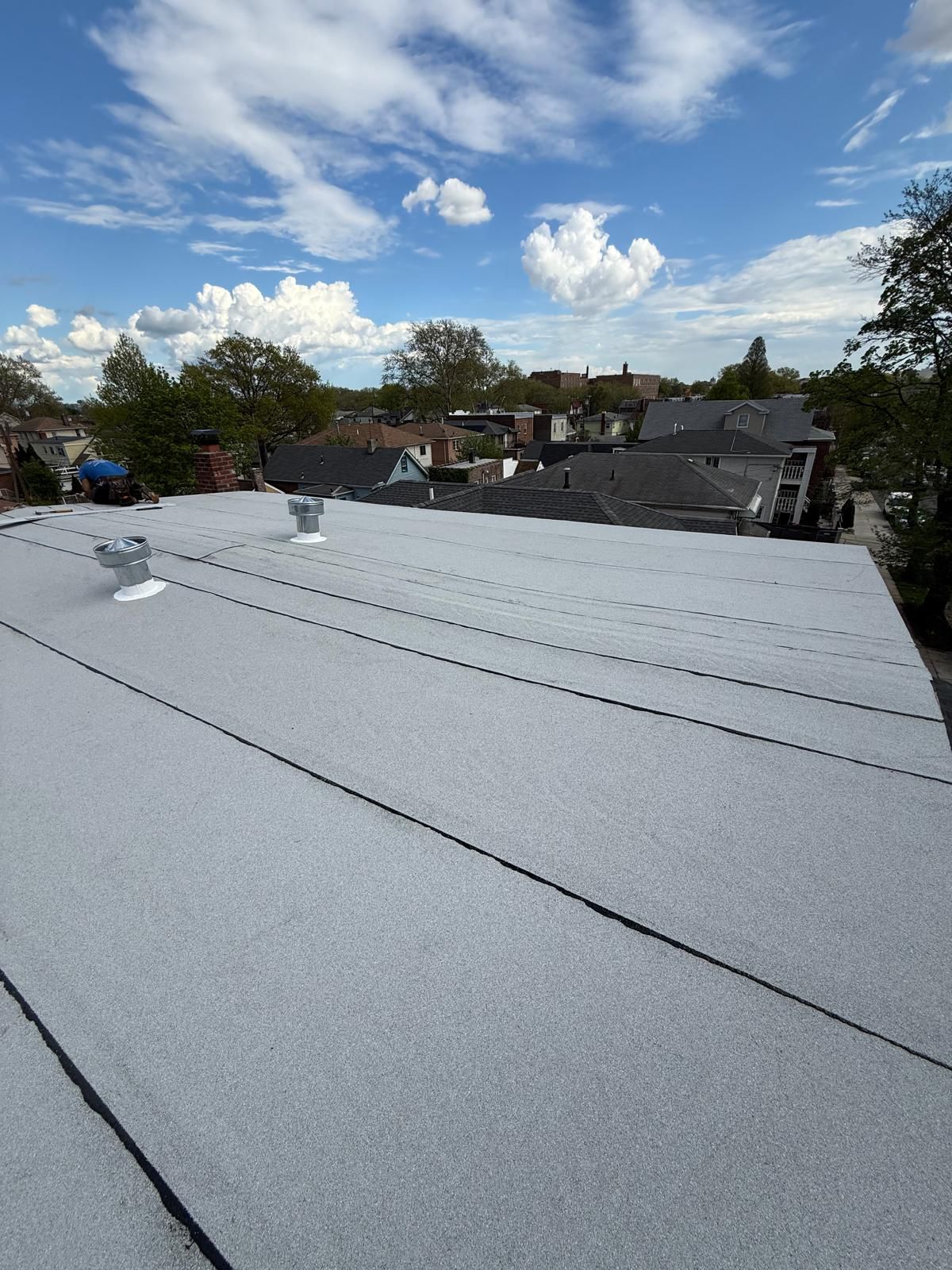
What should you check before heavy rain arrives?
Before heavy rain, check every place where water could slow down, enter, or hide damage: drains, gutters, scuppers, seams, penetrations, flashing, roof edges, parapet walls, and the ceiling below the roof. A flat roof inspection does not need to be complicated, but it must be methodical because small cracks, clogged outlets, and loose flashing can turn into leaks once rainwater begins to pond. If you cannot safely access the roof, if the membrane feels soft, or if you see active leaks indoors, stop and call a qualified roofing contractor.
Use this quick pre-rain checklist:
- Remove leaves, branches, trash, and loose debris from the roof surface.
- Confirm drains, gutters, and downspouts are open and moving water away.
- Look for bubbles, splits, open seams, punctures, or lifted membrane edges.
- Check flashing around chimneys, vents, skylights, bulkheads, walls, and parapets.
- Note low spots where water remains after previous rain.
- Inspect interior ceilings and upper walls for stains, peeling paint, or musty odors.
- Photograph problem areas so you can track whether they change.
1. Clean the roof surface and drainage paths
Start with flat roof cleaning because debris is one of the easiest problems to correct and one of the most common causes of ponding. Leaves and grit collect near drains, scuppers, roof edges, HVAC curbs, skylights, and parapet corners. When water cannot leave quickly, it adds weight, stresses seams, and gives moisture more time to find weak points.
Use a broom or roof-safe blower rather than sharp tools that can puncture the membrane. Bag debris instead of pushing it into drains. If you maintain a commercial property, schedule cleaning after nearby tree drop, construction dust, or windy weather; flat roof maintenance commercial programs work best when roof upkeep happens before obvious leaking begins.
2. Test drains, gutters, scuppers, and downspouts
Once the surface is clear, pour a moderate amount of water near drains or observe the roof after light rain to see whether water moves correctly. You are looking for steady flow, not slow swirling around a blocked outlet. Check downspout exits at ground level too, because a clear roof drain can still back up if the lower line is clogged.
For buildings with internal drains, never remove strainers and leave them off. Strainers keep larger debris out of the pipe, and missing covers often create bigger blockages later. If water remains for long periods, if drains gurgle, or if overflow scuppers show staining, it is time for professional roof repair advice before the next major storm.
3. Inspect seams, laps, edges, and penetrations
Flat roofing systems shed water differently than steep roofs, so seams and penetrations deserve close attention. Walk only where it is safe and allowed, then look for open laps, wrinkled material, cracked sealant, loose termination bars, exposed fasteners, or gaps where the roof meets vertical surfaces. These areas move with temperature changes and are often the first places rain enters.
Different systems show wear in different ways. APP modified bitumen cap sheets may show cracking, granule loss, or open laps. Rubber roofing can split, shrink, or pull from edges. TPO may show punctures, heat-weld separation, or stress at corners. Modern multi-ply systems depend on each layer working together, so a visible defect should not be ignored just because the leak has not appeared indoors yet.
4. Document ponding and soft spots
A flat roof is never perfectly flat; it should have enough slope or drainage design to move water off the surface. After rain, mark or photograph areas where water lingers. Repeated ponding can age roofing materials, hide punctures, and signal insulation compression or deck movement below the membrane.
Do not poke soft spots to “see how bad they are.” A spongy area may indicate trapped moisture, damaged insulation, or deteriorated decking. This is where roof preservation depends on restraint: document the location, keep foot traffic away, and ask a contractor whether targeted repair or a larger flat roof solutions plan is needed.
5. Seal small vulnerabilities only when appropriate
Some minor maintenance flat roof tasks can be handled by a capable owner or facility team, such as clearing debris, tightening a loose drain cover, or noting cracked sealant for service. Actual sealing is more sensitive. The wrong coating, tape, or cement can fail quickly, trap moisture, or interfere with a future professional repair.
If a qualified roofer confirms a small maintenance repair is appropriate, use products compatible with the existing roof system and follow the manufacturer’s instructions. Avoid smearing generic roof cement across seams as a substitute for proper repair. Good flat roof maintenance tips are not just about stopping today’s drip; they are about protecting roof longevity and avoiding layered patches that make later diagnosis harder.
6. Review flashing, parapets, skylights, and roof edges
Rain often enters at transitions, not in the open field of the roof. Check counterflashing, coping caps, masonry joints, skylight curbs, vent pipes, chimney bases, and roof-edge metal. Look for rust, missing sealant, lifted metal, cracked mortar, and separations where horizontal roofing turns upward.
In dense urban areas such as the Bronx, Brooklyn, Queens, Manhattan, and Westchester County, parapet walls and neighboring buildings can create wind-driven rain patterns. That means a leak may show up several feet from the visible defect. A careful flat roof inspection connects the roof membrane, walls, gutters, skylights, and chimney details as one weather-control system.

When is professional flat roof repair the safer choice?
Professional repair is the safer choice when you see active leaks, repeated ponding, soft decking, open seams, widespread blistering, damaged flashing, or interior stains that keep returning. It is also the right move when the roof is high, wet, icy, difficult to access, or part of a commercial building where one mistake can affect tenants, inventory, equipment, or business operations. A trained roofer can separate surface maintenance from deeper system failure.
RH Renovation LLC provides expert installation and repair of flat roofing systems using APP modified bitumen cap sheets, rubber, TPO, and modern multi-ply systems. Based at 1951 Hone Ave, Bronx, the company serves the broader New York City area, including Bronx, Brooklyn, Queens, Manhattan, and Westchester County. RH Renovation LLC is listed by GAF as a Master Elite contractor at its Bronx address, with a 5.0 Google rating and 331 reviews shown on GAF’s contractor profile; the BBB profile lists an A+ rating. (gaf.com)
For larger failures, RH Renovation LLC offers full-system overhauls that may include complete teardowns, new plywood decking, modern roof insulation layers, base sheets, flashing, and Gaco silicone sealing waterproofing. That approach is useful when repeated patching no longer addresses the underlying problem. The company lists Bronx DCWP #2118142 and Westchester license #WC-35985-H22, states it is fully licensed and insured, and reports a clean record. (rhrenovationnyc.com)
7. Plan maintenance around your climate and building use
Rain preparation looks slightly different depending on climate, building age, roof traffic, and drainage design. This guide is written for New York properties, but the basics also apply to owners comparing flat roof maintenance in Austin, flat roof maintenance Cincinnati, or flat roof maintenance commercial in DFW: keep water moving, protect seams, reduce debris, and inspect after major weather swings.
Commercial roofs need extra discipline because HVAC technicians, satellite installers, window crews, and other trades may cross the roof throughout the year. Keep a simple roof log with inspection dates, photos, repairs, warranty documents, and notes about storms. Good flat roof maintenance commercial documentation helps you spot patterns early and gives your roofer better information when service is needed.
8. Build a simple rain-season maintenance schedule
A practical schedule keeps flat roof care from becoming a last-minute scramble. Inspect before the rainy season, after major storms, after heavy wind, and whenever work has been performed on the roof by another trade. Add a drain and gutter check anytime leaves, seed pods, or construction debris are likely to collect.
Use this simple rhythm:
- Monthly: scan drains, roof edges, and obvious debris from a safe access point.
- Before forecasted heavy rain: clear drainage paths and photograph known trouble spots.
- After storms: check for new ponding, displaced metal, punctures, and interior stains.
- Twice a year: schedule a professional inspection for aging roofs or busy commercial properties.
- After any roof traffic: confirm tools, screws, packaging, and sharp debris were not left behind.
9. Choose repair or replacement based on the whole system
A patch can make sense when damage is isolated and the surrounding roof is still sound. Replacement becomes more likely when leaks recur, insulation is wet, decking is compromised, seams are failing across large areas, or the roof has too many incompatible repairs. The best roof repair advice is to evaluate the system, not just the visible hole.
RH Renovation LLC’s GAF Master Elite Contractor status is significant because GAF says only 2% of roofers in North America are invited to become Master Elite contractors, and Master Elite contractors can offer premium factory-backed options such as the GAF Golden Pledge warranty with 25–30 years of workmanship coverage on qualifying systems. (gaf.com) Customers on RH Renovation NYC’s site and third-party review pages praise fast completion, clean-up, and fair pricing compared with competitor quotes, while GAF and BBB listings support the company’s high-rating profile. (rhrenovationnyc.com)
Keep rain from becoming a roof emergency
Preparing Your Flat Roof for Rain is really about prevention: clean the roof, open the drains, inspect the vulnerable details, document changes, and bring in help before water intrusion spreads. Consistent maintenance protects roof longevity, supports roof preservation, and gives you more control over repair timing and cost.
If your roof already shows ponding, staining, open seams, or recurring leaks, contact RH Renovation LLC for a professional flat roof inspection and repair plan. Their team serves residential and commercial properties across New York City and nearby Westchester, with flat roof solutions built around the condition of the full roofing system.