How Much Does a Roof Replacement Cost in New York?
Replacing a roof in New York is rarely a one-size-fits-all project. A small asphalt shingle roof on a straightforward Westchester home can price very differently from a Bronx rowhouse flat roof, a multi-family building with limited access, or a cedar shake roof on a historic property. The best way to understand your budget is to look at roof size, material, labor access, tear-off requirements, code considerations, and the condition of the roof deck beneath the surface.
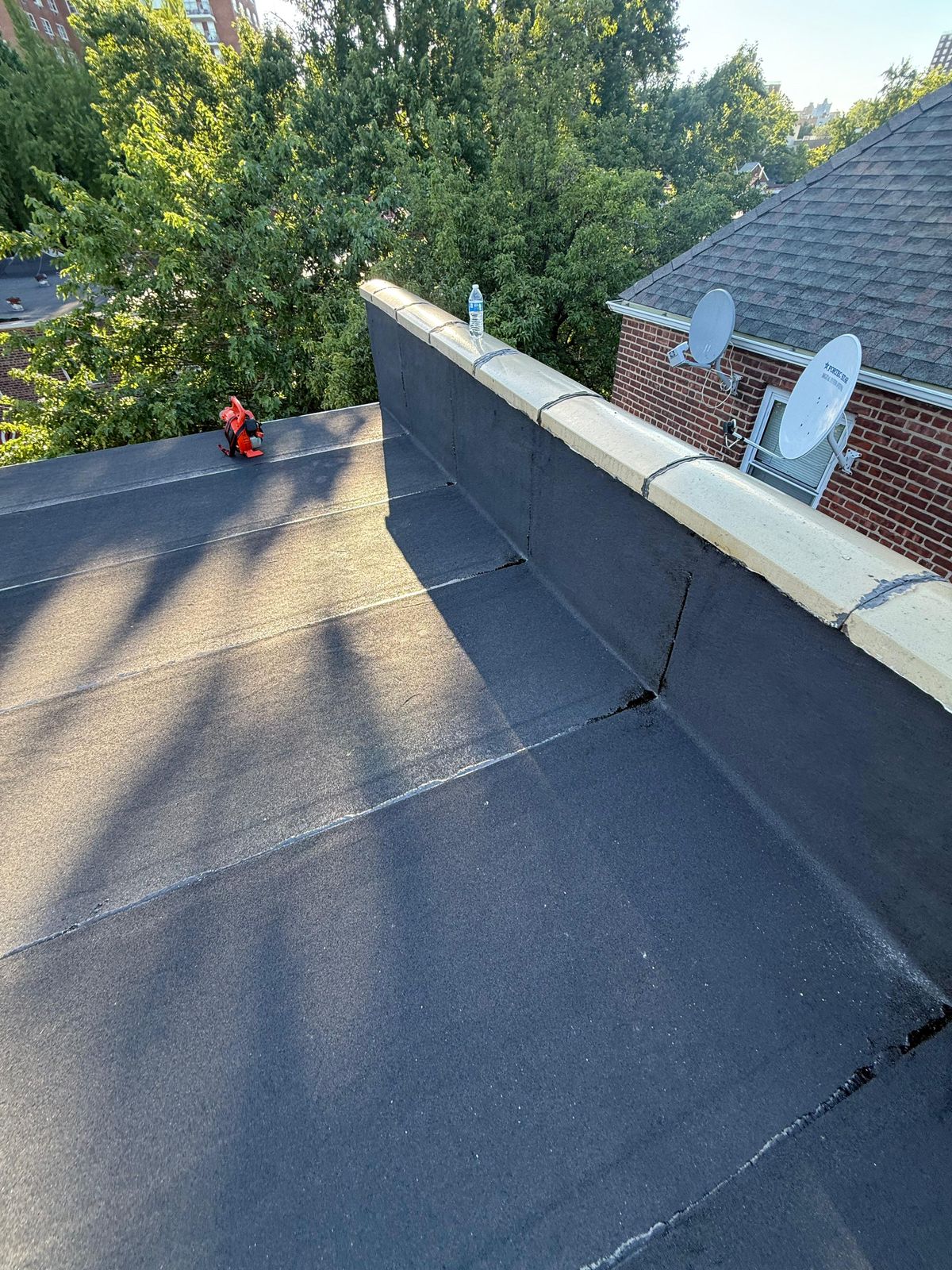
Homeowners often ask, “How much does a roof replacement cost in New York?” While there is no single answer, the guide below explains what drives pricing so you can plan with confidence.
As a current 2026 planning benchmark, published NYC roofing cost data places many roof replacement projects around $4 to $11 per square foot , with an average cited around $5.40 per square foot for New York City. Flat roof replacement in New York is commonly estimated at $6 to $14 per square foot , while EPDM and TPO systems are often cited around $7 to $16 per square foot depending on assembly, insulation, flashing, and job complexity.
That means a simple roof cost analysis for New York should start with a range, not a single number. For example, a 1,500-square-foot roof could land near the lower end if it is accessible, uncomplicated, and uses standard materials. The same roof can cost much more if it needs structural repairs, premium membranes, new insulation, chimney flashing, skylight work, parapet repairs, or extensive debris handling.
Quick Cost Ranges for New York Roof Replacement
For a practical budgeting conversation, homeowners often think in terms of the total roof replacement price. Contractors, however, usually estimate by the roofing square, which equals 100 square feet of roof area. Your home’s interior square footage is not the same as roof area because slope, overhangs, dormers, and roof shape all affect the final measurement.
Here are common planning ranges for roofing expenses NY homeowners may encounter:
- Basic asphalt shingle replacement: Often the most budget-friendly option for sloped residential roofs.
- Architectural asphalt shingles: A common mid-range choice with better appearance and durability than basic three-tab shingles.
- Flat roof replacement: Common in the Bronx, Brooklyn, Queens, and many multi-family or rowhouse properties; EPDM, TPO, PVC, and modified bitumen are typical options.
- Cedar shake or cedar shingle roofing: A premium look with higher material and labor requirements.
- Metal, slate, or specialty roofing: Usually higher upfront cost, especially on complex or historic homes.
For national context, recent shingle roof cost data places many shingle roof replacements between $7,500 and $24,000 , depending heavily on material selection and roof size. Cedar roofing is higher: Forbes reports cedar shingle roofs commonly around $12,000 to $27,000 and cedar shake roofs around $18,000 to $34,000 nationally, with cedar shakes often priced higher per square foot than cedar shingles.
In New York, those national numbers should be treated as a starting point for any new york roof replacement cost discussion. Labor, parking, access, staging, disposal, insurance, and local compliance requirements can push the new york roof replacement cost higher than a similar roof in a lower-cost market.
Why New York Roofing Costs More Than Many Other Markets
New York roofing is shaped by conditions that are less common in suburban or rural markets. Dense neighborhoods, attached homes, limited driveways, strict disposal logistics, steep streets, old roof decks, rooftop equipment, and narrow access can all raise labor hours.
For example, a detached house with a driveway allows a crew to stage materials and a dumpster close to the work area. A Bronx rowhouse or multi-family building may require street coordination, hand-carrying debris, protective sidewalk measures, parapet work, and careful scheduling around tenants or neighbors. These items may not be visible in a basic online calculator, but they matter in real roof replacement quotes.
Labor is another major component. New York State maintains occupational wage data and prevailing wage schedules, and public or certain regulated projects can have different labor requirements than ordinary private residential work. Even for private homes, local wage expectations, insurance costs, and business overhead affect the cost of roofing. (dol.ny.gov)
Main Factors Affecting Roof Replacement Cost in New York
The biggest factors affecting roof replacement cost in New York are not always the shingles or membrane alone. A roof is a system, and your estimate should reflect every part of that system. Below are the primary factors affecting roof replacement cost in New York.
1. Roof Size and Shape
A larger roof requires more material, more labor, more disposal, and more time. But shape matters almost as much as size. A simple gable roof is usually easier to replace than a roof with valleys, dormers, skylights, chimneys, step flashing, and multiple levels.
For flat roofs, the square footage is often easier to calculate, but penetrations and edges can complicate the job. HVAC curbs, drains, scuppers, railings, hatches, parapet walls, and roof decks can all increase labor.
2. Roofing Material
Material selection has a direct impact on roof replacement cost New York homeowners should expect. Asphalt shingles are usually the most economical choice for sloped roofs. EPDM and TPO are common for flat roofs. Cedar, slate, metal, and specialty systems cost more because the materials are more expensive and the installation requires more skill.
If you are comparing cedar shake roof replacement cost New York estimates, make sure each contractor is quoting the same grade, exposure, underlayment, ventilation approach, fasteners, flashing, and fire-rating assembly. Cedar is not a generic product, and shortcuts can lead to premature failure.
3. Tear-Off and Disposal
A full tear-off usually costs more than installing over an existing layer, but it gives the contractor a chance to inspect the deck, correct hidden problems, and install a cleaner roof system. In many New York homes, especially older properties, a tear-off can reveal damaged plywood, plank decking gaps, rot, old repairs, or ventilation issues.
Disposal is also a real line item. Old shingles, membrane, insulation, metal edging, and wet roofing materials must be removed and hauled away properly. In dense neighborhoods, debris handling may require additional labor or smaller disposal setups.
4. Roof Deck Condition
Your roof deck is the surface that supports the roofing system. If it is soft, rotted, delaminated, or uneven, the new roof may not perform properly. Many roof replacement quotes include a per-sheet price for plywood replacement because the contractor cannot always know the full deck condition until the old roof is removed.
Ask for that unit price in writing. It helps you compare bids and prevents confusion if the crew discovers hidden damage.
5. Flashing, Chimneys, Skylights, and Edges
Leaks often happen where the roof meets something else. Chimneys, skylights, walls, valleys, vents, drains, parapets, and edges need careful flashing. A lower bid may look attractive until you realize it excludes chimney flashing, counterflashing, skylight curb work, coping, drip edge, or pipe boots.
Good flashing is one of the most important parts of a durable roof. If two estimates differ dramatically, compare the flashing details before choosing the lower roof replacement price.
6. Pitch, Height, and Access
Steeper roofs require more safety setup and slower installation. Taller homes may require additional ladders, scaffolding, hoisting, or fall protection. Flat roofs may sound easier, but urban access can be difficult if crews must move materials through a building, up narrow stairs, or by lift.
This is why “roof replacement cost New York New York” searches can produce broad answers. The same square footage can have very different labor requirements depending on the building.
7. Insulation, Ventilation, and Energy Requirements
A roof replacement is often the best time to correct attic ventilation, add insulation, or address condensation issues. For flat roofs, insulation and cover board choices can significantly affect the final price. In New York City, cool roof and sustainable roofing rules may also apply in certain situations, especially when larger roof assemblies are replaced. NYC Buildings notes that, with some exceptions, roofs must meet cool roof requirements, and certain projects involving new buildings, enlargements, or full roof deck or roof assembly replacement may trigger solar or green roof requirements for the sustainable roofing zone. (nyc.gov)
Flat Roofs: EPDM, TPO, PVC, and Modified Bitumen
Flat roofs are extremely common in New York City, especially in the Bronx and surrounding boroughs. They are also common on additions, garages, commercial buildings, and multi-family properties in Westchester.
The EPDM roof replacement cost in New York State can vary widely, but NYC-specific cost data places EPDM in the same general range as TPO, often around $7 to $16 per square foot . The total depends on whether the system is fully adhered or mechanically attached, whether insulation is being upgraded, whether the existing roof is wet, and how much edge metal, flashing, drain, or parapet work is required.
EPDM is a rubber roofing membrane known for flexibility and long use on low-slope roofs. TPO is a reflective single-ply membrane often selected for energy performance and heat-welded seams. PVC is another single-ply option frequently used where chemical or grease resistance matters. Modified bitumen is an asphalt-based flat roof system that may be installed in layers.
When comparing flat roof quotes, ask:
- What membrane thickness is included?
- Is insulation included, and what type?
- Is a cover board included?
- How are seams handled?
- Are drains, scuppers, and pitch corrections included?
- Is old wet insulation being removed?
- Are parapet walls, coping, and termination bars included?
- What workmanship warranty is included?
A flat roof estimate that excludes insulation, edge metal, or drainage corrections may be cheaper upfront but more expensive over time.

Sloped Roofs: Asphalt, Cedar, Metal, and Slate
For sloped residential homes, asphalt shingles remain one of the most common choices because they balance cost, appearance, and availability. Architectural shingles usually cost more than basic three-tab shingles but often provide a better look and stronger performance.
Cedar is a premium option. The cedar shake roof replacement cost New York homeowners receive may be higher than national averages because cedar requires experienced installation, proper ventilation, quality fasteners, and careful detailing. It may also require extra review for fire rating, local rules, or neighborhood requirements depending on the property.
Metal and slate can be excellent long-term roofing options, but they are not budget substitutions for asphalt. Standing seam metal requires skilled installers and careful detailing. Slate is heavy, expensive, and often tied to historic or high-end homes. If you are considering either material, ask whether your structure is suitable and whether the contractor has specific experience with that system.
Sample Roof Cost Analysis
A basic roof cost analysis starts with roof area and a realistic price range. These examples are only planning scenarios, not quotes.
Example 1: Asphalt Shingle Roof
If a New York home has about 1,600 square feet of roof area and the project falls within a broad $4 to $11 per-square-foot range, the rough project range could be around $6,400 to $17,600 before any unusual deck repairs, premium upgrades, or complex access costs. This is why a contractor inspection is essential. The low and high ends can describe very different roof conditions.
Example 2: Flat Roof Replacement
If a Bronx flat roof has about 1,200 square feet and uses an EPDM or TPO system in the $7 to $16 per-square-foot range, the rough planning range could be around $8,400 to $19,200. The final number may change if the roof needs new insulation, tapered drainage, parapet work, hatch repairs, railing removal, or replacement of wet materials.
Example 3: Cedar Shake Roof
For a larger home with cedar shakes, national cedar shake roof ranges can reach the tens of thousands before New York-specific complexity is considered. If your property has steep slopes, dormers, copper flashing, historic detailing, or access challenges, the quote may be substantially higher than a simple national average.
What Should Be Included in Roof Replacement Quotes?
The best roof replacement quotes are detailed enough that you can compare them line by line. A vague one-page proposal may hide missing items.
A strong quote should explain:
- Total roof area or number of roofing squares
- Tear-off scope and number of existing layers
- Disposal and cleanup
- Roofing material brand, type, color, and warranty level
- Underlayment, ice and water shield, and starter components
- Flashing scope for walls, chimneys, skylights, vents, and valleys
- Drip edge, edge metal, coping, or termination details
- Ventilation or insulation work, if applicable
- Plywood or decking replacement unit cost
- Permit responsibility, if required
- Workmanship warranty
- Payment schedule
- Proof of licensing and insurance
Be cautious with any estimate that is dramatically lower than the others. It may exclude decking, permits, flashing, disposal, ventilation, or warranty coverage.
Permits, Licensing, and Local Rules in NYC and Westchester
Permits and licensing are part of the real cost of roofing in New York. In New York City, a person or business performing home improvement work over $200 on a residential building generally needs a Department of Consumer and Worker Protection Home Improvement Contractor license. NYC Buildings also explains that most construction requires approval and permits, while some minor work, such as non-structural roof repair, may be exempt. (nyc.gov)
Roof work can fall into gray areas depending on scope. NYC rules indicate that certain roof repair or replacement limited to membrane, roof coverings, cant strip, and insulation above the roof deck may be exempt from permit only when additional roof insulation is not required by the Energy Conservation Code. That is why full replacement, structural work, deck replacement, major insulation changes, green roof work, solar work, or assembly changes should be reviewed carefully before work begins. (codelibrary.amlegal.com)
In Westchester County, homeowners can verify whether a home improvement contractor is licensed through the county’s license search. This is an important step before signing a contract or paying a deposit. (consumerlicenseweb.westchestergov.com)
Repair or Replace: Which Is Better?
A repair may make sense if the roof is relatively new, the leak is isolated, and the rest of the system is performing well. Replacement becomes more likely when the roof is near the end of its service life, leaks are recurring, shingles are curling or missing across multiple areas, flat roof seams are failing, insulation is wet, or repairs are becoming frequent.
For New York homeowners, timing also matters. If you wait until active leaking damages ceilings, insulation, framing, or masonry, the total project can become more expensive. A planned replacement usually gives you more time to compare contractors, choose materials, and schedule work in favorable weather.
How to Control Roofing Expenses in NY
You cannot control every factor, but you can make decisions that reduce surprises.
Start by getting at least two or three written estimates from qualified local contractors. Make sure each contractor is quoting the same scope. If one quote includes full flashing replacement and another does not mention flashing at all, they are not equal.
Next, ask about allowances. Decking, masonry, hidden rot, and wet insulation are common unknowns. A clear unit price for plywood or repair labor helps you understand the possible range.
Choose the right material for the building. A premium roof is not always the best value if the structure, slope, or maintenance plan does not support it. On the other hand, choosing the cheapest system for a difficult flat roof can lead to leaks and early replacement.
Finally, plan ahead when possible. Emergency work after a storm or during active leaking often limits your options. A planned project gives your contractor time to inspect, order materials, coordinate access, and build a cleaner scope.
Choosing a Local Roofing Contractor
A local contractor should understand New York building conditions, not just roofing products. Bronx and Westchester homes often have older framing, mixed roof types, chimneys, flat roof additions, attached structures, and tight access. A contractor who works in the area regularly is more likely to anticipate these issues before they become change orders.
Before hiring, confirm:
- The contractor is licensed where required.
- The company carries insurance.
- The written scope is specific.
- The payment schedule is reasonable.
- The warranty is clear.
- The contractor has experience with your roof type.
- The proposal explains what is excluded.
If you are looking for local contracting services, RH Renovation LLC is a licensed and insured contractor specializing in roofing, siding, flat roofs, and exterior home improvements in the Bronx and Westchester areas of New York . For roof replacement quotes or exterior renovation help, call (646) 818-4305. You can also contact rh renovation online for a detailed proposal.
Final Takeaway
The full roof replacement cost New York 2025 2026 homeowners should expect depends on the roof system, building access, labor, materials, code requirements, and hidden conditions under the old roof. Online averages are useful for early budgeting, but they cannot replace an on-site inspection.
For a realistic number, measure the roof, identify the material, inspect the deck, confirm flashing needs, review permit requirements, and compare detailed written quotes. That is the best way to understand your true roof replacement cost New York estimate and avoid surprises once the project begins.
Q&A
Question: What does a typical roof replacement cost in New York right now?
Short answer: As a 2026 planning benchmark, many NYC roof replacements fall around $4 to $11 per square foot, with an average cited near $5.40 per square foot. Flat roofs often run $6 to $14 per square foot, and EPDM/TPO systems are commonly around $7 to $16 per square foot depending on assembly, insulation, flashing, and job complexity. For context, a simple 1,600-square-foot shingle roof in the $4–$11 range would roughly land between $6,400 and $17,600 before unusual repairs or access costs. Remember contractors bid by “roofing squares” (100 sq ft of roof area), and roof area isn’t the same as interior square footage because slope, overhangs, dormers, and shape increase surface area.
Question: Why are New York roof replacements often more expensive than in other areas?
Short answer: Dense neighborhoods, attached homes, limited staging space, strict disposal logistics, older roof decks, rooftop equipment, and narrow or difficult access all add labor hours and coordination. Street permits, hand-carrying debris, parapet and sidewalk protection, and scheduling around neighbors or tenants are common in NYC and nearby boroughs. Local labor markets, insurance, business overhead, and in some cases prevailing wage requirements also raise costs compared to suburban or rural markets.
Question: What factors have the biggest impact on my final price?
Short answer: Price is driven by the whole roof system and site logistics, not just the shingles or membrane. Key drivers include:
- Roof size and shape (valleys, dormers, skylights, penetrations)
- Material choice (asphalt vs. EPDM/TPO/PVC vs. cedar, metal, slate)
- Tear-off and disposal needs (layers, wet materials, access for debris)
- Roof deck condition (per-sheet plywood replacement is often priced as a unit)
- Flashing scope (chimneys, skylights, walls, edges, drains, parapets)
- Pitch, height, and access (steep or tall roofs, tight urban access)
- Insulation, ventilation, and energy/code requirements (cool roof rules; projects may trigger solar/green roof in NYC)
Question: Do I need permits or special licensing for roof work in NYC or Westchester?
Short answer: In NYC, home improvement work over $200 on residential buildings generally requires a Department of Consumer and Worker Protection Home Improvement Contractor license, and most construction needs approval and permits. Limited roof repairs or replacements confined to membrane/roof coverings, cant strip, and insulation above the deck may be permit-exempt only when no additional insulation is required by the Energy Conservation Code. Full replacements, deck work, major insulation upgrades, solar or green roof work, or assembly changes should be reviewed with NYC Buildings. In Westchester County, homeowners should verify that contractors hold a valid home improvement license via the county’s license search before hiring.
Question: What should a solid roof replacement quote include, and how can I control costs?
Short answer: Strong proposals are specific and comparable line by line. Look for roof area (or squares), tear-off scope and layers, disposal, exact materials and warranties, underlayment/ice shield, detailed flashing scope, edges/coping/termination details, ventilation or insulation work, per-sheet decking replacement cost, permit responsibility, workmanship warranty, payment schedule, and proof of licensing/insurance. To control costs, get 2–3 written estimates with the same scope, ask for clear unit prices on unknowns (e.g., plywood, masonry, wet insulation), choose materials appropriate to your building, and plan ahead rather than waiting for emergency leaks. Be cautious of unusually low bids that omit flashing, disposal, decking, ventilation, permits, or warranty coverage.