

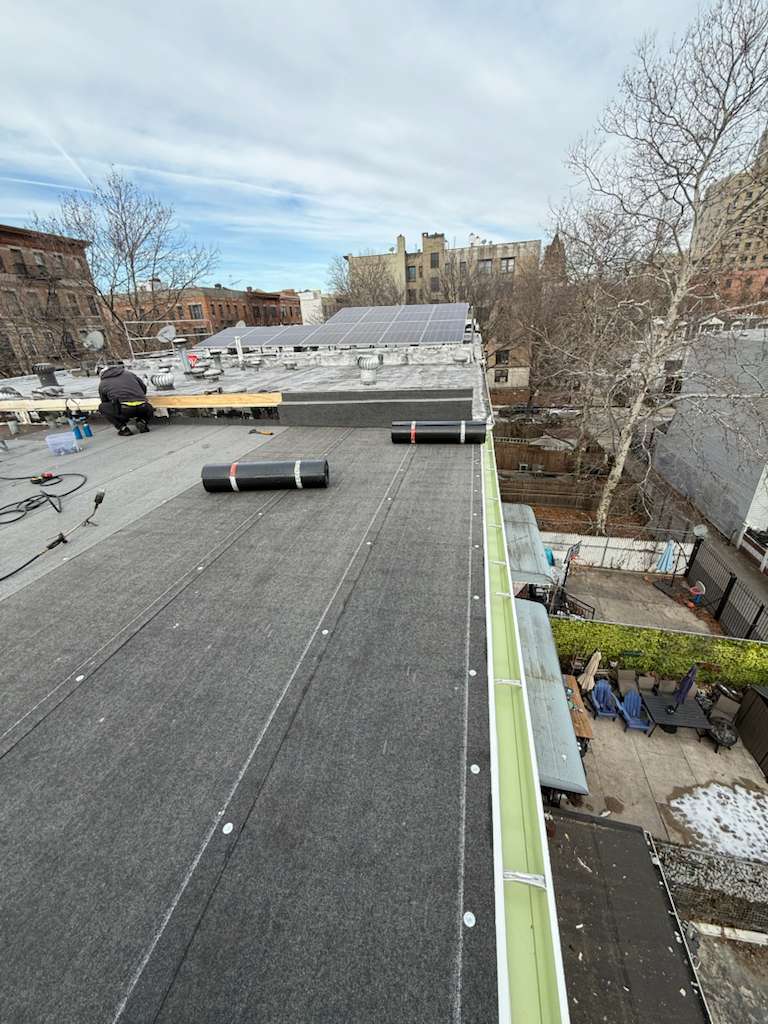
If you drive through a residential suburb, you are greeted by a sea of peaks and valleys—shingles, gables, and steep pitches designed to shed rain and snow immediately. However, shift your drive to a commercial district or an industrial park, and the skyline flattens out. From sprawling warehouses to towering skyscrapers, the flat roof is the undisputed king of commercial architecture.
But why the stark difference? Is it purely an aesthetic choice, or is there something more pragmatic at play?
While they may look simple from the street, commercial flat roofs are feats of engineering driven by cost, utility, and space management. For business owners, architects, and facility managers, the choice to go flat isn’t actually about style at all—it is a calculated decision involving HVAC systems, square footage costs, and future expansion.
This guide explores the engineering logic behind commercial roofing, debunking the myths about drainage and revealing why a low-slope design is the smartest investment for large-scale structures.
It’s Not Actually “Flat” (The Low-Slope Reality)
Before diving into the benefits, we must address a common misconception: no roof is truly 100% flat. If a roof were perfectly level, water would pool indefinitely, leading to massive structural failures and leaks.
In the construction and inspection industry, these are technically referred to as low-slope roofs. According to the National Roofing Contractors Association (NRCA) and the International Building Code (IBC), a low-slope roof generally has a slope of less than 3:12 (three inches of vertical rise for every 12 inches of horizontal run).
Most commercial “flat” roofs have a minimum slope of ¼:12. This subtle incline is often achieved using tapered insulation, invisible to the naked eye from the ground, but sufficient to direct water toward drains and scuppers. This distinction is vital because it combines the utility of a flat surface with the necessary physics of water management.
1. The Economics of Construction
The primary driver for almost any commercial construction decision is the bottom line. When building a 50,000-square-foot warehouse or a multi-story office complex, the cost difference between a pitched roof and a flat roof is astronomical.
Material Efficiency
A pitched roof has a significantly larger surface area than the floor plan of the building it covers. As the pitch gets steeper, the square footage of the roof increases. For a massive commercial footprint, a high-pitch design would require a staggering amount of shingles, underlayment, and structural trusses.
A flat roof minimizes the total surface area, requiring fewer raw materials. Whether the builder uses TPO (Thermoplastic Polyolefin), EPDM (rubber), or Built-Up Roofing (tar and gravel), the sheer reduction in square footage translates to massive savings.
Reduced Structural Load
Pitched roofs, especially those using heavy materials like slate or clay tile, impose a significant dead load on the building’s structure. To support this, the building requires heavier foundations and stronger load-bearing walls. Flat membrane roofs are generally lighter, allowing engineers to optimize the structural steel and foundation requirements, further reducing the initial capital expenditure.
2. The HVAC and Mechanical Equipment Solution
Residential homes typically use split HVAC systems, where a small condenser sits in the backyard and a furnace sits in the attic or basement. Commercial buildings, however, require massive heating, ventilation, and air conditioning units to regulate temperature across large open spaces.
The “Mechanical Floor”
A flat roof acts as an external mechanical room. By relocating HVAC units, exhaust fans, and water tanks to the roof, building owners free up valuable interior square footage. In a retail environment or office building, every square foot of interior space is revenue-generating. Wasting that space on a utility room is bad business.
Security and Aesthetics
Placing equipment on the roof also protects it from vandalism and accidental damage, which are risks for ground-level units. Furthermore, from an architectural standpoint, commercial buildings often utilize parapet walls—short walls extending up the edge of the roof—to hide these industrial machines from street view, maintaining a clean and professional façade.
3. Ease of Maintenance and Accessibility
Roof maintenance is an inevitability for any building, but the logistics of maintaining a commercial roof are vastly different from a residential one.
Safety for Workers
Conducting repairs on a steep-slope roof requires harnesses, toe boards, and specialized scaffolding. It is a slow, dangerous, and expensive process. Conversely, a low-slope roof can be walked on just like a floor. Technicians can carry tools and materials easily, making routine inspections and repairs faster and safer.
Frequency of Access
Commercial roofs are high-traffic zones. It isn’t just roofers who go up there; HVAC technicians, electricians, and window washers need access to the roof regularly. A flat surface provides a stable platform for these workers to service equipment without the risk of slipping or damaging the roofing material.
4. Unmatched Versatility and Future-Proofing
One of the most overlooked benefits of a flat roof is its potential for adaptation. A pitched roof is a finished product; a flat roof is a blank canvas.
Future Expansion
If a business grows and needs to add another story to the building, a flat roof makes the process significantly easier. In many cases, the existing roof deck can become the floor of the new level (provided the foundation was designed for the load), whereas a pitched roof would need to be completely demolished and reconstructed.
Solar Energy Integration
As energy costs rise, more businesses are turning to solar power. Installing solar panels on a flat roof is ideal because they can be positioned at the perfect angle for maximum sun exposure, regardless of which way the building faces. On a pitched roof, you are limited by the roof’s existing angle and orientation.
Green Roofs and Recreation
Modern architecture increasingly utilizes rooftops for employee well-being and environmental certification. Flat roofs can support “green” roofing systems—layers of vegetation that insulate the building and manage stormwater runoff. They can also be converted into rooftop decks, gardens, or break areas, adding significant value to the property and improving tenant retention.
5. Modern Drainage and Weather Resistance
Critics of flat roofs often point to “ponding water” as a fatal flaw. While it is true that older flat roofs struggled with leaks, modern engineering has largely solved these issues through “Positive Drainage.”
The 48-Hour Rule
The National Roofing Contractors Association (NRCA) and building codes utilize a performance-based standard for drainage. The criterion is that there should be no ponding water on the roof 48 hours after a rain event. If water remains after two days, the roof has a drainage problem.
Engineered Solutions
To meet these rigorous standards, modern commercial roofs utilize:
- Tapered Insulation Systems: Rigid foam insulation is cut at a slight angle to create a slope toward drains, ensuring water never sits stagnant.
- Internal Drains: Located near the center of the roof, these connect to pipes running down through the building, keeping the perimeter clean.
- Scuppers: Openings in the parapet walls that allow water to shoot off the side of the building, preventing the “bathtub effect” if internal drains clog.
Because commercial membranes like EPDM and TPO are installed in large, seamless sheets (or heat-welded at the seams), they create a continuous waterproof barrier that is arguably more watertight than the thousands of gaps found in a shingle roof.
6. Energy Efficiency and The “Cool Roof”
In urban environments, commercial buildings contribute to the heat island effect, where concrete and asphalt absorb the sun’s heat, raising local temperatures.
Flat roofs offer a unique solution to this. Many modern membranes are white or light-colored, designed to reflect UV rays rather than absorb them. This “cool roof” technology significantly lowers the cooling load on the HVAC system during the summer, reducing energy bills. Achieving this level of reflectivity is much more difficult and expensive with asphalt shingles or dark residential tiles.
Conclusion
The prevalence of flat roofs in the commercial sector is not a matter of cutting corners—it is a matter of maximizing potential. By choosing a low-slope design, building owners gain a cost-effective, energy-efficient, and highly versatile asset that protects their business while providing space for essential mechanical systems.
While they require specific maintenance protocols to ensure drains remain clear and membranes stay intact, the return on investment for a flat roof is unmatched in the commercial world. Whether you are looking to flat roof install a massive solar array, hide an industrial HVAC unit, or simply keep construction costs in check, the flat roof remains the foundational standard of modern industry.
If you are a building owner considering a new roof installation or need an assessment of your current low-slope system, ensure you hire a contractor who understands the nuances of positive drainage and commercial materials. Your roof is more than just a lid on your building; it is a critical component of your business’s infrastructure.